Hammar Ilham Akbar1This email address is being protected from spambots. You need JavaScript enabled to view it., Ardian Dwi Saputra2, Eko Surojo2, Dody Ariawan2, and Ganjar Pramudi1
1Department of Manufacturing Engineering Technology, Vocational School, Universitas Sebelas Maret, Surakarta, 57126, Indonesia
2Department of Mechanical Engineering, Faculty of Engineering, Universitas Sebelas Maret, Universitas Sebelas Maret, Surakarta, 57126, Indonesia
Received: October 16, 2025 Accepted: March 31, 2026 Publication Date: April 18, 2026
Copyright The Author(s). This is an open access article distributed under the terms of the Creative Commons Attribution License (CC BY 4.0), which permits unrestricted use, distribution, and reproduction in any medium, provided the original author and source are cited.
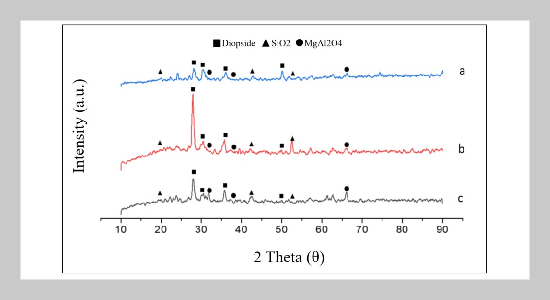
The use of sea sand as a reinforcing material in aluminum matrix composites (AMC) offers a promising solution for producing economical and lightweight materials. A significant challenge in this material is the low wettability of the sea sand’s surface with respect to metal particles. The objectives of this research are to enhance the wettability of sea sand to enable its practical use as a reinforcement material in AMCs. The study was conducted experimentally in two stages. The first stage involved an electroless coating process. This was carried out by mixing 40 ml of nitric acid (HNO3) with 0.5 g of aluminum (Al) powder and varying amounts of magnesium (Mg), specifically 0.1 g,0.2 g, and 0.3 g . The coated sea sands were analyzed using scanning electron microscopy (SEM), energy dispersive X-ray spectroscopy (EDS), and X-ray diffraction (XRD). In the second stage, an aluminum 6061/sea sand composite was produced by stir casting, with the coated sea sand from the first stage as the reinforcement. The composites were then tested for density, porosity, and hardness. The results of the first-stage analysis indicate that Mg successfully modifies the surface of sea sand particles, as confirmed by SEM, EDS, and XRD tests. These tests reveal that the surface structure of sea sand becomes rough due to the presence of metal oxides. In the second-stage analysis, it was found that the Al6061/sea sand composite containing 0.1 g of Mg performed best among the variations. This variation achieves the highest values of density, porosity, and hardness at 2.643 g/cm3, 1.84%, and 61.5 BHN, respectively.
[1] E. W.A.Fanani, E. Surojo, A. R. Prabowo, and H. I. Akbar, (2021) “Recent progress in hybrid aluminum composite: Manufacturing and application" Metals 11(12): 1919. DOI: 10.3390/met11121919.
[2] E. W. A. Fanani, E. Surojo, A. R. Prabowo, D. Ariawan, and H. I. Akbar, (2021) “Recent development in aluminum matrix composite forging: Effect on the mechanical and physical properties" Procedia Structural Integrity 33: 3–10. DOI: 10.1016/j.prostr.2021.10.002.
[3] S. Ravindran, N. Mani, S. Balaji, M. Abhijith, and K. Surendaran, (2019) “Mechanical behaviour of aluminium hybrid metal matrix composites–a review" Materials Today: Proceedings 16: 1020–1033. DOI: 10. 1016/j.matpr.2019.05.191.
[4] K. K. Alaneme, B. O. Ademilua, and M. O. Bodunrin, (2013) “Mechanical properties and corrosion behaviour of aluminium hybrid composites reinforced with silicon carbide and bamboo leaf ash" Tribology in Industry 35(1): 25.
[5] H. I. Akbar, E. Surojo, D. Ariawan, and A. R. Prabowo, (2020) “TECHNICAL INVESTIGATION OF SEA SAND REINFORCEMENT FOR NOVEL AL6061-SEA SAND COMPOSITES: IDENTIFICA TION OF PERFORMANCE AND MECHANICAL PROPERTIES." Periódico Tchê Química 17(36): DOI: 10.52571/PTQ.v17.n36.2020.63.
[6] S. Jannet, R. Raja, V. Arumugaprabu, G. V. Kumar, S. Vigneshwaran, P. R. Sreekanth, and K. Naresh, (2022) “Effect of neem seed biochar on the mechanical and wear properties of aluminum metal matrix composites fabricated using stir casting" Materials Today: Proceedings 56: 1507–1512. DOI: 10.1016/j.matpr.2021.12.572.
[7] P. Yadav, A. Ranjan, H. Kumar, A. Mishra, and J. Yoon, (2021) “A contemporary review of aluminium MMC developed through stir-casting route" Materials 14(21): 6386. DOI: 10.3390/ma14216386.
[8] L. Zhengwuvi, L. Timon, M. Hassan, and R. Joshua, (2023) “Production and characterization of aluminium matrix composite with mixture of silicon carbide and groundnut shell ash as reinforcement for automotive application" Savannah Journal of Science and Engineering Technology 1(5): 244–250.
[9] N. Panwar, M. Goud, S. Kant, et al., (2018) “Experi mental investigation of AA6061-Al2O3-fly ash composite produced by using stir casting method" Materials To day: Proceedings 5(14): 28413–28419. DOI: 10.1016/j.matpr.2018.10.127.
[10] V. Chak, H. Chattopadhyay, and T. Dora, (2020) “A review on fabrication methods, reinforcements and mechanical properties of aluminum matrix composites" Journal of manufacturing processes 56: 1059–1074. DOI: 10.1016/j.jmapro.2020.05.042.
[11] B. C. Kandpal, H. Singh, et al., (2017) “Fabrication and characterisation of Al2O3/aluminium alloy 6061 composites fabricated by Stir casting" Materials Today: Proceedings 4(2): 2783–2792. DOI: 10.1016/j.matpr.2017.02.157.
[12] A. Zulfia and A. I. Adyatma, (2013) “Electroless plating of Al2O3 particles reinforced composites" Advanced Materials Research 789: 66–71. DOI: 10.4028/www. scientific.net/AMR.789.66DOIlink.
[13] A.Zulfia,(2010) “Effect of Mg on formation of electroless plating on the surface of SiC particles reinforced composites" Journal of Materials Science and Engineering 4(12): 12–17.
[14] A. I. Adityatama, (2010) “The Effect of Magnesium on the Electroless Plating Process on Al2O3 Reinforcement Particles" Universitas Indonesia:
[15] V. M. Sreekumar, R. M. Pillai, B. C. Pai, and M. Chakraborty, (2008) “Microstructural development in Al/MgAl2O4 in situ metal matrix composite using value added silica sources" Science and Technology of Advanced Materials: DOI: 10.1088/1468-6996/9/1/015004.
[16] V.Sreekumar,N.H.Babu,D.Eskin,andZ.Fan,(2015) “Structure–property analysis of in-situ Al–MgAl2O4 metal matrix composites synthesized using ultrasonic cavitation" Materials Science and Engineering: A 628: 30–40. DOI: 10.1016/j.msea.2015.01.029.
[17] P. Garg, A. Jamwal, D. Kumar, K. K. Sadasivuni, C. M. Hussain, and P. Gupta, (2019) “Advance research progresses in aluminium matrix composites: manufacturing & applications" Journal of materials research and technology 8(5): 4924–4939. DOI: 10.1016/j.jmrt.2019.06.028.
[18] H. I. Akbar, E. Surojo, and D. Ariawan. “Effect of Sea Sand Content on Hardness of Novel Aluminium Metal Matrix Composite AA6061/Sea Sand”. In: Proceedings of the 6th International Conference and Exhibition on Sustainable Energy and Advanced Materials: ICE-SEAM 2019, 16—17 October 2019, Surakarta, In donesia. Springer. 2020, 307–315. DOI: 10.1007/978 981-15-4481-1_31.
[19] L. Yolshina and A. Kvashinchev, (2016) “Chemical interaction of liquid aluminum with metal oxides in molten salts" Materials & Design105: 124–132. DOI: 10.1016/ j.matdes.2016.05.012.
We use cookies on this website to personalize content to improve your user experience and analyze our traffic. By using this site you agree to its use of cookies.