YiChen DuThis email address is being protected from spambots. You need JavaScript enabled to view it.
EDNA Joint Institute, China Academy of Art, Hangzhou 310000, Zhejiang, China
Received: December 20, 2025 Accepted: January 31, 2026 Publication Date: February 26, 2026
Copyright The Author(s). This is an open access article distributed under the terms of the Creative Commons Attribution License (CC BY 4.0), which permits unrestricted use, distribution, and reproduction in any medium, provided the original author and source are cited.
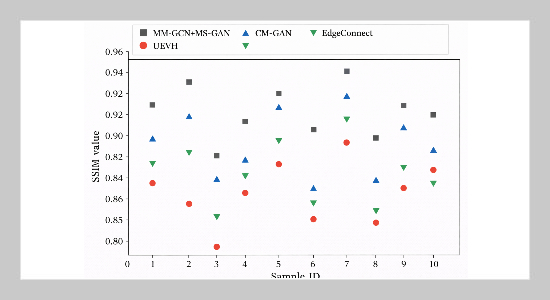
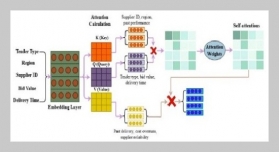
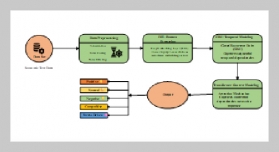
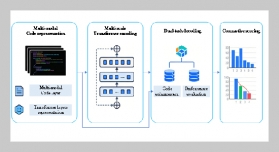
This study proposes an intelligent restoration and immersion system for digital intangible cultural heritage, addressing the lack of multimodal data coordination. It uses a Multimodal Graph Convolutional Network (MM-GCN)tofuse images, craft texts, and dynamic action data, with spatiotemporal alignment and adaptive weight allocation to optimize modal contributions. The dual-channel architecture integrates visual restoration via MS-GANwith semantic constraints and tactile feedback through a mechanical model, achieving 4K/60fps real-time rendering. The system achieves an average structural similarity of 0.915, a feature extraction rate of 44.2fps, and a tactile feedback delay under 0.85ms. This algorithm provides a high-precision, low-latency solution for the digitization of intangible cultural heritage, promoting the living inheritance of cultural skills.
Keywords: Digital Intangible Cultural Heritage Art Restoration; Immersive Experience System; Multimodal Fusion; MM-GCN;MS-GAN
[1] Y. Hou, S. Kenderdine, D. Picca, et al., (2022) “Digitizing intangible cultural heritage embodied: State of the art" Journal on Computing and Cultural Heritage 15(3): 1–20. DOI: 10.1145/3494837.
[2] X. Jing, F. Tan, and M. Zhang, (2021) “Digital application of intangible cultural heritage from the perspective of cultural ecology" Journal of Smart Tourism 1(1): 41–52. DOI: 10.52255/smarttourism.2021.1.1.6.
[3] L. N. Amali, M. R. Katili, and W. Ismail, (2022) “Preservation of intangible and tangible cultural heritage using digital technology" Indonesian Journal of Electrical Engineering and Computer Science 28(2): 980–986. DOI: 10.11591/ijeecs.v28.i2.pp980-986.
[4] F. Wang and H. Liu, (2024) “Current status, problems and countermeasures of paper production for ancient book restoration—Based on the field investigation of intangible cultural heritage handmade paper in China" China Paper making 43(10): 122–127. DOI: 10.11980/j.issn.0254-508 X.2024.10.016.
[5] Y. Tong, (2023) “University leadership and practice of intangible cultural heritage craftsmanship in ancient book restoration—Taking the library of Henan University as an example" Journal of Hubei Open Vocational College 36(3): 29–31. DOI: 10.3969/j.issn.2096-711X.2023.03.01-2.
[8] P. Dhiman, A. Kaur, Y. Hamid, E. Alabdulkreem, H. Elmannai, and N. Ababneh, (2023) “Smart disease detec tion system for citrus fruits using deep learning with edge computing" Sustainability 15(5): 4576. DOI: 10.3390/su15054576.
We use cookies on this website to personalize content to improve your user experience and analyze our traffic. By using this site you agree to its use of cookies.