




Zhenguo Xing1, Xiao Wu2, and Jiangjiang Li1
1School of Electronics and Electrical Engineering, Zhengzhou University of Science and Technology, Zhengzhou, 450064 China
2School of Finance and Economics, Zhengzhou University of Science and Technology, Zhengzhou, 450064 China
Received: March 14, 2025
Accepted: May 8, 2025
Publication Date: March 29, 2026
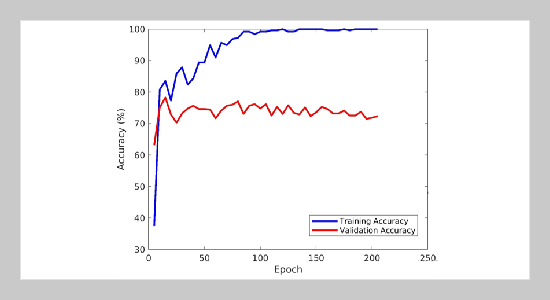
Classification accuracy (ACC) varies with the number of iterations
Copyright The Author(s). This is an open access article distributed under the terms of the Creative Commons Attribution License (CC BY 4.0), which permits unrestricted use, distribution, and reproduction in any medium, provided the original author and source are cited.
Download Citation: BibTeX | https://doi.org/10.6180/jase.202602_29(2).0008
Most of the traditional university employment forecasting systems adopt a single traditional feature modeling, which leads to poor employment forecasting effect and weak employment accurate service. Therefore, this paper proposes a novel student employment forecasting model based on random forest and multi-features fusion. Firstly, the student data is preprocessed to remove irrelevant attributes to achieve data consistency. Secondly, in order to improve the accuracy of the prediction model, a feature selection model combining principal component analysis and random forest algorithm is used to select the optimal subset from the original features. Finally, considering the prediction accuracy and prediction time, a combined prediction model GRU-LSTM based on gated recurrent unit (GRU) and long short-term memory network (LSTM) is proposed. The employment data is forecast efficiently and accurately. The experimental results show that compared with the advanced methods, the accuracy of employment prediction is increased by 4.2%, which provides reliable data support for improving the employment of college students.
Keywords: student employment forecasting; random forest; multi-features fusion; gated recurrent unit; long short-term memory network
- [1] T. Ramayah, (2024) “Factors influencing the effectiveness of information system governance in higher education institutions (heis) through a partial least squares structural equation modeling (pls-sem) approach” IAIC Transactions on Sustainable Digital Innovation (ITSDI) 5(2): 100–107. DOI: 10.34306/itsi.v5i2.658.
- [2] P. Shojaei, E. Vlahu-Gjorgievska, and Y.-W. Chow, (2024) “Security and privacy of technologies in health information systems: A systematic literature review” Computers 13(2): 41. DOI: 10.3390/computers13020041.
- [3] S. Devaraju, (2024) “AI-Powered HRM and Finance Information Systems for Workforce Optimization and Employee Engagement” Turkish Journal of Computer and Mathematics Education (TURCOMAT) ISSN 3048: 4855. DOI: 10.61841/turcomat.v15i1.14940.
- [4] J. Yu, Z. Lu, S. Yin, and M. Ivanović, (2024) “News recommendation model based on encoder graph neural network and bat optimization in online social multimedia art education” Computer Science and Information Systems (3): 989–1012. DOI: 10.2298/CSIS231225025Y.
- [5] U. Marjanovic, G. Mester, and B. Milic Marjanovic, (2024) “Assessing the Success of Artificial Intelligence Tools: an Evaluation of ChatGPT Using the Information System Success Model” Interdisciplinary Description of Complex Systems: INDECS 22(3): 266–275. DOI: 10.7906/indecs.22.3.3.
- [6] M. L. Dominic, P. Venkateswaran, L. T. Reddi, S. Rangineni, R. Regin, and S. S. Rajest. “The synergy of management information systems and predictive analytics for marketing”. In: Data-Driven Decision Making for Long-Term Business Success. IGI Global Scientific Publishing, 2024, 49–63. DOI: 10.4018/978-1-3693-2193-5.ch004.
- [7] U. Rusilowati, N. Narimawati, Y. R. Wijayanti, U. Rahardja, and O. A. Al-Kamari, (2024) “Optimizing human resource planning through advanced management information systems: A technological approach” Aptisi Transactions on Technopreneurship (ATT) 6(1): 72–83. DOI: 10.34306/att.v6i1.390.
- [8] Y. Zhao, M. Zhao, and F. Shi, (2024) “Integrating moral education and educational information technology: A strategic approach to enhance rural teacher training in universities” Journal of the Knowledge Economy 15(3): 15053–15093. DOI: 10.1007/s13132-023-01693-z.
- [9] A. Hera, A. Al Rian, M. O. Faruque, M. M. H. Sizan, N. A. Khan, M. A. Rahaman, and M. J. Ali, (2024) “Leveraging information systems for strategic management: Enhancing decision-making and organizational performance” American Journal of Industrial and Business Management 14(8): 1045–1061. DOI: 10.4236/ajibm.2024.148054.
- [10] J. Zhang, J. D. Peter, A. Shankar, and W. Viriyasitavat, (2024) “Public cloud networks oriented deep neural networks for effective intrusion detection in online music education” Computers and Electrical Engineering 115: 109095. DOI: 10.1016/j.compeleceng.2024.109095.
- [11] D. Vijayan, M. Saad, and A. M. Khedr, (2024) “Bayesian Optimized Enhanced Ensemble Multi-Layer Perceptron for Rear-End Collision Prediction in IoV” IEEE Access 12: DOI: 10.1109/ACCESS.2024.3519177.
- [12] J. Wang, (2024) “Towards an open university based on machine learning for the teaching service support system using backpropagation neural networks” Soft Computing 28(5): 4531–4549. DOI: 10.1007/s00500-024-09639-6.
- [13] C. Abdelilah, S. Ahriz, K. El Guemmat, and K. Mansouri, (2024) “Implementation of suitable information technology governance frameworks for Moroccan higher education institutions.” International Journal of Electrical & Computer Engineering (2088-8708) 14(3): DOI: 10.11551/ijece.v14i3.pp3116-3126.
- [14] R. Takata, K. Hashimoto, T. Shimazaki, K. Kaneda, S. Yamamoto, S. Nakanishi, and I. Osaka, (2024) “Normalization Based on m/z Shift and Ion Intensity in SALDI-TOFMS Imaging of Samples with Non-Horizontal Surface” Mass Spectrometry 13(1): A0166–A0166. DOI: 10.5702/massspectrometry.A0166.
- [15] Y. Yang, (2024) “TSO Algorithm and DBN-Based Comprehensive Evaluation System for University Physical Education.” International Journal of Advanced Computer Science & Applications 15(10): DOI: 10.14569/ijacsa.2024.015104.
- [16] X. Zhang, (2024) “Research on the Application of Speech Database based on Emotional Feature Extraction in International Chinese Education and Teaching” Scalable Computing: Practice and Experience 25(1): 299–311. DOI: 10.12694/scpe.v25i1.2296.
- [17] S. Yin, H. Li, A. A. Laghari, T. R. Gadekallu, G. A. Sampedro, and A. Almadhor, (2024) “An Anomaly Detection Model Based on Deep Auto-Encoder and Capsule Graph Convolution via Sparrow Search Algorithm in 6G Internet of Everything” IEEE Internet of Things Journal 11(18): 29402–29411. DOI: 10.1109/JIOT.2024.3353337.
- [18] Q. Cai, Y. Lin, and Z. Yu, (2024) “Factors influencing learner attitudes towards ChatGPT-assisted language learning in higher education” International Journal of Human–Computer Interaction 40(22): 7112–7126. DOI: 10.1080/10447318.2023.2261725.
- [19] N. Rahman, A. Y. Hasda, and R. Niswaty, (2024) “Effectiveness of the Use of Mail Application Information Systems at the Center for Security and Enforcement of Environmental and Forestry Law in Sulawesi Region” International Journal of Administration and Education (IJAE) 1(1): 29–40. DOI: 10.70188/f4yj3q15.
- [20] J. Luo, S. F. Ahmad, A. Alyaemeni, Y. Ou, M. Irshad, R. Alyafi-Alzahri, G. Alsanie, and S. T. Unnisa, (2024) “Role of perceived ease of use, usefulness, and financial strength on the adoption of health information systems: The moderating role of hospital size” Humanities and Social Sciences Communications 11(1): 1–12. DOI: 10.1057/s41599-024-02976-9.
- [21] A. S. Almogren, W. M. Al-Rahmi, and N. A. Dahri, (2024) “Exploring factors influencing the acceptance of ChatGPT in higher education: A smart education perspective” Heliyon 10(11): DOI: 10.1016/j.heliyon.2024.e31887.
- [22] A. Syahbana, M. Asbari, V. Anggitia, and H. Andre, (2024) “Revolusi Pendidikan: Analisis Kurikulum Merdeka Sebagai Inovasi Pendidikan” Journal of Information Systems and Management (JISMA) 3(2): 27–30. DOI: 10.4444/jisma.v3i2.935.
- [23] A. Jisi, S. Yin, et al., (2021) “A new feature fusion network for student behavior recognition in education” Journal of Applied Science and Engineering 24(2): 133–140. DOI: 10.6180/jase.202104_24(2).0002.
- [24] H. Gong, Y. Li, J. Zhang, B. Zhang, and X. Wang, (2024) “A new filter feature selection algorithm for classification task by ensembling pearson correlation coefficient and mutual information” Engineering Applications of Artificial Intelligence 131: 107865. DOI: 10.1016/j.engappai.2024.107865.
- [25] S. Neelima, M. Govindaraj, D. K. Subramani, A. ALkhayyat, and D. C. Mohan, (2024) “Factors influencing data utilization and performance of health management information systems: A case study” Indian Journal of Information Sources and Services 14(2): 146–152. DOI: 10.51983/ijiss-2024.14.2.21.
- [26] E. Sivadasan, N. Mohana Sundaram, and R. Santhosh, (2024) “Stock market forecasting using deep learning with long short-term memory and gated recurrent unit” Soft Computing 28(4): 3267–3282. DOI: 10.1007/s00500-023-09606-7.
- [27] A. Rahmadeyan. “Long short-term memory and gated recurrent unit for stock price prediction”. In: 7th Information Systems International Conference (ISICO) 2023. 234. 2024. DOI: 10.1016/j.procs.2024.02.167.
- [28] M. Namazi and G. Rezaei. “Modelling the role of strategic planning, strategic management accounting information system, and psychological factors on the budgetary slack”. In: Accounting Forum. 48. 2. Taylor & Francis. 2024, 279–306. DOI: 10.1080/01559982.2022.2163040.
- [29] Y. E. Rachmad, A. A. Bakri, S. Irdiana, J. Waromi, and A. A. J. Sinlae, (2024) “Analysis of the influence of financial information systems, internal control systems, and information technology on quality of financial reports” Jurnal Informasi Dan Teknologi: 266–271. DOI: 10.60083/jidt.v6i1.513.