





School of Physical Education, Sichuan University of Commerce, Chengdu, Sichuan 61174, China
Received: October 6, 2025
Accepted: December 18, 2025
Publication Date: March 15, 2026
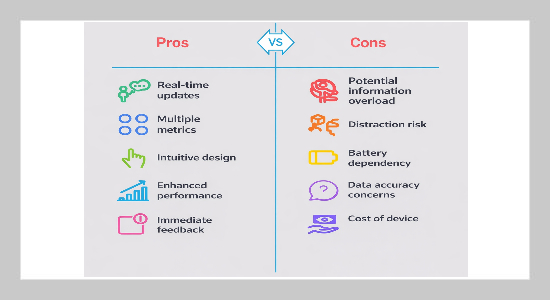
Real-Time Feedback Display Interface
Copyright The Author(s). This is an open access article distributed under the terms of the Creative Commons Attribution License (CC BY 4.0), which permits unrestricted use, distribution, and reproduction in any medium, provided the original author and source are cited.
Download Citation: BibTeX | https://doi.org/10.6180/jase.202608_31.040
Wearable embedded devices are a significant innovation in football training, providing real-time physiological and technical data crucial for skill acquisition. This study assessed their efficacy in enhancing training efficiency compared to conventional methods. Thirty amateur and semi-professional players aged 18-30 participated, training while wearing devices equipped with motion and physiological sensors. Quantitative metrics-including sprint speed, passing efficiency, joint angular kinematics, and energy expenditure-were collected over six weeks, with baseline measurements taken before the intervention. Data analysis employed correlation and regression techniques to link wearable metrics with skill improvement. Results showed significant gains, including a 12% increase in passing accuracy and a 15% improvement in sprint speed. High correlation coefficients (above 0.7 ) indicated strong relationships between wearable-derived data and performance enhancements. The combination of real-time feedback and individualized training schedules proved more effective than traditional approaches. Overall, wearable embedded devices offer a novel, evidence-based, and personalized method for optimizing football training and improving technical, physical, and biomechanical performance.
Keywords: Football training; wearable embedded devices; skill enhancement; motion monitoring; physiological metrics; biomechanics; real-time analytics; performance optimization; IoT in sports
- [1] H. Song, (2021) “Application of embedded wearable devices in football training injury prevention” Microprocessors and Microsystems 82: 103915. DOI: 10.1016/j.micpro.2021.103915.
- [2] P. Tierney. “Wearable Technology in Football Further Education Settings in the United Kingdom”. (phdthesis). Liverpool John Moores University, 2021. DOI: 10.24377/LJMU.d.00000107.
- [3] Y. Wen, (2023) “Research on the Training Model of Engineering Excellence” Journal of Applied Science and Engineering Innovation 10(2): 59–63.
- [4] D. He and L. Li, (2021) “A novel deep learning method based on modified recurrent neural network for sports posture recognition” Journal of Applied Science and Engineering 24(1): 43–48. DOI: 10.6180/jase.202102_24(1).0005.
- [5] P. Tierney, N. Clarke, and S. Roberts, (2024) “Use and application of wearable technology in football further education settings in the UK” Sport, Education and Society: 1–14. DOI: 10.1080/13573322.2024.2404896.
- [6] G. Aroganam. “Design of performance data through wearable technology for ankle movement upon football shots”. (phdthesis). Brunel University London, 2023.
- [7] F. Chen, (2021) “Athlete muscle measurement and exercise data monitoring based on embedded system and wearable devices” Microprocessors and Microsystems 82: 103901. DOI: 10.1016/j.micpro.2021.103901.
- [8] A. Seçkin, B. Ateş, and M. Seçkin, (2023) “Review on Wearable Technology in sports: Concepts, Challenges and opportunities” Applied Sciences 13(18): 10399. DOI: 10.3390/app131810399.
- [9] M. Cardinale and M. C. Varley, (2017) “Wearable training-monitoring technology: applications, challenges, and opportunities” International Journal of Sports Physiology and Performance 12(s2): S2–55. DOI: 10.1123/ijspp.2016-0423.
- [10] N. Mateus, J. Exel, S. Santos, B. Gonçalves, and J. Sampaio, (2023) “Effectiveness of wearable technology to optimize youth soccer players’ off-training behaviour and training responses: a parallel group randomized trial” Science and Medicine in Football 7(4): 384–393. DOI: 10.1080/24733938.2022.2114604.
- [11] G. M. Migliaccio, J. Padulo, and L. Russo, (2024) “The impact of wearable technologies on marginal gains in sports performance: An integrative overview on advances in sports, exercise, and health” Applied Sciences 14(15): 6649. DOI: 10.3390/app14156649.
- [12] A. bin Hamid, (2024) “Advancements in Wearable Technology For Enhancing Athletic Performance And Training” Revista Multidisciplinar de las Ciencias del Deporte 24(96):
- [13] R. Lindberg, J. Seo, and T. H. Laine, (2016) “Enhancing physical education with exergames and wearable technology” IEEE Transactions on Learning Technologies 9(4): 328–341. DOI: 10.1109/TLT.2016.2557338.
- [14] X. Li, D. Fan, J. Feng, Y. Lei, C. Cheng, and X. Li, (2024) “Systematic review of motion capture in virtual reality: Enhancing the precision of sports training” Journal of Ambient Intelligence and Smart Environments: 1–23. DOI: 10.3233/AIS-230198.
- [15] L. Yang, O. Amin, and B. Shihada, (2024) “Intelligent wearable systems: Opportunities and challenges in health and sports” ACM Computing Surveys 56(7): 1–42. DOI: 10.1145/3649456.