




Received: December 31, 2025
Accepted: May 04, 2026
Publication Date: October 09, 2026
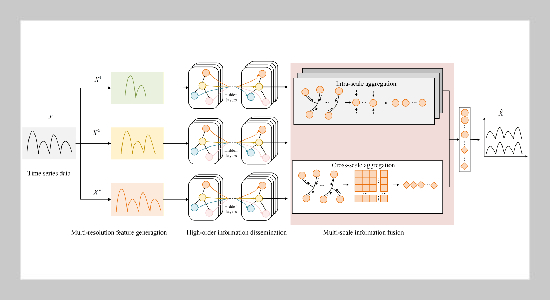
Representation of the XGB’s optimization process by the POA metaheuristic model.
Copyright The Author(s). This is an open access article distributed under the terms of the Creative Commons Attribution License (CC BY 4.0), which permits unrestricted use, distribution, and reproduction in any medium, provided the original author and source are cited.
Download Citation: BibTeX | http://dx.doi.org/10.6180/jase.202701_36.006
Supercritical Water Gasification is a promising technology for the production of hydrogen-rich gas from biomass, but it suffers from high operating costs because of the extreme temperature and pressure requirements. A reasonable estimation for hydrogen produced by this process is required for the optimization of process and scaling it for industrial purposes. The present study aims to provide a predictive framework for hydrogen mole fraction estimation in the absence of expensive experimental trials. For accurate modelling of water gasification high-dimensional space, the current research provides comparative machine learning based farmwork, which are optimized using a novel Pufferfish Optimization Algorithm by hyperparameter optimization strategy. The performance comparison indicates that optimized Extremely Gradient Boosting model achieves the highest performance in hydrogen mole fraction prediction by yielding Coefficient of Determination of 0.9992, Mean Squared Error of 0.2325 during testing process. The interpretability analysis of this model demonstrates that the Temperature and Catalyst Type parameters influential parameters, that higher catalyst type negatively impact the model output, while elevated temperatures positively influence the model output.
Keywords: Supercritical water gasification, Hydrogen, Quantitative assessment, Wet biomass conversion
- [1] M. Tauseef, A. A. Ansari, A. H. Khoja, S. R. Naqvi, R. Liaquat, W. Nimmo, and S. S. Daood, (2022) “Thermokinetics synergistic effects on co-pyrolysis of coal and rice husk blends for bioenergy production” Fuel 318: 123685. DOI: https://doi.org/10.1016/j.fuel.2022.123685.
- [2] F. F. S. Supply, Percent of World Energy And Other Eye Openers from BP’s Annual Review, 84.
- [3] M. A. Azni, R. M. Khalid, U. A. Hasran, and S. K. Kamarudin, (2023) “Review of the effects of fossil fuels and the need for a hydrogen fuel cell policy in Malaysia” Sustainability 15: 4033. DOI: https://doi.org/10.3390/su15054033.
- [4] M. A. H. Khan, S. Bonifacio, J. Clowes, A. Foulds, R. Holland, J. C. Matthews, C. J. Percival, and D. E. Shallcross, (2021) “Investigation of biofuel as a potential renewable energy source” Atmosphere 12: 1289. DOI: https://doi.org/10.3390/atmos12101289.
- [5] M. M. H. Bhuiyan and Z. Siddique, (2025) “Hydrogen as an alternative fuel: A comprehensive review of challenges and opportunities in production, storage, and transportation” International Journal of Hydrogen Energy 102: 1026-1044. DOI: https://doi.org/10.1016/j.ijhydene.2025.01.033.
- [6] A. Kruse, (2008) “Supercritical water gasification” Biofuels, Bioproducts and Biorefining: Innovation for a sustainable economy 2: 415-437. DOI: https://doi.org/10.1002/bbb.93.
- [7] G. Ruoppolo, P. Ammendola, R. Chirone, and F. Miccio, (2012) “H2-rich syngas production by fluidized bed gasification of biomass and plastic fuel” Waste Management 32: 724-732. DOI: https://doi.org/10.1016/j.wasman.2011.12.004.
- [8] J. A. Okolie, S. Nanda, A. K. Dalai, F. Berruti, and J. A. Kozinski, (2020) “A review on subcritical and supercritical water gasification of biogenic, polymeric and petroleum wastes to hydrogen-rich synthesis gas” Renewable and Sustainable Energy Reviews 119: 109546. DOI: https://doi.org/10.1016/j.rser.2019.109546.
- [9] T. L. Saaty and M. Sodenkamp, (2008) “Making decisions in hierarchic and network systems” International Journal of Applied Decision Sciences 1: 24-79. DOI: https://doi.org/10.1504/IJADS.2008.017952.
- [10] C. Wang, C. Hu, Y. Zheng, H. Jin, and Z. Wu, (2023) “Predictive control of reactor network model using machine learning for hydrogen-rich gas and biochar polygeneration by biomass waste gasification in supercritical water” Energy 282: 128441. DOI: https://doi.org/10.1016/j.energy.2023.128441.
- [11] O. Yakaboylu, J. Harinck, K. G. Smit, and W. D. Jong, (2015) “Supercritical water gasification of biomass: a literature and technology overview” Energies 8: 859-894. DOI: https://doi.org/10.3390/en8020859.
- [12] S. K. Bishnu, S. Y. Alnouri, and D. M. Al-Mohannadi, (2023) “Computational applications using data driven modeling in process Systems: A review” Digital Chemical Engineering 8: 100111. DOI: https://doi.org/10.1016/j.dche.2023.100111.
- [13] M. Marković, M. Bossart, and B.-M. Hodge, (2023) “Machine learning for modern power distribution systems: Progress and perspectives” Journal of Renewable and Sustainable Energy 15: 032301. DOI: https://doi.org/10.1063/5.0147592.
- [14] Z. Ma, J. Wang, Y. Feng, R. Wang, Z. Zhao, and H. Chen, (2023) “Hydrogen yield prediction for supercritical water gasification based on generative adversarial network data augmentation” Applied Energy 336: 120814. DOI: https://doi.org/10.1016/j.apenergy.2023.120814.
- [15] W. Zhao, Y. Chen, J. Wu, Z. Zhu, and J. Wang, (2021) “Study on CO2 capture upgrading of existing coal fired power plants with gas steam mixture cycle and supercritical water coal gasification” International Journal of Greenhouse Gas Control 112: 103482. DOI: https://doi.org/10.1016/j.ijggc.2021.103482.
- [16] M. Mohamadi-Baghmolaei, P. Zahedizadeh, M. Khajeh, S. Zendehboudi, and N. M. C. Saady, (2024) “Developing a hybridized thermodynamic and data-driven model for catalytic supercritical water gasification of biomass for hydrogen production” Energy Conversion and Management 307: 118302. DOI: https://doi.org/10.1016/j.enconman.2024.118302.
- [17] Z. U. Haq, H. Ullah, M. N. A. Khan, S. R. Naqvi, and M. Ahsan, (2022) “Hydrogen production optimization from sewage sludge supercritical gasification process using machine learning methods integrated with genetic algorithm” Chemical Engineering Research and Design 184: 614-626. DOI: https://doi.org/10.1016/j.cherd.2022.06.020.
- [18] C. C. Ukwuoma, D. Cai, A. L. Jonathan, N. Chen, C. Sey, N. W. Ntia, O. Bamisile, and Q. Huang, (2024) “Enhancing hydrogen production prediction from biomass gasification via data augmentation and explainable AI: A comparative analysis” International Journal of Hydrogen Energy 68: 755-776. DOI: https://doi.org/10.1016/j.ijhydene.2024.04.283.
- [19] M. N. A. Khan, Z. U. Haq, H. Ullah, S. R. Naqvi, U. Ahmed, M. Zaman, and N. A. S. Amin, (2024) “Prediction of hydrogen yield from supercritical gasification process of sewage sludge using machine learning and particle swarm hybrid strategy” International Journal of Hydrogen Energy 54: 512-525. DOI: https://doi.org/10.1016/j.ijhydene.2023.01.033.
- [20] S. Azadvar and O. Tavakoli, (2024) “Data-driven interpretation, comparison and optimization of hydrogen production from supercritical water gasification of biomass and polymer waste: Applying ensemble and differential evolution in machine learning algorithms” International Journal of Hydrogen Energy 85: 511-525. DOI: https://doi.org/10.1016/j.ijhydene.2024.08.
- [21] K. Khandelwal and A. K. Dalai, (2024) “Prediction of individual gas yields of supercritical water gasification of lignocellulosic biomass by machine learning models” Molecules 29: 2337. DOI: https://doi.org/10.3390/molecules29102337.
- [22] K. Khandelwal, S. Nanda, and A. K. Dalai, (2025) “Machine learning modeling of supercritical water gasification for predictive hydrogen production from waste biomass” Biomass and Bioenergy 197: 107816. DOI: https://doi.org/10.1016/j.biombioe.2025.107816.
- [23] S. Heddam, (2020) “Intelligent data analytics approaches for predicting dissolved oxygen concentration in river: extremely randomized tree versus random forest, MLPNN and MLR” Springer: 89-107. DOI: https://doi.org/10.1007/978-981-15-5772-9_5.
- [24] F. Afshar, S. Seyedabrishami, and S. Moridpour, (2022) “Application of Extremely Randomised Trees for exploring influential factors on variant crash severity data” Scientific Reports 12: 11476. DOI: https://doi.org/10.1038/s41598-022-15693-7.
- [25] R. Al-Qasimi and F. Al-Hajri, (2024) “The Implementation of a Support Vector Regression Model Utilizing Meta-Heuristic Algorithms for Predicting Undrained Shear Strength” Advances in Engineering and Intelligence Systems 3: 49-66. DOI: https://doi.org/10.22034/aeis.2024.489661.1253.
- [26] H. Alkattan, B. Turyasingura, B. Willbroad, and A. A. K. Jaafar, (2025) “Economic performance classification in Iraq (2000-2023): A statistical analysis using machine learning with support vector machines and random forest” EDRAAK 2025: 29-37. DOI: https://doi.org/10.70470/EDRAAK/2025/005.
- [27] M. Imane, E.-S. Aoula, and E. H. Achouyab, (2022) “Using Bayesian ridge regression to predict the overall equipment effectiveness performance” 2022 2nd International conference on innovative research in applied science, engineering and technology (IRASET): 1-4. DOI: https://doi.org/10.1109/IRASET52964.2022.9738316.
- [28] E. Y. Kaya, I. Ali, Z. Ceylan, and S. Ceylan, (2024) “Prediction of higher heating value of hydrochars using Bayesian optimization tuned Gaussian process regression based on biomass characteristics and process conditions” Biomass and Bioenergy 180: 106993. DOI: https://doi.org/10.1016/j.biombioe.2023.106993.
- [29] S. Rodgers, A. Bowler, L. Wells, C. S. Lee, M. Hayes, S. Poulston, E. Lester, F. Meng, J. McKechnie, and A. Conradie, (2024) “A surrogate model for the economic evaluation of renewable hydrogen production from biomass feedstocks via supercritical water gasification” International Journal of Hydrogen Energy 49: 277-294. DOI: https://doi.org/10.1016/j.ijhydene.2023.08.016.
- [30] Y. Feng and Q. Wu, (2022) “A statistical learning assessment of Huber regression” Journal of Approximation Theory 273: 105660. DOI: https://doi.org/10.1016/j.jat.2021.105660.
- [31] M. K. Çodur, (2023) “Ensemble machine learning approaches for prediction of Türkiye’s energy demand” Energies 17: 74. DOI: https://doi.org/10.3390/en17010074.
- [32] R. Sibindi, R. W. Mwangi, and A. G. Waititu, (2023) “A boosting ensemble learning based hybrid light gradient boosting machine and extreme gradient boosting model for predicting house prices” Engineering Reports 5: e12599. DOI: https://doi.org/10.1002/eng2.12599.
- [33] S. Zhao, J. Li, C. Chen, B. Yan, J. Tao, and G. Chen, (2021) “Interpretable machine learning for predicting and evaluating hydrogen production via supercritical water gasification of biomass” Journal of Cleaner Production 316: 128244. DOI: https://doi.org/10.1016/j.jclepro.2021.128244.
- [34] O. Al-Baik, S. Alomari, O. Alssayed, S. Gochhait, I. Leonova, U. Dutta, O. P. Malik, Z. Montazeri, and M. Dehghani, (2024) “Pufferfish optimization algorithm: a new bio-inspired metaheuristic algorithm for solving optimization problems” Biomimetics 9: 65. DOI: https://doi.org/10.3390/biomimetics9020065.