





1School of Design, Hefei University, Hefei, Anhui 230601, China
2Anhui Geological Museum, Hefei, Anhui 230031, China
Received: April 25, 2026
Accepted: July 08, 2026
Publication Date: August 17, 2026
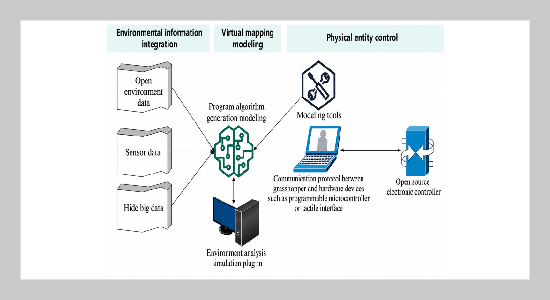
Digital tool platform for L-system and complex network-based landscape response generation
Copyright The Author(s). This is an open access article distributed under the terms of the Creative Commons Attribution License (CC BY 4.0), which permits unrestricted use, distribution, and reproduction in any medium, provided the original author and source are cited.
Download Citation: BibTeX | http://dx.doi.org/10.6180/jase.202611_34.047
Accurate quantification of natural landscapes is of great significance to the study of ecological benefits. At present, most systems are still dominated by human intervention. This paper addresses the limitation of existing landscape design systems that prioritize visual aesthetics over ecological functionality and lack accurate ecosystem simulation. It proposes a natural landscape generation model combining L-system theory, complex network analysis, and Generative Adversarial Networks (GAN). The system encodes L-system rules as input to a GAN generator, enabling the creation of realistic and ecologically meaningful landscape structures. By analyzing landscape characteristics, topology, and growth functions, the model ensures effective visualization of complex landscape components. Experimental results demonstrate that the proposed L-system-GAN model achieves significantly higher resolvability and operates 5.4 times faster than traditional GAN approaches. Additionally, it meets commercial standards in generation quality, computational efficiency, and user experience, with strong potential for deployment in embedded systems. Therefore, subsequent optimization directions can focus on extreme scenario robustness and energy consumption control. The proposed framework utilizes publicly available terrain and landscape-related datasets, with key training parameters including controlled learning rate, batch size, and iteration settings for GAN optimization. Performance is evaluated using fractal dimension (FD), resolvability (SVR), and generation time metrics, ensuring consistent and verifiable assessment
of model effectiveness.
Keywords: L-system; complex networks; natural landscapes; generation system; ecological modeling, topology analysis, generative design
- [1] L. Zhao and K. Zhang, (2022) “Application of a random forest algorithm in natural landscape animation design” Computational Intelligence and Neuroscience 2022: 2820558. DOI: 10.1155/2022/2820558.
- [2] S. Liu, X. Zhao, X. Meng, W. Ji, L. Liu, W. Li, and Q. Yang, (2024) “Research on the application of extended reality in the construction and management of landscape engineering” Electronics 13(5): 897. DOI: 10.3390/electronics13050897.
- [3] D. Casino Rubio, F. Rodriguez Ramirez, and H. Fernández-Elorza, (2024) “Strategies for sustainable rooting in landscape: arrangements between architecture and the ground” Buildings 14(4): 1006. DOI: 10.3390/buildings14041006.
- [4] M. Liu and S. Nijhuis, (2022) “Talking about landscape spaces: towards a spatial-visual landscape design vocabulary” The Design Journal 25(2): 263–281. DOI: 10.1080/14606925.2021.2021672.
- [5] Y. D. Şahin and C. Altunkasa, (2023) “Holistic Approach to Ecological Design Parameters of Building and Landscape Design on Outdoor Thermal Comfort in Hot, Humid Climate” Prostor 31(1(65)): 38–51. DOI: 10.31522/p.31.1(65).4.
- [6] S. Jacobs and T. Wiens, (2024) “Landscapes of care: politics, practices, and possibilities” Landscape Research 49(3): 428–444. DOI: 10.1080/01426397.2023.2266394.
- [7] Y. Dai, (2022) “Application of regional culture in landscape architecture design under the background of data fusion” Scientific Programming 2022: 6240313. DOI: 10.1155/2022/6240313.
- [8] N. Kikuchi, T. Fukuda, and N. Yabuki, (2022) “Future landscape visualization using a city digital twin: integration of augmented reality and drones with implementation of 3D model-based occlusion handling” Journal of Computational Design and Engineering 9(2): 837–856. DOI: 10.1093/jcde/qwac032.
- [9] K. Endo, E. S. Lin, and C. L. Tan, (2022) “Augmenting and virtualising landscape architectural teaching and learning” Journal of Digital Landscape Architecture 7: 592–607. DOI: 10.14627/537724055.
- [10] M. Amani-Beni, M. R. Khalilnezhad, and S. Mahdizadeh, (2022) “Hierarchical access to the edible landscape: the Akbarieh garden in Iran” Landscape Research 47(3): 333–353. DOI: 10.1080/01426397.2021.2016667.
- [11] L. Zhou, (2025) “An enhanced CycleGAN approach for landscape design: style transfer and color harmonization” Alexandria Engineering Journal 133: 225–238. DOI: 10.1016/j.aej.2025.11.007.
- [12] Z. Hou, N. Lang, and X. Zhou, (2025) “WL-GAN: learning to sample in generative latent space” Information Sciences 700(C): 121834. DOI: 10.1016/j.ins.2024.121834.
- [13] R. Hashemi Sigari and T. Panagopoulos, (2024) “A multicriteria decision-making approach for urban water features: ecological landscape architecture evaluation” Land 13: 1799. DOI: 10.3390/land13111799.
- [14] R. J. Fletcher Jr., T. A. Smith, N. Kortessis, E. M. Bruna, and R. D. Holt, (2023) “Landscape experiments unlock relationships among habitat loss, fragmentation, and patch-size effects” Ecology 104: e4037–e4048. DOI: 10.1002/ecy.4037.
- [15] M. Carta, M. R. Gisotti, and F. Lucchesi, (2022) “Settlements and urban morphological quality in landscape planning: analytical models and regulating tools in the landscape plan of the Regione Toscana” Sustainability 14(3): 1867. DOI: 10.3390/su14031867.