





Received: May 05, 2026
Accepted: June 26, 2026
Publication Date: August 12, 2026
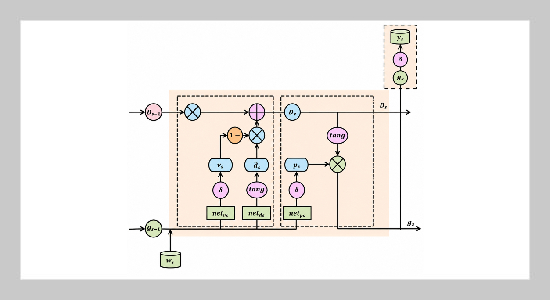
Architecture of the Adaptive Gated Long Short-Term Memory (AG-LSTM) Unit
Copyright The Author(s). This is an open access article distributed under the terms of the Creative Commons Attribution License (CC BY 4.0), which permits unrestricted use, distribution, and reproduction in any medium, provided the original author and source are cited.
Download Citation: BibTeX | http://dx.doi.org/10.6180/jase.202611_34.034
New energy vehicles (NEVs), powered by sustainable energy, are emerging as a cleaner alternative to conventional vehicles. Their performance and safety depend heavily on the health of critical components, making accurate fault diagnosis essential. This study proposes an advanced fault detection framework for NEVs, focusing on fault identification and classification in the drivetrain using deep learning techniques. Sensor data from electric vehicles, including current, voltage, motor speed, and environmental conditions, are pre-processed through normalization and missing-value imputation to ensure consistency. Feature extraction is performed using Wavelet Transform (WT) and Fast Fourier Transform (FFT) to capture both transient and steady-state behaviours. The proposed Enriched Crow Search Optimizer-based Adaptive Gated Long Short-Term Memory (ECS-AG-LSTM) model enhances LSTM adaptability and fault classification accuracy through optimization. Experimental results demonstrate superior performance, achieving 98.5% accuracy, 98.31% recall, 98.42% precision, 98.51% F1-score, and an R2 value of 0.956 . The findings confirm that ECS-AG-LSTM provides a robust and reliable solution for improving NEV safety and operational dependability.
Keywords: New Energy Vehicles (NEVs), Fault Diagnosis, Deep Learning (DL), Enriched Crow Search Optimizer-driven Adaptive Gated Long Short-Term Memory (ECS-AGLSTM), Sensor Data ion.
- [1] Y. Chen, J. Zhang, S. Zhai, and Z. Hu, (2024) “Data-Driven Modeling and Fault Diagnosis for Fuel Cell Vehicles Using Deep Learning” Energy AI 16: 100345. DOI: 10.1016/j.egyai.2024.100345.
- [2] C. S. A. Gong, C. H. S. Su, and K. H. Tseng, (2020) “Implementation of Machine Learning for Fault Classification on Vehicle Power Transmission System” IEEE Sensors Journal 20(24): 15163–15176. DOI: 10.1109/JSEN.2020.3010291.
- [3] H. Kaplan, K. Tehrani, and M. Jamshidi, (2021) “A Fault Diagnosis Design Based on Deep Learning Approach for Electric Vehicle Applications” Energies 14(20): 6599. DOI: 10.3390/en14206599.
- [4] M. U. I. Khan, M. I. H. Pathan, M. M. Rahman, M. M. Islam, M. A. R. Chowdhury, M. S. Anower, et al., (2024) “Securing Electric Vehicle Performance: Machine Learning-Driven Fault Detection and Classification” IEEE Access: DOI: 10.1109/ACCESS.2024.3400913.
- [5] M. Z. Khaneghah, M. Alzayed, and H. Chaoui, (2023) “Fault Detection and Diagnosis of the Electric Motor Drive and Battery System of Electric Vehicles” Machines 11(7): 713. DOI: 10.3390/machines11070713.
- [6] X. Liang, P. Wang, X. Cao, X. Wan, P. Chao, X. Zhao, et al., (2025) “Research on Improving the Safety of New Energy Vehicles Exploits Vehicle Operating Data” Safety Science 181: 106681. DOI: 10.1016/j.ssci.2024.106681.
- [7] H. Liu, X. Song, and F. Zhang, (2021) “Fault Diagnosis of New Energy Vehicles Based on Improved Machine Learning” Soft Computing 25(18): 12091–12106. DOI: 10.1007/s00500-021-05860-9.
- [8] P. Wang, J. Chen, F. Lan, Y. Li, and Y. Feng, (2024) “Multiscale Feature Fusion Approach to Early Fault Diagnosis in EV Power Battery Using Operational Data” Journal of Energy Storage 98: 112812. DOI: 10.1016/j.est.2024.112812.
- [9] Y. Wang and W. Li, (2021) “Transfer-Based Deep Neural Network for Fault Diagnosis of New Energy Vehicles” Frontiers in Energy Research 9: 796528. DOI: 10.3389/fenrg.2021.796528.
- [10] Y. Zhang, C. Liao, M. Liu, and Z. She, (2024) “PLC Technology Under the New Energy Vehicle Motor Drive System Fault Detection Research” Journal of Electrical Systems 20(9s): 537–545.
- [11] J. Zhao, X. Feng, J. Wang, Y. Lian, M. Ouyang, and A. F. Burke, (2023) “Battery Fault Diagnosis and Failure Prognosis for Electric Vehicles Using Spatiotemporal Transformer Networks” Applied Energy 352: 121949. DOI: 10.1016/j.apenergy.2023.121949.
- [12] K. Zhao and H. Bai, (2024) “Safety Management System of New Energy Vehicle Power Battery Based on Improved LSTM” Energy Informatics 7(1): 101. DOI: 10.1186/s42162-024-00411-6.
- [13] C. Wu, R. Sehab, A. Akrad, and C. Morel, (2022) “Fault Diagnosis Methods and Fault Tolerant Control Strategies for the Electric Vehicle Powertrains” Energies 15(13): 4840. DOI: 10.3390/en15134840.
- [14] X. Wang, S. Lu, K. Chen, Q. Wang, and S. Zhang, (2021) “Bearing Fault Diagnosis of Switched Reluctance Motor in Electric Vehicle Powertrain via Multisensor Data Fusion” IEEE Transactions on Industrial Informatics 18(4): 2452–2464. DOI: 10.1109/TII.2021.3095086.