


Received: March 25, 2026
Accepted: July 02, 2026
Publication Date: August 09, 2026
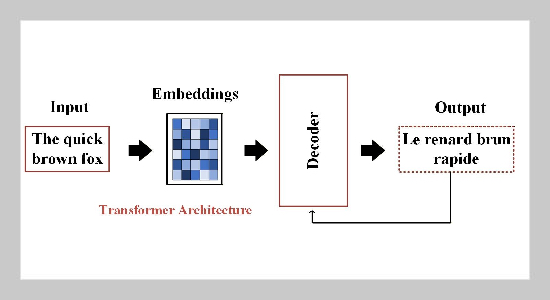
Transformer Based Translation Architecture
Copyright The Author(s). This is an open access article distributed under the terms of the Creative Commons Attribution License (CC BY 4.0), which permits unrestricted use, distribution, and reproduction in any medium, provided the original author and source are cited.
Download Citation: BibTeX | http://dx.doi.org/10.6180/jase.202611_34.026
Artificial intelligence (AI) has significantly advanced machine translation through deep learning-based approaches. This study presents a comparative evaluation of Neural Machine Translation (NMT) and Transformer BASE models for Chinese-English automatic translation using a parallel corpus containing 200,000 bilingual sentence pairs. The dataset was pre-processed through sentence cleaning, tokenization, and Byte Pair Encoding (BPE)-based subword segmentation to improve translation quality. Both models were implemented and evaluated using Bilingual Evaluation Understudy (BLEU), METEOR, and Translation Edit Rate (TER) metrics. Experimental results demonstrated that the Transformer model outperformed the conventional Neural Machine Translation (NMT) model, achieving improvements of +6.30 BLEU and +5.60 METEOR while reducing TER by
3.77. Ablation analysis further confirmed the importance of multi-head self-attention and positional encoding in improving translation performance. The findings indicate that Transformer-based architectures provide higher translation accuracy, semantic fluency, and computational efficiency, making them suitable for modern multilingual translation applications.
Keywords: Artificial Intelligence, Neural Machine Translation, Transformer Architecture, Bilingual Evaluation Understudy, Translation Edit Rate
- [1] S. M. Abdelhalim, A. A. Alsahil, and Z. A. Al-suhaibani, (2025) “Artificial intelligence tools and literary translation: a comparative investigation of ChatGPT and Google Translate from novice and advanced EFL student translators’ perspectives” Cogent Arts & Humanities 12(1): 2508031. DOI: 10.1080/23311983.2025.2508031.
- [2] M. A. AlAfnan, (2024) “Artificial Intelligence and Language: Bridging Arabic and English with Technology” Journal of Ecohumanism 3(8): DOI: 10.62754/joe.v3i8.4961.
- [3] N. Alowedi and A. Al-Ahdal, (2023) “Artificial Intelligence based Arabic-to-English machine versus human translation of poetry: An analytical study of outcomes” Journal of Namibian Studies: History Politics Culture 33: DOI: 10.59670/jns.v33i.800.
- [4] W. Alsubhi, (2024) “Attitudes of translation agencies and professional translators in Saudi Arabia towards translation management systems” Saudi Journal of Language Studies 4: 331. DOI: 10.1108/SJLS-09-2023-0040.
- [5] O. Asscher, (2024) “The explanatory power of descriptive translation studies in the machine translation era” Perspectives 32(2): 261–277. DOI: 10.1080/0907676X.2022.2136005.
- [6] D. Ataman et al., (2025) “Machine Translation in the Era of Large Language Models: A Survey of Historical and Emerging Problems” Information 16(9): 723. DOI: 10.3390/info16090723.
- [7] Y. Bai, (2025) “Exploring the role and impact of artificial intelligence in personalized foreign language teaching” Discover Artificial Intelligence 5(1): 1–21. DOI: 10.1007/s44163-025-00546-9.
- [8] L. Cao and J. Fu, (2023) “Improving Efficiency and Accuracy in English Translation Learning: Investigating a Semantic Analysis Correction Algorithm” Applied Artificial Intelligence 37(1): 2219945. DOI: 10.1080/08839514.2023.2219945.
- [9] M. Chen, (2024) “Trust, understanding, and machine translation: the task of translation and the responsibility of the translator” AI & SOCIETY 39(5): 2307–2319. DOI: 10.1007/s00146-023-01681-6.
- [10] S. Eo et al., (2021) “Comparative Analysis of Current Approaches to Quality Estimation for Neural Machine Translation” Applied Sciences 11(14): 6584. DOI: 10.3390/app11146584.
- [11] Y. Jiang, X. Li, H. Luo, S. Yin, and O. Kaynak, (2022) “Quo vadis artificial intelligence?” Discover Artificial Intelligence 2(1): 4. DOI: 10.1007/s44163-022-00022-8.
- [12] X. Shu and C. Xu, (2022) “Artificial Intelligence-Based English Self-Learning Effect Evaluation and Adaptive Influencing Factors Analysis” Mathematical Problems in Engineering 2022(1): 2776823. DOI: 10.1155/2022/2776823.
- [13] Y. Yuxiu, (2024) “Application of translation technology based on AI in translation teaching” Systems and Soft Computing 6: 200072. DOI: 10.1016/j.sasc.2024.200072.
- [14] . Chinese-English translation dataset. Kaggle Dataset. Accessed: May 13, 2026. 2023