





Junjie Liu1,2 and Pingping Zhang1,2
1School of Hebi Institute of Engineering and Technology, Henan Polytechnic University, Hebi 458000, Henan Province, China
2School of Electronics And Information, Henan Institute of Information Science and Technology, Hebi 458000, Henan Province, China
Received: April 25, 2026
Accepted: July 05, 2026
Publication Date: August 05, 2026
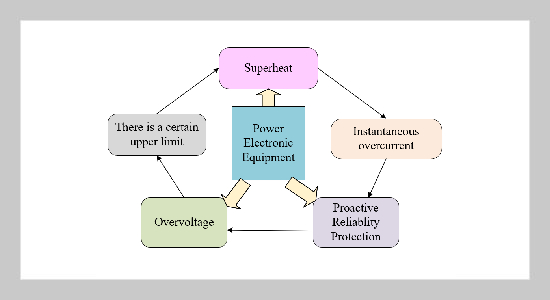
Thermal and Electrical Stress Factors Affecting Power Electronic Equipment Reliability
Copyright The Author(s). This is an open access article distributed under the terms of the Creative Commons Attribution License (CC BY 4.0), which permits unrestricted use, distribution, and reproduction in any medium, provided the original author and source are cited.
Download Citation: BibTeX | http://dx.doi.org/10.6180/jase.202611_34.021
Inversion, conversion, and motor drives are power electronic devices central to current industrial systems and are often subject to operational challenges created by thermal stress, voltage imbalance, and dynamic loading. These problems particularly affect China’s market sectors of high performance, where reliability and continuous operation matter. While fault detection systems originally used in such applications are likely to be somewhat reactive and thus fall short of watching systems fail in real-time, this study introduces a predictive framework and real-time estimation for monitoring two upmost operating states, namely: junction temperature and DC bus voltage via a discrete Kalman filter. The structure of the framework is based on a recursive state space model that receives real-time sensor input to dynamically predict and correct internal state variables. The proposed discrete Kalman filter framework continuously estimates and predicts junction temperature and DC bus voltage from real-time sensor measurements, enabling proactive fault detection and thermal management before critical operating limits are reached under dynamic loading conditions. The algorithm is lightweight, and therefore suitable for embedded systems, industrial applications, and applications with high computational loads involved. An additional condition for the model is based on biologically inspired thermal stress indicators that enhance validation of thermal behavior. Validated with simulated datasets at various thermal and load conditions, the model instigates empirical results regarding its predictive performance. Experimental results confirm above 97 percent accuracy level for junction temperature prediction by the proposed system and a significant reduction in failure risk. In addition, multiple sensory data fusion further strengthens prediction’s robustness, enhancing early fault detection for proactive thermal management. Compared with conventional threshold-based models and those based on an artificial intelligence model, discrete Kalman filter provides
more efficient, reliable, and scalable real-time state estimation.
Keywords: Kalman filter, power electronics, state estimation, predictive control, thermal management
- [1] H. Keshmiri Neghab, M. Jamshidi, and H. Keshmiri Neghab, (2022) “Digital Twin of a Magnetic Medical Microrobot with Stochastic Model Predictive Controller Boosted by Machine Learning in Cyber-Physical Healthcare Systems” Information 13(7): 321. DOI: 10.3390/info13070321.
- [2] M. Rashed, I. Gondal, J. Kamruzzaman, and S. Islam, (2021) “State Estimation within IED Based Smart Grid Using Kalman Estimates” Electronics 10(15): 1783. DOI: 10.3390/electronics10151783.
- [3] B. Xiong, S. Dong, Y. Li, J. Tang, Y. Su, and H. B. Gooi, (2023) “Peak Power Estimation of Vanadium Redox Flow Batteries Based on Receding Horizon Control” IEEE Journal of Emerging and Selected Topics in Power Electronics 11(1): 154–165. DOI: 10.1109/JESTPE.2022.3152588.
- [4] Y. Jia, L. Brancato, F. Cadini, and M. Giglio, (2024) “Real-Time Detection of Internal Short Circuits in Lithium-Ion Batteries Using an Extend Kalman Filter: A Novel Approach Combining Electrical and Thermal Measurements” International Journal of Prognostics and Health Management 15(3): DOI: 10.36001/ijphm.2024.v15i3.3848.
- [5] M. Messing, S. Rahimifard, T. Shoa, and S. Habibi, (2021) “Low Temperature, Current Dependent Battery State Estimation Using Interacting Multiple Model Strategy” IEEE Access 9: 99876–99889. DOI: 10.1109/ACCESS.2021.3095938.
- [6] M. Shanks, U. Inyang-Udoh, and N. Jain, (2023) “Design and Validation of a State-Dependent Riccati Equation Filter for State of Charge Estimation in a Latent Thermal Storage Device” Journal of Dynamic Systems, Measurement, and Control 145(9): 091002. DOI: 10.1115/1.4062707.
- [7] A. Khalid, S. A. R. Kashif, N. U. Ain, M. Awais, M. Al Simiee, J. E. M. Carreño, J. C. Vasquez, J. M. Guerrero, and B. Khan, (2023) “Comparison of Kalman Filters for State Estimation Based on Computational Complexity of Li-Ion Cells” Energies 16(6): 2710. DOI: 10.3390/en16062710.
- [8] Z. Xue, C. Zhang, Z. Li, and J. Cheng, (2022) “An On-Site Temperature Prediction Method for Passive Thermal Management of High-Temperature Logging Apparatus” Measurement and Control 55(9–10): 1180–1189. DOI: 10.1177/00202940221076809.
- [9] R. R. Kumar, C. Bharatiraja, K. Udhayakumar, S. Devakirubakaran, K. S. Sekar, and L. Mihet-Popa, (2023) “Advances in Batteries, Battery Modeling, Battery Management System, Battery Thermal Management, SOC, SOH, and Charge/Discharge Characteristics in EV Applications” IEEE Access 11: 105761–105809. DOI: 10.1109/ACCESS.2023.3318121.
- [10] M. Chebaani, M. M. Mahmoud, A. F. Tazay, M. I. Mosaad, and N. A. Nouraldin, (2023) “Extended Kalman Filter Design for Sensorless Sliding Mode Predictive Control of Induction Motors Without Weighting Factor: An Experimental Investigation” PLOS ONE 18(11): e0293278. DOI: 10.1371/journal.pone.0293278.
- [11] C. Jia, W. Qiao, J. Cui, and L. Qu, (2022) “Adaptive Model Predictive Control-Based Real-Time Energy Management of Fuel Cell Hybrid Electric Vehicles” IEEE Transactions on Power Electronics 38(2): 2681–2694. DOI: 10.1109/TPEL.2022.3214782.
- [12] Y. Li et al., (2021) “Electrochemical Model-Based Fast Charging: Physical Constraint-Triggered PI Control” IEEE Transactions on Energy Conversion 36(4): 3208–3220. DOI: 10.1109/TEC.2021.3065983.
- [13] Y. Liu et al., (2021) “Dynamic State Estimation for Power System Control and Protection” IEEE Transactions on Power Systems 36(6): 5909–5921. DOI: 10.1109/TPWRS.2021.3079395.
- [14] Y. Li, Z. Wei, C. Xie, and D. M. Vilathgamuwa, (2023) “Physics-Based Model Predictive Control for Power Capability Estimation of Lithium-Ion Batteries” IEEE Transactions on Industrial Informatics 19(11): 10763–10774. DOI: 10.1109/TII.2022.3233676.
- [15] S. Jafari and Y.-C. Byun, (2022) “Prediction of the Battery State Using the Digital Twin Framework Based on the Battery Management System” IEEE Access 10: 124685–124696. DOI: 10.1109/ACCESS.2022.3225093.