




Received: July 08, 2026
Accepted: July 29, 2026
Publication Date: August 05, 2026
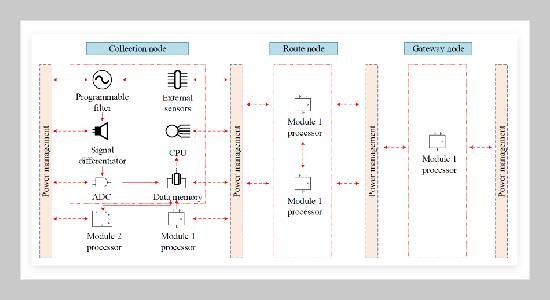
Hardware transmission system for WSNs with multimode multiplexing
Copyright The Author(s). This is an open access article distributed under the terms of the Creative Commons Attribution License (CC BY 4.0), which permits unrestricted use, distribution, and reproduction in any medium, provided the original author and source are cited.
Download Citation: BibTeX | http://dx.doi.org/10.6180/jase.202611_34.011
Mineral geological exploration requires mechanical data to be collected and analyzed. To process these data effectively, the mechanical data acquisition method based on analog-to-digital converter is adopted in the experiment and optimized. In the experiment, integrated empirical modal decomposition is used for noise reduction processing of data signals, and convolutional neural network is used for feature identification and classification processing of data. After performance validation, for the Analog-to-digital Converter (ADC) based mechanical data acquisition method, the amplitude error between the standard signal and the test signal is between 0.7% and 3.1%, and the frequency error is from 0.05% to 0.30%. After optimization, the proposed method has the lowest final loss value of 0.075. it has the highest accuracy of 99.2%. Also, the proposed method has the lowest Mean Absolute Error (MAE) and Root Mean Squared Error (RMSE) values among all models with 0.38% and 0.094% respectively. In conclusion, the proposed method can effectively process the mechanical acquisition data in mineral geological exploration, which is favorable to the application of ADC-based mechanical data acquisition method in mineral geological exploration
Keywords: ADC; Data acquisition; Geological exploration; Wireless Sensor Networks; Ensemble Empirical Mode Decomposition; Convolutional Neural Networks; Mineral products
- [1] Q. Qiu, B. Wang, K. Ma, H. Lü, L. Tao, and Z. Xie, (2023) “A practical approach to constructing a geological knowledge graph: A case study of mineral exploration data” Journal of Earth Science 34(5): 1374–1389. DOI: 10.1007/s12583-023-1809-3.
- [2] J. Misiak, (2022) “Geological exploration of the Moon” Gospodarka Surowcami Mineralnymi 38(4): 91–104. DOI: 10.24425/gsm.2022.144095.
- [3] H. Rajadurai and U. D. Gandhi, (2022) “A stacked ensemble learning model for intrusion detection in wireless network” Neural Computing and Applications 34(18): 15387–15395. DOI: 10.1007/s00521-020-04986-5.
- [4] P. P. Groumpos. “A critical historic overview of artificial intelligence: issues, challenges, opportunities, and threats”. In: Artificial Intelligence and Applications. 1. 4. 2023, 181–197. DOI: 10.47852/bonviewAIA3202689.
- [5] C. Liu, X. Fu, Y. Li, H. Wang, L. Sun, J. Lu, J. Li, Y. Sun, L. Shi, H. Hu, H. Yuan, and Z. Yang, (2023) “Petroleum exploration breakthrough and geological significance in Cretaceous Yingcheng and Denglouku formations of Shuangcheng area, northern Songliao Basin, NE China” Petroleum Exploration and Development 50(1): 72–84. DOI: 10.1016/S1876-3804(22)60370-7.
- [6] B. Chaudhari, (2022) “Role of swarm intelligence algorithms on secured wireless network sensor environment-A comprehensive review” International Journal of Performability Engineering 18(2): 92–100. DOI: 10.23940/ijpe.22.02.p3.92100.
- [7] E. Suganya and S. Sountharrajan, (2022) “Gradient boost-modified classifier with particle swarm optimization and stochastic diffusion search method for data optimization in wireless sensor networks” Adhoc & Sensor Wireless Networks 54(3/4): 193–218. DOI: 10.32908/ahswn.v54.9811.
- [8] A. A. Elsway, A. M. Khedr, O. Alfawaz, and W. Osamy, (2023) “Energy-aware disjoint dominating sets-based whale optimization algorithm for data collection in WSNs” Journal of Supercomputing 79(4): 4318–4350. DOI: 10.1007/s11227-022-04814-8.
- [9] M. V. N. Chakravarthi and B. Chandramohan, (2022) “Calibration of mismatches in time-interleaved adcs using teacher learner-based optimization algorithm” Journal of Circuits, Systems and Computers 31(09): 1–14. DOI: 10.1142/S0218126622501638.
- [10] S. Huang, X. Sun, X. Peng, H. Jiang, and S. Yu, (2022) “Achieving high in situ training accuracy and energy efficiency with analog non-volatile synaptic devices” ACM Transactions on Design Automation of Electronic Systems 27(4): 1–19. DOI: 10.1145/3500929.
- [11] Y. Zhang, S. Liu, Y. Liang, and Z. Zhu, (2022) “A 2nd-order noise shaping SAR ADC realizing NTF zero-pole optimization based on IIR-FIR filter” Chinese Journal of Electronics 31(1): 33–39. DOI: 10.1049/cje.2020.00.309.
- [12] A. Sardar, S. Dey, and S. MISR, (2022) “An innovative FPGA-based ADC/DAC design using 1-bit adaptive-delta modulation” I-Manager’s Journal on Circuits & Systems 10(2): 1–9. DOI: 10.26634/jcir.10.2.18902.
- [13] S. Bashir, N. U. D. Hakim, and G. M. Rather, (2023) “Analog-to-digital converters: a review of existing architectures and a new proposal for high resolution sensors” Sensor Review 43(2): 125–130. DOI: 10.1108/SR-09-2022-0369.
- [14] A. I. Al-Sulaifanie, B. K. Al-Sulaifanie, and S. Biswas, (2022) “Recent trends in clustering algorithms for wireless sensor networks: A comprehensive review” Computer Communications 191: 395–424. DOI: 10.1016/j.comcom.2022.05.006.
- [15] Y. Zhang, L. Liu, M. Wang, J. Wu, and H. Huang, (2022) “An improved routing protocol for raw data collection in multihop wireless sensor networks” Computer Communications 188: 66–80. DOI: 10.1016/j.comcom.2022.02.016.
- [16] M. Ajoudani, A. Shiekholeslami, and A. Zakariazadeh, (2022) “Improving state estimation accuracy in active distribution networks by coordinating real-time and pseudo-measurements considering load uncertainty” IET Generation, Transmission & Distribution 16(8): 1620–1638. DOI: 10.1049/gtd2.12388.
- [17] D. T. Al-Zuhairi, A. S. Hameed, and I. S. Hameed, (2022) “Dual-stage SVD basis approach for ECG signal associated noise removal” Signal, Image and Video Processing 16(6): 1489–1496. DOI: 10.1007/s11760-021-02102-1.
- [18] M. Wang, C. Xiong, and Z. Shang, (2025) “Predictive evaluation of dynamic responses and frequencies of bridge using optimized VMD and genetic algorithm-back propagation approach” Journal of Civil Structural Health Monitoring 15(1): 173–190. DOI: 10.1007/s13349-024-00833-6.
- [19] B. Heythem, M. Djerioui, T. Beghriche, A. Zerguine, and A. Beghdadi, (2024) “Customized CNN for multi-class classification of brain tumor based on MRI images” Arabian Journal for Science and Engineering 49(12): 16903–16918. DOI: 10.1007/s13369-024-09284-z.
- [20] R. Chavez, D. Colosi, H. Salehi, M. A. Ayala, M. L. Chairez, and M. Mahdian, (2025) “Convolutional neural network—assisted detection of pantomographic technique errors” Oral Surgery, Oral Medicine, Oral Pathology and Oral Radiology 139(3): e77–e78. DOI: 10.1016/j.oooo.2024.11.028.
- [21] A. Jain, V. Bhatnagar, A. C. S. Rao, and M. Khari, (2023) “Retina disease prediction using modified convolutional neural network based on Inception-ResNet model with support vector machine classifier” Computational Intelligence 39(6): 1088–1111. DOI: 10.1111/coin.12601.
- [22] L. Jian, X. Wang, S. Huang, H. Hao, X. Zhang, and X. Yang, (2024) “Comparative analysis of different empirical mode decomposition-kind algorithms on sea-level inversion by GNSS-MR” Journal of Applied Geodesy 18(1): 133–152. DOI: 10.1515/jag-2023-0027.
- [23] S. R. Bandi, M. Anbarasan, and D. Sheela, (2022) “Fusion of SAR and optical images using pixel-based CNN” Neural Network World 32(4): 197–213. DOI: 10.14311/NNW.2022.32.012.
- [24] G. Luo, (2022) “Neural network-based optimization model for sprint data collection” Journal of Computational Methods in Science and Engineering 22(1): 253–263. DOI: 10.3233/JCM-215729.
- [25] A. A. Elsway, A. M. Khedr, O. Alfawaz, and W. Osamy, (2023) “Energy-aware disjoint dominating sets-based whale optimization algorithm for data collection in WSNs” Journal of Supercomputing 79(4): 4318–4350. DOI: 10.1007/s11227-022-04814-8.
- [26] E. S. M. Elkenawy, A. A. Alhussan, D. S. Khafaga, Z. Tarek, and A. M. Elshewey, (2024) “Greylag goose optimization and multilayer perceptron for enhancing lung cancer classification” Scientific Reports 14(1): 1–23. DOI: 10.1038/s41598-024-72013-x.
- [27] A. E. S. Saqr, M. S. Saraya, and E. S. M. El-Kenawy, (2025) “Enhancing CO2 emissions prediction for electric vehicles using Greylag Goose Optimization and machine learning” Scientific Reports 15(1): 1–38. DOI: 10.1038/s41598-025-99472-0.