



College of Physical Education, Shaanxi Xueqian Normal University, Xi’an, Shaanxi, 710100, China
Received: April 19, 2026
Accepted: June 2, 2026
Publication Date: July 25, 2026
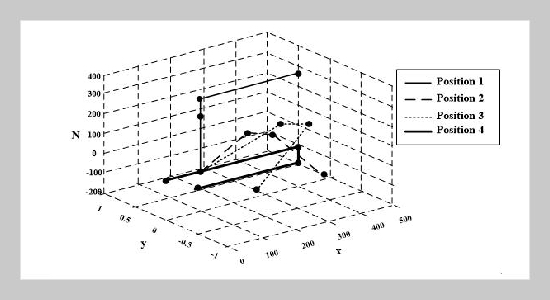
Simulation diagram of multi-sensor fusion and adaptive scheduling in Sanda teaching system.
Copyright The Author(s). This is an open access article distributed under the terms of the Creative Commons Attribution License (CC BY 4.0), which permits unrestricted use, distribution, and reproduction in any medium, provided the original author and source are cited.
Download Citation: BibTeX | http://dx.doi.org/10.6180/jase.202610_33.057
This article focuses on the needs of Sanda teaching scenarios and intelligent device health monitoring, and builds a distributed Sanda teaching system based on multi-sensor fusion and reinforcement learning. The system integrates multiple types of sensors to synchronously collect teaching data such as training actions and striking force, as well as equipment operating status, achieving collaborative collection and analysis of two types of data. Building a distributed scheduling model based on reinforcement learning, combined with regional teaching conditions, student training differences, and equipment status, to ensure efficient collaboration in cross regional teaching. By utilizing reinforcement learning reward mechanisms to iterate adaptive maintenance strategies, device stability and resource utilization can be improved. At the same time, develop personalized training plans based on perceptual data to assist teachers in precise teaching. This study can provide reference for the intelligent upgrading and distributed teaching innovation of Sanda teaching.
Keywords: Reinforcement Learning; Multi-Sensor Fusion; Intelligent Device Health Monitoring; Sanda Teaching System; Autonomous Scheduling; Adaptive Maintenance
- [1] Y. Wang, X. An, and W. Xu, (2023) “Intelligent medical IoT health monitoring system based on VR and wearable devices” Journal of Intelligent Systems 32(1): 20220291. DOI: 10.1515/jisys-2022-0291.
- [2] B. Dai, C. Gao, and Y. Xie, (2022) “Flexible wearable devices for intelligent health monitoring” View 3(5): 20220027. DOI: 10.1002/VIW.20220027.
- [3] C. Zhu, (2022) “Exploring the role of sports APP in (campus fitness) intelligent solutions using data fusion algorithm and internet of things” International Journal of Grid and Utility Computing 13(1): 40–48. DOI: 10.1504/IJGUC.2022.121419.
- [4] Y. Wang, S. Lu, and D. Harter, (2021) “Towards collaborative and intelligent learning environments based on eye tracking data and learning analytics: A survey” IEEE Access 9(1): 137991–138002. DOI: 10.1109/access.2021.3117780.
- [5] Y. Pan, (2024) “Sports game teaching and high precision sports training system based on virtual reality technology” Entertainment Computing 50: 100662. DOI: 10.1016/j.entcom.2024.100662.
- [6] J. Zhou and W. Wu, (2026) “Reforming university physical education with artificial intelligence for enhanced teaching and learning” Discover Artificial Intelligence 6(1): 32. DOI: 10.1007/s44163-025-00531-2.
- [7] Q. Li, P. Kumar, and M. Alazab, (2022) “IoT-assisted physical education training network virtualization and resource management using a deep reinforcement learning system” Complex & Intelligent Systems 8: 1229–1242. DOI: 10.1007/s40747-021-00584-7.
- [8] X. Wu, C. Liu, L. Wang, and M. Bilal, (2023) “Internet of things-enabled real-time health monitoring system using deep learning” Neural Computing and Applications 35(20): 14565–14576. DOI: 10.1007/s00521-021-06440-6.
- [9] Z. Xie, Z. Li, and X. Liu, (2025) “SHARP: Blockchain-Powered WSNs for Real-Time Student Health Monitoring and Personalized Learning” Sensors 25(16): 4885. DOI: 10.3390/s25164885.
- [10] Y. Jia and L. Yang. “Online interactive teaching system of sanda course based on P2P network”. In: International Conference on E-Learning, E-Education, and Online Training. Springer Nature Switzerland, 2022, 103–117. DOI: 10.1007/978-3-031-21161-4_9.
- [11] T. Tian, (2025) “Wearable sensor-based real time monitoring system for physical education teaching and training” Molecular & Cellular Biomechanics 22(1): DOI: 10.62617/mcb1027.
- [12] T. Iqbal, P. Redon-Lurbe, A. J. Simpkin, A. Elahi, S. Ganly, W. Wijns, and A. Shahzad, (2021) “A sensitivity analysis of biophysiological responses of stress for wearable sensors in connected health” IEEE Access 9(1): 93567–93579. DOI: 10.1109/access.2021.3082423.
- [13] L. Yang, O. Amin, and B. Shihada, (2024) “Intelligent wearable systems: Opportunities and challenges in health and sports” ACM Computing Surveys 56(7): 1–42. DOI: 10.1145/3648469.
- [14] Z. Ma. “Research on the sports teaching system based on the data visualization”. In: The International Conference on Cyber Security Intelligence and Analytics. Springer International Publishing, 2019, 249–254. DOI: 10.1007/978-3-030-15235-2_39.
- [15] J. Kallio, E. Vildjiounaite, J. Tervonen, and M. Bordallo López, (2025) “A survey on sensor-based techniques for continuous stress monitoring in knowledge work environments” ACM Transactions on Computing for Healthcare 6(3): 1–31. DOI: 10.1145/3720551.
- [16] R. H. Charfare, A. U. Desai, N. N. Keni, A. S. Nambiar, and M. M. Cherian, (2025) “Smart Healthcare Framework: Real-Time Vital Monitoring and Personalized Diet and Fitness Recommendations Using IoT and Machine Learning” International Journal of Robotics & Control Systems 5(2): DOI: 10.31763/ijrcs.v5i2.1839.
- [17] X. Liu, X. Sang, and G. Huo, (2025) “Optimization of intelligent physical education teaching method based on fuzzy logic and virtual reality” Discover Computing 28(1): 310. DOI: 10.1007/s10791-025-09851-4.
- [18] T. Yue and Y. Zou, (2019) “Online teaching system of sports training based on mobile multimedia communication platform” International Journal of Mobile Computing and Multimedia Communications 10(1): 32–48. DOI: 10.4018/IJMCMC.2019010103.
- [19] D. Mu, (2025) “Online Physical Education Teaching Resources Integration Method Based on Multi-Objective Optimization Algorithm” International Journal of High Speed Electronics and Systems 34(04): 2540278. DOI: 10.1142/S0129156425402785.
- [20] S. Morelli and D. Giansanti, (2025) “Recent Advances in AI-Driven Mobile Health Enhancing Healthcare—Narrative Insights into Latest Progress” Bioengineering 13(1): 54. DOI: 10.3390 / bioengineering13010054.