




Ping Xu1 and Aziguli Abudouwaili2
1Shanxi Vocational University of Culture and Tourism
2Moray (Beijing) Data Technology Co., Ltd.
Received: March 14, 2026
Accepted: April 29, 2026
Publication Date: July 18, 2026
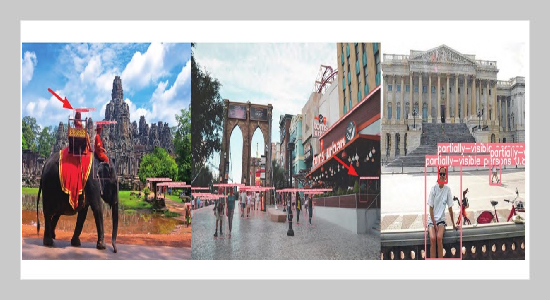
Results of a partial experiment
Copyright The Author(s). This is an open access article distributed under the terms of the Creative Commons Attribution License (CC BY 4.0), which permits unrestricted use, distribution, and reproduction in any medium, provided the original author and source are cited.
Download Citation: BibTeX | http://dx.doi.org/10.6180/jase.202610_33.044
The rapid development of the tourism industry has made the need for managing tourists’ behaviors in scenic spots more urgent. The irregularities of the tourists, such as unauthorized climbing, writing graffiti, and entering the forbidden regions, can cause security hazards and negatively impact the reputation of the location. In this paper, a novel framework is introduced for recognizing abnormal behaviors of pedestrians in the region of interest using the characteristics extracted from surveillance videos. To achieve a robust background subtraction, a mixture of Gaussians is applied, and then the bounding boxes of motion objects are computed using minimum bounding rectangles. To recognize periodic changes in aspect ratios, curve fitting is employed to find abnormal behaviors.
Keywords: Abnormal behavior detection; video surveillance; hybrid Gaussian model; regional features; real-time monitoring.
- [1] J. M. Korn, F. G. Kuruvilla, S. A. McCarroll, A. Wysoker, J. Nemesh, S. Cawley, and D. Altshuler, (2008) “Integrated genotype calling and association analysis of SNPs, common copy number polymorphisms and rare CNVs” Nature Genetics 40(10): 1253–1260. DOI: 10.1038/ng.237.
- [2] L. M. M. Visuwasam and D. P. Raj, (2023) “Spatio Temporal Tourism Tracking System Based on Adaptive Convolutional Neural Network” Computer Systems Science & Engineering 45(3): 2435–2446. DOI: 10.32604/csse.2023.024742.
- [3] E. Zhao, P. Du, E. Y. Azaglo, S. Wang, and S. Sun, (2023) “Forecasting daily tourism volume: A hybrid approach with CEMMDAN and multi-kernel adaptive ensemble” Current Issues in Tourism 26(7): 1112–1131. DOI: 10.1080/13683500.2022.2048806.
- [4] W. Chen, W. Wang, H. Yin, L. Zhao, and X. Zhou, (2023) “HFUL: A hybrid framework for user account linkage across location-aware social networks” The VLDB Journal 32(1): 1–22. DOI: 10.1007/s00778-022-00730-8.
- [5] G. Bharathi and G. Anandharaj, (2023) “Classification of review information based on tourist’s places of interest in India using support vector machine” International Journal of Business Information Systems 44(2): 202–218. DOI: 10.1504/IJBIS.2023.134951.
- [6] S. Wang, Y. Yu, J. Chen, and J. Liu, (2023) “Impact of climate change on cherry blossom viewing tourism: Analysis and simulation based on Weibo proxy data” Current Issues in Tourism 26(5): 718–734. DOI: 10.1080/13683500.2022.2049711.
- [7] I. Afyouni, Z. Al Aghbari, and R. Razack, (2022) “Multi-feature, multi-modal, and multi-source social event detection: A comprehensive survey” Information Fusion 79: 279–308. DOI: 10.1016/j.inffus.2021.10.013.
- [8] W. Yu, (2021) “Research on feature extraction of vehicle abnormal driving behaviour based on 5G internet of vehicles” International Journal of Vehicle Design 86(1–4): 124–142. DOI: 10.1504/IJVD.2021.122256.
- [9] J. Ali, R. H. Jhaveri, M. Alswailim, and B.-H. Roh, (2023) “ESCALB: An effective slave controller allocation-based load balancing scheme for multi-domain SDN-enabled-IoT networks” Journal of King Saud University – Computer and Information Sciences 35(6): 101566. DOI: 10.1016/j.jksuci.2023.101566.
- [10] F. Gholami, Z. Rahmati, A. Mofidi, and M. Abbaszadeh, (2023) “On enhancement of text classification and analysis of text emotions using graph machine learning and ensemble learning methods on non-English datasets” Algorithms 16(10): 470. DOI: 10.3390/a16100470.
- [11] M. Qaraqe, A. Elzein, E. Basaran, Y. Yang, E. B. Varghese, W. Costandi, and N. Alam, (2024) “PublicVision: A secure smart surveillance system for crowd behavior recognition” IEEE Access 12: 26474–26491. DOI: 10.1109/ACCESS.2024.3366693.
- [12] I. Nosheen, A. Naseer, and A. Jalal. “Efficient vehicle detection and tracking using blob detection and kernelized filter”. In: Proceedings of the 5th International Conference on Advancements in Computational Sciences (ICACS). IEEE, 2024, 1–8. DOI: 10.1109/ICACS60934.2024.10473292.
- [13] H. Yang, Q. He, L. Cui, and A. M. Mohamed Taha, (2023) “Exploring the spatial relationship between urban vitality and urban carbon emissions” Remote Sensing 15(8): 2173. DOI: 10.3390/rs15082173.
- [14] A. Zahid, T. Qasim, N. Bhatti, and M. Zia, (2024) “A data-driven approach for road accident detection in surveillance videos” Multimedia Tools and Applications 83(6): 17217–17231. DOI: 10.1007/s11042-023-16193-0.
- [15] F. Yao, (2025) “Classroom anomalous behavior detection based on improved YOLOv5” Journal of Applied Science and Engineering 28(7): 1473–1481. DOI: 10.1080/0000000.
- [16] X. Liu, (2024) “Detection of abnormal tourist behavior in scenic spots based on optimized Gaussian model for background modeling” Journal of Intelligent Systems 33(1): 20240092. DOI: 10.1515/jisys-2024-0092.
- [17] G. Saravanan, G. Yamuna, and S. Nandhini. “Real time implementation of RGB to HSV/HSI/HSL and its reverse color space models”. In: Proceedings of the International Conference on Communication and Signal Processing (ICCSP). IEEE, 2016, 462–466. DOI: 10.1109/ICCSP.2016.7754179.