





Shijiazhuang College of Applied Technology, Department of electrical and electronic engineering, Shijiazhuang, 050800, China
Received: March 29, 2026
Accepted: May 27, 2026
Publication Date: July 10, 2026
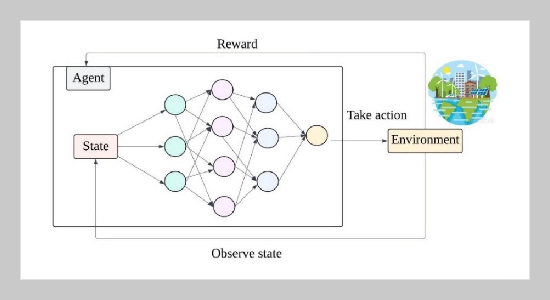
DRL Framework for Fault Prediction and Self-Healing in Electrical Systems
Copyright The Author(s). This is an open access article distributed under the terms of the Creative Commons Attribution License (CC BY 4.0), which permits unrestricted use, distribution, and reproduction in any medium, provided the original author and source are cited.
Download Citation: BibTeX | http://dx.doi.org/10.6180/jase.202610_33.033
Modern smart grids have electrical automation systems that need smart mechanisms to predict faults early and recover fast to maintain the system stability and reliability. Nonetheless, the traditional fault detection methods have a weakness in that they cannot effectively represent the temporal relationships in power system signals, slow recovery processes, and excessive system downtime in response to disturbances. To overcome these difficulties, the present paper proposes an intelligent fault prediction and self-healing system, which combines a Temporal Convolutional Network (TCN) and Deep Reinforcement Learning (DRL). The model then predicts possible faults through the TCN model that is trained on the IEEE-39 bus power system data with the time-series data on voltage, frequency and power flow parameters under different operating conditions. The DRL agent subsequently becomes aware of the best control measures to curb flaws and reinstate stability in the system. The suggested model is able to withstand the shortcomings of conventional approaches due to its ability to integrate precise learning of temporal patterns with the adaptability of decision-making. The experimental findings indicate that the proposed model, which gives 98.2% accuracy, 97.5% precision, 98.8% recall, and 98.1%
F1-score and has an ROC-AUC of 0.985, indicates high accuracy and precision. Also, the system demonstrates an average recovery time of 120 ms and a voltage deviation of 0.02 p.u., which is much higher than the grid resilience and operational reliability. Overall, the proposed framework provides an effective and intelligent solution for predictive fault management and automated self-healing in modern electrical automation systems.
Keywords: Fault Prediction, Self-Healing Power Systems, TCN, DRL, Smart Grid Automation, Electrical Automation Systems
- [1] S. Gil, G. Zapata-Madrigal, R. García-Sierra, and L. Cruz Salazar, (2022) “Converging IoT protocols for the data integration of automation systems in the electrical industry” Journal of Electrical Systems and Information Technology 9(1): 1. DOI: 10.1186/s43067-022-00043-4.
- [2] A. Al Shahrani, M. Alomar, K. Alqahtani, M. Basingab, B. Sharma, and A. Rizwan, (2023) “Machine learning-enabled smart industrial automation systems using internet of things” Sensors 23(1): 324. DOI: 10.3390/s23010324.
- [3] F. Almasoudi, (2023) “Enhancing power grid resilience through real-time fault detection and remediation using advanced hybrid machine learning models” Sustainability 15(10): 8348. DOI: 10.3390/su15108348.
- [4] Y. Li, H. He, A. Khajepour, Y. Chen, W. Huo, and H. Wang, (2024) “Deep reinforcement learning for intelligent energy management systems of hybrid-electric powertrains: Recent advances, open issues, and prospects” IEEE Transactions on Transportation Electrification 10(4): 9877–9903. DOI: 10.1109/TTE.2024.3377809.
- [5] M. Rabi, I. Abarkan, S. Sarfarazi, F. Ferreira, and A. Alkherret, (2025) “Automated design and optimization of concrete beams reinforced with stainless steel” Structural Concrete: DOI: 10.1002/suco.70332.
- [6] M. Rabi, (2025) “Serviceability-based deflection of RC beams with stainless steel reinforcement: A revised design approach and reliability assessment” Results in Engineering 27: 105696. DOI: 10.1016/j.rineng.2025.105696.
- [7] I. Abarkan, M. Rabi, S. Sarfarazi, and F. Ferreira, (2024) “Machine learning for optimal design of circular hollow section stainless steel stub columns: A comparative analysis with Eurocode 3 predictions” Engineering Applications of Artificial Intelligence 132: 107952. DOI: 10.1016/j.engappai.2024.107952.
- [8] S. Sarfarazi, R. Shamass, M. Rabi, I. Abarkan, F. Ferreira, and K. Tsavdaridis, (2026) “Inverse machine learning for the design of perforated beams: Parent section and material prediction” Engineering Applications of Artificial Intelligence 164: 113275. DOI: 10.1016/j.engappai.2025.113275.
- [9] M. Rabi, (2025) “Investigation on the buckling behavior of normal steel CHS beam–columns: A revised design approach with reliability analysis” Buildings 15(10): 1708. DOI: 10.3390/buildings15101708.
- [10] H. Dui, X. Dong, L. Chen, and Y. Wang, (2023) “IoT-enabled fault prediction and maintenance for smart charging piles” IEEE Internet of Things Journal 10(23): 21061–21075. DOI: 10.1109/JIOT.2023.3285206.
- [11] M. Cai, X. He, and D. Zhou, (2024) “Self-healing fault-tolerant control for high-order fully actuated systems against sensor faults: A redundancy framework” IEEE Transactions on Cybernetics 54(4): 2628–2640. DOI: 10.1109/TCYB.2023.3285903.
- [12] B. Baadji, S. Belagoune, and S. Boudjellal, (2025) “Transformer-based deep learning networks for fault detection, classification, and location prediction in transmission lines” Network: Computation in Neural Systems 36(4): 1837–1857. DOI: 10.1080/0954898X.2024.2393746.
- [13] Q.-H. Ngo, B. Nguyen, J. Zhang, K. Schoder, H. Ginn, and T. Vu, (2025) “Deep graph neural network for fault detection and identification in distribution systems” Electric Power Systems Research 247: 111721. DOI: 10.1016/j.epsr.2025.111721.
- [14] G. Eldeghady, H. Kamal, and M. Hassan, (2023) “Fault diagnosis for PV system using a deep learning optimized via PSO heuristic combination technique” Electrical Engineering 105(4): 2287–2301. DOI: 10.1007/s00202-023-01806-6.
- [15] F. Arellano-Espitia, M. Delgado-Prieto, V. Martinez-Viol, J. Saucedo-Dorantes, and R. Osornio-Rios, (2020) “Deep-learning-based methodology for fault diagnosis in electromechanical systems” Sensors 20(14): 3949. DOI: 10.3390/s20143949.