




School of Northeast Asia, Liaoning University of International Business and Economics, Dalian, 116052, China
Received: July 28, 2025
Accepted: May 25, 2026
Publication Date: July 3, 2026
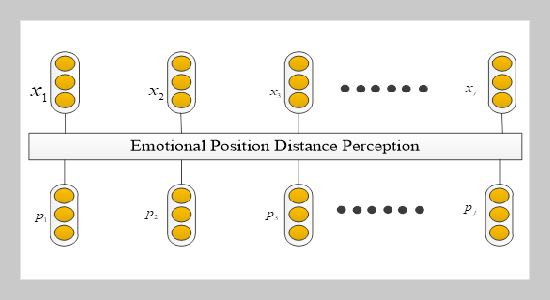
Emotional Space Position Perception Vector
Copyright The Author(s). This is an open access article distributed under the terms of the Creative Commons Attribution License (CC BY 4.0), which permits unrestricted use, distribution, and reproduction in any medium, provided the original author and source are cited.
Download Citation: BibTeX | http://dx.doi.org/10.6180/jase.202610_33.028
In order to solve the problems of poor matching accuracy and long time-consuming in traditional Korean text translation emotional semantic matching methods, this paper proposes research on a Korean text translation emotional semantic matching method considering a user preference model. Build a user preference model, input that obtained emotional space position perception vector into the user preference model, correcting the translation semantic result according to the user’s emotional preference, determining the freshness of keyword features, calculating the freshness weight, generating user preferences, and calculating the similarity of interest vectors among users, on this basis, obtaining a Korean text data set, and using Word2Vec model to map individual words in natural language corpus to vectors to extract Korean text translation features; By inputting word vectors into DPCNN, depth features are extracted to classify text emotions. The semantic matching model of translated text is constructed by sentence representation, and the emotional space position perception vector is introduced to deeply match the emotional semantics of Korean translated text, which makes the semantic matching result more accurate. The experimental results show that the semantic matching accuracy of Korean translation text under this method is 99.6%, and the matching time is 3.6s, which can effectively improve the accuracy of emotional semantic matching and further improve the translation effect of Korean text.
Keywords: User preference model; Freshness; Korean text; Emotional semantics; Semantic matching
- [1] T. Yang, H. Wu, B. Yi, G. Feng, and X. Zhang, (2023) “Semantic-preserving linguistic steganography by pivot translation and semantic-aware bins coding” IEEE Transactions on Dependable and Secure Computing 21(1): 139–152. DOI: 10.1109/TDSC.2023.3247493.
- [2] M. M. C. Eddine, (2021) “A new concept of electronic text based on semantic coding system for machine translation” Transactions on Asian and Low-Resource Language Information Processing 21(1): 1–16. DOI: https://doi.org/10.1145/3469655.
- [3] R. Duan, Y. Feng, and C.-Y. Wen, (2022) “Deep pose graph-matching-based loop closure detection for semantic visual SLAM” Sustainability 14(19): 11864. DOI: https://doi.org/10.3390/su141911864.
- [4] M. Kayed, F. Azzam, H. Ali, and A. Ali, (2024) “Temporal dynamics of user activities: deep learning strategies and mathematical modeling for long-term and short-term profiling” Scientific Reports 14(1): 14498. DOI: https://doi.org/10.1038/s41598-024-64120-6.
- [5] W. Li, Y. Bai, and L. Meng. “Design of intelligent push system for teaching resources based on user profile”. In: 2023 4th International Conference on Computer Vision, Image and Deep Learning (CVIDL). IEEE. 2023, 574–577. DOI: 10.1109/CVIDL58838.2023.10166991.
- [6] G. Couairon, A. Grechka, J. Verbeek, H. Schwenk, and M. Cord. “Flexit: Towards flexible semantic image translation”. In: Proceedings of the IEEE/CVF conference on computer vision and pattern recognition. 2022, 18270–18279.
- [7] E. Batbaatar, M. Li, and K. H. Ryu, (2019) “Semantic-emotion neural network for emotion recognition from text” IEEE access 7: 111866–111878. DOI: 10.1109/ACCESS.2019.2934529.
- [8] A. Pieroni, N. Scarpato, and L. Felli, (2020) “Blockchain and IoT convergence—a systematic survey on technologies, protocols and security” Applied Sciences 10(19): 6749. DOI: https://doi.org/10.3390/app10196749.
- [9] H. Yu, J. Bae, J. Choi, and H. Kim, (2021) “LUX: smart mirror with sentiment analysis for mental comfort” Sensors 21(9): 3092. DOI: https://doi.org/10.3390/s21093092.
- [10] J. Zhang, H. Han, H. Su, Z. Jiang, and C. Peng, (2022) “PUMTD: Privacy-preserving user-profile matching protocol in social networks” China Communications 19(6): 77–90. DOI: 10.23919/JCC.2022.06.007.
- [11] Y. Cheng and L. Kuang. “CSRS: Code search with relevance matching and semantic matching”. In: Proceedings of the 30th IEEE/ACM International Conference on Program Comprehension. 2022, 533–542. DOI: https://doi.org/10.1145/3524610.3524678.
- [12] H. A. Uymaz and S. K. Metin, (2022) “Vector based sentiment and emotion analysis from text: A survey” Engineering Applications of Artificial Intelligence 113: 104922. DOI: https://doi.org/10.1045/https://doi.org/10.1016/j.engappai.2022.104922.
- [13] W. Ahmad, H. U. Khan, T. Iqbal, M. A. Khan, U. Tariq, and J.-h. Cha, (2023) “Hybrid multichannel-based deep models using deep features for feature-oriented sentiment analysis” Sustainability 15(9): 7213. DOI: https://doi.org/10.3390/su15097213.
- [14] Z. Liu, H. Liao, M. Li, Q. Yang, and F. Meng, (2023) “A deep learning-based sentiment analysis approach for online product ranking with probabilistic linguistic term sets” IEEE Transactions on Engineering Management 71: 6677–6694. DOI: https://doi.org/10.1109/TEM.2023.3271597.
- [15] P. Park, S. Jang, Y. Cho, and Y. Kim, (2024) “SAM: cross-modal semantic alignments module for image-text retrieval” Multimedia Tools and Applications 83(4): 12363–12377. DOI: https://doi.org/10.1007/s11042-023-15798-9.
- [16] P. Jiang and X. Cai, (2024) “A survey of text-matching techniques” Information 15(6): 332. DOI: https://doi.org/10.3390/info15060332.
- [17] S. Wang, S. Moon, I. Eum, D. Hwang, and J. Kim, (2025) “A text dataset of fire door defects for pre-delivery inspections of apartments during the construction stage” Data in Brief 60: 111536. DOI: https://doi.org/10.1016/j.dib.2025.111536.
- [18] S. Wang, (2025) “Development of an automated transformer-based text analysis framework for monitoring fire door defects in buildings” Scientific Reports 15(1): 43910. DOI: https://doi.org/10.1038/s41598-025-27648-9.
- [19] S. Wang, (2025) “Graph neural network–driven text classification for fire-door defect inspection in pre-completion construction” Scientific Reports 15(1): 44382. DOI: https://doi.org/10.1038/s41598-025-28120-4.
- [20] S. Sharma, V. Rana, and V. Kumar, (2021) “Deep learning based semantic personalized recommendation system” International Journal of Information Management Data Insights 1(2): 100028. DOI: https://doi.org/10.1016/j.jjimei.2021.100028.
- [21] J. Pei, K. Zhong, Z. Yu, L. Wang, and K. Lakshmanna, (2023) “Scene graph semantic inference for image and text matching” ACM Transactions on Asian and Low-Resource Language Information Processing 22(5): 1–23. DOI: https://doi.org/10.1145/3563390.
- [22] G. Xu, X. Wang, D. Wei, Y. Shao, and B. Chen, (2023) “Bug localization with features crossing and structured semantic information matching” International Journal of Software Engineering and Knowledge Engineering 33(08): 1261–1291. DOI: https://doi.org/10.1142/S0218194023500316.
- [23] A. Malkova, M.-R. Amini, B. Denis, and C. Villien, (2024) “Neural architecture search for radio map reconstruction with partially labeled data” Integrated Computer-Aided Engineering 31(3): 285–305. DOI: https://doi.org/10.3233/ICA-240732.
- [24] X. Pu, L. Yuan, J. Leng, T. Wu, and X. Gao, (2023) “Lexical knowledge enhanced text matching via distilled word sense disambiguation” Knowledge-Based Systems 263: 110282. DOI: https://doi.org/10.1016/j.knosys.2023.110282.
- [25] R. Qureshi, M. Irfan, T. M. Gondal, S. Khan, J. Wu, M. U. Hadi, J. Heymach, X. Le, H. Yan, and T. Alam, (2023) “AI in drug discovery and its clinical relevance” Heliyon 9(7): DOI: https://doi.org/10.1016/j.heliyon.2023.e17575.
- [26] F. Wang, I. Buranaut, B. Zhang, and J. Liu, (2024) “Emotional matching model construction of the interior interface form of age-friendly housing in Jinan city examined using Kansei engineering” Heliyon 10(7): DOI: https://doi.org/10.1016/j.heliyon.2024.e2912.
- [27] F. Azzam, M. Kayed, and A. Ali, (2022) “A model for generating a user dynamic profile on social media” Journal of King Saud University-Computer and Information Sciences 34(10): 9132–9145. DOI: https://doi.org/10.1016/j.jksuci.2022.08.036.
- [28] J. Zhang, H. Hao, and H. Su, (2022) “SE-$P^2\mu m$: Secure and Efficient Privacy-Preserving User-Profile Matching Protocol for Social Networks” IEEE Transactions on Computational Social Systems 10(6): 3295–3307. DOI: 10.1109/TCSS.2022.3200940.
- [29] L. P. de Morais, R. Immich, N. F. Silva, T. C. Rosa, and V. d. C. M. Borges, (2022) “Characterization of the Mobile User Profile Based on Sentiments and Network Usage Attributes” Journal of Internet Services and Applications 13(1): 82–97. DOI: https://doi.org/10.5753/jisa.2022.2520.
- [30] K. Sudhakar, B. Smail, T. S. Reddy, S. Shitharth, D. R. Tripathi, and M. Fahlevi. “Web user profile generation and discovery analysis using LSTM architecture”. In: 2022 2nd International Conference on Technological Advancements in Computational Sciences (ICTACS). IEEE. 2022, 371–375. DOI: 10.1109/ICTACS56270.2022.9988505.
- [31] S. Kılıçarslan, (2023) “A novel nonlinear hybrid Hard-SReLuE activation function in transfer learning architectures for hemorrhage classification” Multimedia Tools and Applications 82(4): 6345–6365. DOI: https://link.springer.com/article/10.1007/s11042-022-14313-w.
- [32] Y. Duan, J. Wang, H. Ma, and Y. Sun, (2021) “Residual convolutional graph neural network with subgraph attention pooling” Tsinghua Science and Technology 27(4): 653–663. DOI: 10.26599/TST.2021.9010058.
- [33] P. Nagaraju and S. Sudha. Retraction Note: Design of a novel panoptic segmentation using multi-scale pooling model for tooth segmentation. 2026. DOI: https://doi.org/10.1007/s00500-026-11253-7.
- [34] K. Huang, T. Sui, and H. Wu, (2022) “3D human pose estimation with multi-scale graph convolution and hierarchical body pooling” Multimedia systems 28(2): 403–412. DOI: https://doi.org/10.1007/s00530-021-00808-3.