




1Information Engineering College, Hunan Applied Technology University, Changde 415000, Hunan, China
2Anhui Xinhua University, Hefei 230000, Anhui, China
Received: May 21, 2025
Accepted: January 18, 2026
Publication Date: June 29, 2026
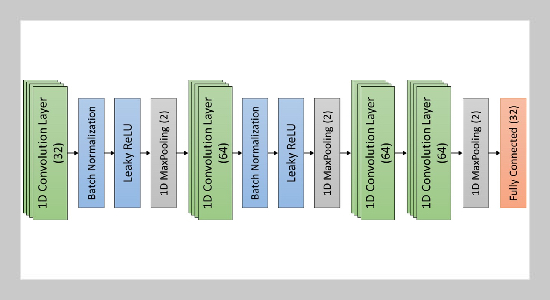
Each block within the feature extraction unit is applied to every 90 -region. All networks have similar weights
Copyright The Author(s). This is an open access article distributed under the terms of the Creative Commons Attribution License (CC BY 4.0), which permits unrestricted use, distribution, and reproduction in any medium, provided the original author and source are cited.
Download Citation: BibTeX | http://dx.doi.org/10.6180/jase.202610_33.025
Resting state fMRI has emerged as a popular neuroimaging tool for the automated identification and classification of brain disorders. Among such disorders, ADHD (attention deficit hyperactivity disorder), which is a disorder affecting children, is ill-understood regarding the causative factors, and its diagnosis is mainly based on behavioral evaluations. Here, a deep learning (DL) direct tactic for ADHD recognition is introduced. Our proposed architecture is structured into three main components: (1) a feature extraction unit, (2) a functional connectivity unit, and (3) a three-layer deep belief network. The scheme receives preprocessed time-series fMRI signals as input and produces a diagnostic output. It is trained in a direct manner utilizing backprop agation. The experimental findings obtained from the publicly accessible ADHD-200 database indicate that this novel approach surpasses the prior innovative tactics. The recommended method achieved accuracy rates of 91.84%, 91.08%, 87.73%, and 89.62% for PU, KKI, NYU, and NI databases from the ADHD-200 database. On average, the recommended method achieved an accuracy of 90.06%, a specificity of 88.37%, an F1-score of 89.93%, and a sensitivity of 91.55% in ADHD recognition from fMRI scans. Our findings demonstrate significant advancements in categorization performance compared to existing tactics, highlighting both the utility of functional connectivity as a biomarker and the effectiveness of DL in neuroimaging contexts.
Keywords: fMRI; ADHD; DL;functional connectivity; deep belief network
- [1] C. Nash, R. Nair, and S. M. Naqvi, (2024) “Insights into detecting adult ADHD symptoms through advanced dual-stream machine learning” IEEE Transactions on Neural Systems and Rehabilitation Engineering 32: 3378–3387. DOI: 10.1109/TNSRE.2024.3450848.
- [2] M. R. Mohammadi, A. Khaleghi, K. Shahi, and H. Zarafshan, (2023) “Attention deficit hyperactivity disorder: behavioral or neuro-developmental disorder? testing the hitop framework using machine learning methods” Journal of Iranian Medical Council: DOI: 10.18502/jimc.v6i4.13444.
- [3] G. Ayano, S. Demelash, Y. Gizachew, L. Tsegay, and R. Alati, (2023) “The global prevalence of attention deficit hyperactivity disorder in children and adolescents: An umbrella review of meta-analyses” Journal of affective disorders 339: 860–866. DOI: 10.1016/j.jad.2023.07.071.
- [4] M.-R. Mohammadi, H. Zarafshan, A. Khaleghi, N. Ahmadi, Z. Hooshyari, S.-A. Mostafavi, A. Ahmadi, S.-S. Alavi, A. Shakiba, and M. Salmanian, (2021) “Prevalence of ADHD and its comorbidities in a population-based sample” Journal of attention disorders 25: 1058–1067. DOI: 10.1177/1087054719886372.
- [5] S. Talepasand, M. R. Mohammadi, S. S. Alavi, A. Khaleghi, Z. Sajedi, P. Akbari, M. Lari, R. Kasaeian, M. Eskandaripour, and E. Rashti, (2019) “Psychiatric disorders in children and adolescents: prevalence and sociodemographic correlates in Semnan Province in Iran” Asian journal of psychiatry 40: 9–14. DOI: 10.1016/j.ajp.2019.01.007.
- [6] M. R. Mohammadi, N. Ahmadi, A. Khaleghi, S. A. Mostafavi, K. Kamali, M. Rahgozar, A. Ahmadi, Z. Hooshyari, S. S. Alavi, and P. Molavi, (2019) “Prevalence and correlates of psychiatric disorders in a national survey of Iranian children and adolescents” Iranian journal of psychiatry 14: 1. DOI: 10.18502/ijps.v14i1.418.
- [7] A. Ekhlasi, A. M. Nasrabadi, and M. R. Mohammadi, (2021) “Analysis of effective connectivity strength in children with attention deficit hyperactivity disorder using phase transfer entropy” Iranian Journal of Psychiatry 16: 374. DOI: 10.18502/ijps.v16i4.7224.
- [8] M. R. Mohammadi, N. Malmir, A. Khaleghi, and M. Aminiorani, (2015) “Comparison of sensorimotor rhythm (SMR) and beta training on selective attention and symptoms in children with attention deficit/hyperactivity disorder (ADHD): A trend report” Iranian journal of psychiatry 10: 165.
- [9] M. R. Mohammadi, A. Khaleghi, A. M. Nasrabadi, S. Rafieivand, M. Begol, and H. Zarafshan, (2016) “EEG classification of ADHD and normal children using non-linear features and neural network” Biomedical Engineering Letters 6: 66–73. DOI: 10.1007/s13534-016-0218-2.
- [10] H. Zarafshan, A. Khaleghi, M. R. Mohammadi, M. Moeini, and N. Malmir, (2016) “Electroencephalogram complexity analysis in children with attention-deficit/hyperactivity disorder during a visual cognitive task” Journal of clinical and experimental neuropsychology 38: 361–369. DOI: 10.1080/13803395.2015.1119252.
- [11] A. Bäcker, D. Forsström, L. Hommerberg, M. Johansson, I. Hensler, and P. Lindner, (2024) “A novel self-rating instrument designed for long-term, app-based monitoring of ADHD symptoms: A mixed-methods development and validation study” Digital Health 10: 20552076241280037. DOI: 10 . 1177 / 20552076241280037.
- [12] C. Cornoldi, D. Giofrè, and E. Toffalini, (2023) “Cognitive characteristics of intellectually gifted children with a diagnosis of ADHD” Intelligence 97: 101736. DOI: 10.1016/j.intell.2023.101736.
- [13] G. S. de Pablo, R. Iniesta, A. Bellato, A. Caye, M. Dobrosavljevic, V. Parlatini, M. Garcia-Argibay, L. Li, A. Cabras, and M. H. Ali, (2024) “Individualized prediction models in ADHD: a systematic review and meta-regression” Molecular Psychiatry 29: 3865–3873. DOI: 10.1038/s41380-024-02606-5.
- [14] N. Ahmadi, M. R. Mohammadi, S. M. Araghi, and H. Zarafshan, (2014) “Neurocognitive profile of children with attention deficit hyperactivity disorders (ADHD): A comparison between subtypes” Iranian journal of psychiatry 9: 197.
- [15] A. Khaleghi, H. Zarafshan, and M. R. Mohammadi, (2019) “Visual and auditory steady-state responses in attention-deficit/hyperactivity disorder” European archives of psychiatry and clinical neuroscience 269: 645–655. DOI: 10.1007/s00406-018-0902-6.
- [16] A. Khaleghi, P. M. Birgani, M. F. Fooladi, and M. R. Mohammadi, (2020) “Applicable features of electroencephalogram for ADHD diagnosis” Research on Biomedical Engineering 36: 1–11. DOI: 10.1007/ s42600-019-00036-9.
- [17] A. Khaleghi, M. R. Mohammadi, K. Shahi, and A. M. Nasrabadi, (2022) “Computational neuroscience approach to psychiatry: a review on theory-driven approaches” Clinical Psychopharmacology and Neuroscience 20: 26. DOI: 10.9758/cpn.2022.20.1.26.
- [18] P. Bellec, C. Chu, F. Chouinard-Decorte, Y. Benhajali, D. S. Margulies, and R. C. Craddock, (2017) “The neuro bureau ADHD-200 preprocessed repository” Neuroimage 144: 275–286. DOI: 10.1016/j.neuroimage.2016.06.034.
- [19] J. Rode, R. Runnamo, P. Thunberg, and M. Msghina, (2023) “Salience and hedonic experience as predictors of central stimulant treatment response in ADHD–A resting state fMRI study” Journal of Psychiatric Research 163: 378–385. DOI: 10.1016/j.jpsychires.2023.05.073.
- [20] A. Riaz, M. Asad, E. Alonso, and G. Slabaugh, (2020) “DeepfMRI: End-to-end deep learning for functional connectivity and classification of ADHD using fMRI” Journal of neuroscience methods 335: 108506. DOI: 10.1016/j.jneumeth.2019.108506.
- [21] S. D. Silva, U. Dayarathna, G. Ariyarathne, D. Meedeniya, and S. Jayarathna, (2021) “fMRI feature extraction model for ADHD classification using convolutional neural network” International Journal of E-Health and Medical Communications (IJEHMC) 12: 81–105.
- [22] Z. Wang, X. Zhou, Y. Gui, M. Liu, and H. Lu, (2023) “Multiple measurement analysis of resting-state fMRI for ADHD classification in adolescent brain from the ABCD study” Translational Psychiatry 13: 45. DOI: 10.1038/ s41398-023-02309-5.
- [23] D. Dai, J. Wang, J. Hua, and H. He, (2012) “Classification of ADHD children through multimodal magnetic resonance imaging” Frontiers in systems neuroscience 6: 63. DOI: 10.3389/fnsys.2012.00063.
- [24] L. Zou, J. Zheng, C. Miao, M. J. Mckeown, and Z. J. Wang, (2017) “3D CNN based automatic diagnosis of attention deficit hyperactivity disorder using functional and structural MRI” Ieee Access 5: 23626–23636. DOI: 10.1109/ACCESS.2017.2762703.
- [25] P. G. Gülhan and G. Özmen, (2025) “The use of fMRI regional analysis to automatically detect ADHD through a 3D CNN-based approach” Journal of Imaging Informatics in Medicine 38: 203–216. DOI: 10.1007/s10278-024-01189-5.
- [26] S. Ghiassian, R. Greiner, P. Jin, and M. R. G. Brown, (2016) “Using functional or structural magnetic resonance images and personal characteristic data to identify ADHD and autism” PloS one 11: e0166934. DOI: 10.1371/journal.pone.0166934.
- [27] B. Sen, N. C. Borle, R. Greiner, and M. R. G. Brown, (2018) “A general prediction model for the detection of ADHD and Autism using structural and functional MRI” PloS one 13: e0194856. DOI: 10.1371/journal.pone.0194856.
- [28] B. Qiu, Q. Wang, X. Li, W. Li, W. Shao, and M. Wang, (2024) “Adaptive spatial-temporal neural network for ADHD identification using functional fMRI” Frontiers in Neuroscience 18: 1394234. DOI: 10.3389/ fnins.2024.1394234.
- [29] L. Yu, F. Zhou, and J. Wan, (2025) “A dual path deep framework integrated with fuzzy random vector functional link for ADHD detection from fMRI data” Signal, Image and Video Processing 19: 797. DOI: 10.1007/s11760-025-04383-2.
- [30] B. Kim and Y. Kwon, (2025) “Local temporal feature enhanced transformer with roi-rank based masking for diagnosis of adhd” arXiv preprint arXiv:2504.11474: DOI: 10.48550/arXiv.2504.11474.
- [31] S. Bandyopadhyay, M. Sarma, and D. Samanta, (2025) “AI-enabled computational intelligence approach to neurodevelopmental disorders detection using rs-fMRI data” Computers and Electrical Engineering 123: 110117. DOI: 10.1016/j.compeleceng.2025.110117.
- [32] Q. Ding, D. Sun, S. Zhu, Z. Liu, Y. You, X. He, and F. Chen, (2025) “MATNet: a multimodal attention-based temporal network integrating functional MRI and structural MRI for accurate ADHD classification” Journal of Electronic Imaging 34: 43008. DOI: 10.1117/1.JEI.34.4.043008.
- [33] R. C. Craddock, G. A. James, P. E. H. III, X. P. Hu, and H. S. Mayberg, (2012) “A whole brain fMRI atlas generated via spatially constrained spectral clustering” Human brain mapping 33: 1914–1928. DOI: 10.1002/ hbm.21333.
- [34] A. Riaz, M. Asad, E. Alonso, and G. Slabaugh, (2018) “Fusion of fMRI and non-imaging data for ADHD classification” Computerized Medical Imaging and Graphics 65: 115–128. DOI: 10.1016/j.compmedimag.2017.10.002.
- [35] I. Ashraf, S. Jung, S. Hur, and Y. Park, (2024) “A systematic literature review of neuroimaging coupled with machine learning approaches for diagnosis of attention deficit hyperactivity disorder” Journal of Big Data 11: 140. DOI: 10.1186/s40537-024-0099-3.
- [36] A. Riaz, M. Asad, S. M. M. R. Al-Arif, E. Alonso, D. Dima, P. Corr, and G. Slabaugh. “Fcnet: a convolutional neural network for calculating functional connectivity from functional mri”. In: International Workshop on Connectomics in Neuroimaging. Springer, 2017, 70–78. DOI: 10.1007/978-3-319-67159-8_9.
- [37] X. Han, T. Leung, Y. Jia, R. Sukthankar, and A. C. Berg. “Matchnet: Unifying feature and metric learning for patch-based matching”. In: Proceedings of the IEEE conference on computer vision and pattern recognition. 2015, 3279–3286. DOI: 10.1109/CVPR.2015.7298948.
- [38] C. L. P. Chen and S. Feng, (2018) “Generative and Discriminative Fuzzy Restricted Boltzmann Machine Learning for Text and Image Classification” IEEE Transactions on Cybernetics 50: 2237–2248. DOI: 10.1109/TCYB.2018.2869902.
- [39] C. Zhang, K. C. Tan, H. Li, and G. S. Hong, (2018) “A cost-sensitive deep belief network for imbalanced classification” IEEE transactions on neural networks and learning systems 30: 109–122. DOI: 10.1109/TNNLS.2018.2832648.
- [40] R. Turner, D. Eriksson, M. McCourt, J. Kiili, E. Laaksonen, Z. Xu, and I. Guyon. “Bayesian optimization is superior to random search for machine learning hyperparameter tuning: Analysis of the black-box optimization challenge 2020”. In: NeurIPS 2020 competition and demonstration track. PMLR, 2021, 3–26. DOI: 10.48550/arXiv.2104.10201.
- [41] N. Khaleghi, S. Hashemi, M. Peivandi, S. Z. Ardabili, M. Behjati, S. Sheykhivand, and S. Danishvar, (2024) “EEG-based functional connectivity analysis of brain abnormalities: A systematic review study” Informatics in Medicine Unlocked 47: 101476. DOI: 10.1016/j.imu.2024.101476.
- [42] S. Furlong, J. R. Cohen, J. Hopfinger, J. Snyder, M. M. Robertson, and M. A. Sheridan, (2021) “Resting-state EEG connectivity in young children with ADHD” Journal of Clinical Child & Adolescent Psychology 50: 746–762. DOI: 10.1080/15374416.2020.1796680.
- [43] A. Harikumar, D. W. Evans, C. C. Dougherty, K. L. H. Carpenter, and A. M. Michael, (2021) “A review of the default mode network in autism spectrum disorders and attention deficit hyperactivity disorder” Brain connectivity 11: 253–263. DOI: 10.1089/brain.2020.0865.
- [44] L. J. Norman, G. Sudre, J. Price, G. G. Shastri, and P. Shaw, (2023) “Evidence from “big data” for the default-mode hypothesis of ADHD: a mega-analysis of multiple large samples” Neuropsychopharmacology 48: 281–289. DOI: 10.1038/s41386-022-01408-z.