



Received: March 9, 2026
Accepted: April 4, 2026
Publication Date: June 4, 2026
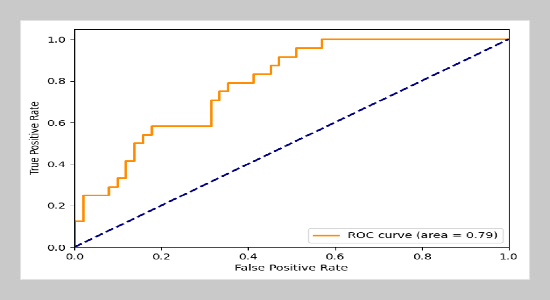
AUC results of different pruning probabilities on Last.FM.
Copyright The Author(s). This is an open access article distributed under the terms of the Creative Commons Attribution License (CC BY 4.0), which permits unrestricted use, distribution, and reproduction in any medium, provided the original author and source are cited.
Download Citation: BibTeX | http://dx.doi.org/10.6180/jase.202609_32.072
This paper proposes a deep attention network based on cluster design (ASDCLK), which effectively removes noise and dynamically adjusts the weights of knowledge triplets by introducing a degree sensitive graph structure denoising module and an attention-based knowledge aggregation mechanism, thereby improving recommendation accuracy. The experiment was conducted on public datasets for music recommendation and movie recommendation scenarios, and the results showed that the ASDCLK model outperformed current advanced recommendation methods in CTR prediction and top-K recommendation tasks. Especially on the Last.FM and MovieLens-1M datasets, ASDCLK performs well in AUC and MovieLens-1M, respectively Recall@20 There is a significant improvement in indicators compared to the baseline model. In addition, by adjusting the sampling probability of graph structure denoising, this study found that a moderate sampling probability can effectively remove noise while preserving key interactive information, thereby achieving optimal recommendation performance. The model is evaluated on the MovieLens-1M and Last.FM datasets, comprising thousands of users and interactions, using standard evaluation metrics such as AUC, F1-score, and Recall@K to comprehensively assess recommendation performance.
Keywords: Intelligent Recommendation System; Graph Neural Network (GNN); Attention Mechanism; Knowledge Graph; Top-K Recommendation
- [1] M. Sangeetha and M. D. Thiagarajan, (2023) “Attribute Preserving Recommendation System Based on Graph Attention Mechanism” Journal of Intelligent & Fuzzy Systems 44(6): 9419–9430. DOI: 10.3233/JIFS-223775.
- [2] J. Liu, W. Wang, B. Yi, X. Shen, and H. Zhang, (2024) “Contrastive Multi-Interest Graph Attention Network for Knowledge-Aware Recommendation” Expert Systems with Applications: 124748. DOI: 10.1016/j.eswa.2024.124748.
- [3] Q. Wang, H. Cui, J. Zhang, Y. Du, Y. Zhou, and X. Lu, (2023) “Neighbor-Augmented Knowledge Graph Attention Network for Recommendation” Neural Processing Letters 55(6): 8237–8253. DOI: 10.1007/s11063-023-11310-4.
- [4] Y. Li, L. Hou, and J. Li, (2023) “Preference-Aware Graph Attention Networks for Cross-Domain Recommendations with Collaborative Knowledge Graph” ACM Transactions on Information Systems 41(3): 1–26. DOI: 10.1145/3576921.
- [5] T. Ma, L. Huang, Q. Lu, and S. Hu, (2023) “KR-GCN: Knowledge-Aware Reasoning with Graph Convolution Network for Explainable Recommendation” ACM Transactions on Information Systems 41(1): 1–27. DOI: 10.1145/3511019.
- [6] Q. Li, Z. Zhang, F. Zhuang, Y. Xu, and C. Li, (2023) “Topic-Aware Intention Network for Explainable Recommendation with Knowledge Enhancement” ACM Transactions on Information Systems 41(4): 1–23. DOI: 10.1145/3579993.
- [7] J. Zhang, Y. Li, R. Zou, J. Zhang, R. Jiang, Z. Fan, and X. Song, (2024) “Hyper-Relational Knowledge Graph Neural Network for Next POI Recommendation” World Wide Web 27(4): 1–19. DOI: 10.1007/s11280-024-01279-y.
- [8] S. Liang, J. Shao, J. Zhang, and B. Cui, (2023) “Graph-Based Non-Sampling for Knowledge Graph Enhanced Recommendation” IEEE Transactions on Knowledge and Data Engineering 35(9): 9462–9475. DOI: 10.1109/TKDE.2023.3240832.
- [9] Y. Yang, C. Zhang, X. Song, Z. Dong, H. Zhu, and W. Li, (2023) “Contextualized Knowledge Graph Embedding for Explainable Talent Training Course Recommendation” ACM Transactions on Information Systems 42(2): 1–27. DOI: 10.1145/3597022.
- [10] F. Akram, T. Ahmad, and M. Sadiq, (2024) “Recommendation systems-based software requirements elicitation process—a systematic literature review” Journal of Engineering and Applied Science 71(1): 29. DOI: 10.1186/s41417-024-00363-4.
- [11] R. Zhang, H. Ma, Q. Li, Y. Wang, and Z. Li, (2023) “FIRE: Knowledge-Enhanced Recommendation with Feature Interaction and Intent-Aware Attention Networks” Applied Intelligence 53(13): 16424–16444. DOI: 10.1007/s10489-022-04300-x.
- [12] Y. Zhang, X. Wu, Q. Fang, S. Qian, and C. Xu, (2023) “Knowledge-Enhanced Attributed Multi-Task Learning for Medicine Recommendation” ACM Transactions on Information Systems 41(1): 1–24. DOI: 10.1145/3527662.
- [13] D. Wang, X. Zhang, Y. Yin, D. Yu, G. Xu, and S. Deng, (2023) “Multi-View Enhanced Graph Attention Network for Session-Based Music Recommendation” ACM Transactions on Information Systems 42(1): 1–30. DOI: 10.1145/3592853.
- [14] H. Xia, K. Huang, and Y. Liu, (2023) “Unexpected Interest Recommender System with Graph Neural Network” Complex & Intelligent Systems 9(4): 3819–3833. DOI: 10.1007/s40747-022-00849-9.
- [15] S. Li, B. Yang, and D. Li, (2023) “Entity-Driven User Intent Inference for Knowledge Graph-Based Recommendation” Applied Intelligence 53(9): 10734–10750. DOI: 10.1007/s10489-022-04048-4.
- [16] D. Cai, S. Qian, Q. Fang, J. Hu, and C. Xu, (2023) “User Cold-Start Recommendation via Inductive Heterogeneous Graph Neural Network” ACM Transactions on Information Systems 41(3): 1–27. DOI: 10.1145/3560487.
- [17] X. Zhang and M. Gan, (2024) “Hi-GNN: Hierarchical Interactive Graph Neural Networks for Auxiliary Information-Enhanced Recommendation” Knowledge and Information Systems 66(1): 115–145. DOI: 10.1007/s10115-023-01949-9.
- [18] H. G. Sri, (2021) “Integrating HMI Display Module into Passive IoT Optical Fiber Sensor Network for Water Level Monitoring and Feature Extraction” World Journal of Advanced Engineering Technology and Sciences 2(1): 132–139. DOI: 10.30574/wjaets.2021.2.1.0087.
- [19] Y. Wu, (2024) “Exploration of the Integration and Application of the Modern New Chinese Style Interior Design” International Journal for Housing Science and Its Applications 45(2): 28–36.
- [20] P. Chen, (2024) “Research on Business English Approaches from the Perspective of Cross-Cultural Communication Competence” International Journal for Housing Science and Its Applications 45(2): 13–22.
- [21] W. Wang, (2024) “ESG Performance on the Financing Cost of A-Share Listed Companies and an Empirical Study” International Journal for Housing Science and Its Applications 45(2): 1–7.