




Hang Tan1, Liang Zhou2, Xumin Wang1, Yongxia Liu3, and Yunlong Jia1
1School of Civil Engineering, Architecture and Environment, Hubei University of Technology, Wuhan, 430068, China
2Lanzhou Bowen College of Science and Technology, Lanzhou, 730101, China
3Gansu Tieke Construction Engineering Consulting Co., Ltd. Lanzhou, 730030, China
Received: September 28, 2025
Accepted: March 24, 2026
Publication Date: May 17, 2026
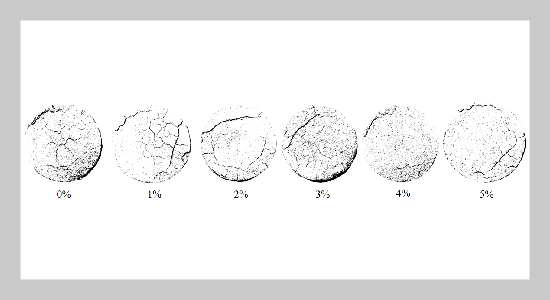
Dry and wet cycling 4 times cleavage skeleton
Copyright The Author(s). This is an open access article distributed under the terms of the Creative Commons Attribution License (CC BY 4.0), which permits unrestricted use, distribution, and reproduction in any medium, provided the original author and source are cited.
Download Citation: BibTeX | http://dx.doi.org/10.6180/jase.202609_32.034
This study examines the impact of sodium polyacrylate (PAAS) on crack resistance in expanded soil subjected to hydraulic erosion, addressing the issue of multiple cracks and strength degradation in this soil type. The findings indicated a 63.56% decrease in the liquid limit and a 92.62% decrease in the plasticity index of the stabilized soil. Additionally, the free expansion ratio decreased to 19.58%. As the PAAS content increased, the expansion ratio decreased by 34% to 57% for no load and by 35% to 93% for load. The initial rise in compressive strength of stable soil is followed by a decline as PAAS content increases. Optimal results are observed at a 4%dosage. Likewise, the deformation modulus initially increases and then decreases, peaking at an 88.93% enhancement. The stabilized soil’s maximum shear strength reached 216.02 kPa , marking a 261.78% increase compared to untreated soil, which coincided with a 112.46% rise in cohesion and a 137.74% increase in the internal friction angle. The compressive strength, cohesion, and angle of the stabilized soil decreased as the number of wet-dry cycles increased. The decrease slowed down after four cycles. X-ray diffraction (XRD) analysis revealed no formation of new minerals post PAAS treatment, with a 43.14% decrease in hydrophilic minerals. Furthermore, a gelation film with adhesive properties was formed, effectively restraining soil crack expansion.
Keywords: Expansive soils; PAAS, Expansion Characteristics; Mechanical Properties; Dry and Wet Cycles; Microscopic Mechanisms
- [1] W.-m. Ye, L.-w. Kong, R.-l. Hu, F.-s. Zha, S.-w. Shi, and Z.-r. Liu, (2022) “Research on New Prevention and Control Techniques and Engineering Demonstration of Expansive Soil Landslides and Engineering Slopes” Chinese Journal of Geotechnical Engineering 44(07): 1295–1309. DOI: 10.11779/CJGE202207009.
- [2] F. Kewei, J. Haoze, L. Jianguo, Y. Jun, and W.-l. Zou, (2022) “Effect of the history of drying-wetting cycles on the deformation of expansive soils in seasonal frost region” Zhongnan Daxue Xuebao (Ziran Kexue Ban)/Journal of Central South University (Science and Technology) 53: 280–287. DOI: 10.11817/j.issn.1672-7207.2022.01.022.
- [3] D. Wang, Z. Zhang, and X. Wang, (2022) “Performance and Micromechanism of Cement-Modified Expansive Soils under the Influence of Freeze-Thaw and Dry-Wet Cycles” Journal of Central South University: Science and Technology 53(01): 306–316. DOI: 10.11817/j.issn.1672-7207.2022.01.025.
- [4] M. Wang, S. Qin, J. Li, and P. Xu, (2014) “Strength of unsaturated lime-treated expansive clay in Hefei” Chinese Journal of Rock Mechanics and Engineering 33(S2): 4233–4238. DOI: 10.13722/j.cnki.jrme.2014.s2.104.
- [5] X. Fu, J. Wang, and G. Zhang, (2017) “Experimental study about mechanic and permeability of soil-cement in different pH value” Journal of Railway Science and Engineering 14(08): 1639–1646. DOI: 10.19713/j.cnki.43-1423/u.2017.08.010.
- [6] Y. Shang, L. Xu, and Y. Cai, (2019) “Dynamic Characteristics of Cement-Improved Expansive Soil Subgrade under Cyclic Dynamic Load of Heavy Haul Railway” China Railway Science 40(06): 19–29. DOI: 10.3969/j.issn.1001-4632.2019.06.03.
- [7] T. Wang, L. Wang, and S. Liu, (2023) “Experimental Study on Mechanical Properties of Expansive Soil Improved by Xanthan Gum and Guar Gum” China Railway Science 44(02): 1–10. DOI: 10.3969/j.issn.1001-4632.2023.02.01.
- [8] S. Naveena and D. Reddy. “Strength Characteristics of Expansive Soils Using Eco-Friendly Xanthan Gum”. In: 2017.
- [9] N. Keshav, A. Prabhu, and A. Kattimani. “Enhancing the Properties of Expansive Soil Using Biopolymers-Xanthan Gum and Guar Gum”. In: 2019. DOI: org/10.1007/978-981-33-6564-3_12.
- [10] U. Ou, H. Zhang, and R. Deng, (2025) “Study on Development of Cracks in Expansive Soil Improved by Xanthan Gum Biopolymer” Chinese Journal of Geotechnical Engineering 47(01): 106–114. DOI: 10.11779/CJGE20230989.
- [11] J. Xiao, Y. Liu, and D. Wang, (2023) “Experimental study on engineering characteristics of composite improvement of expansive soil by using microbial technology” Chinese Journal of Geotechnical Engineering 45(S1): 97–101. DOI: 10.11779/CJGE2023S10047.
- [12] H. Liu, D. Li, and B. Hu, (2022) “Experimental Study on Improving the Swelling Characteristics of Expansive Soil Using MICP Technology” Journal of Yangtze River Scientific Research Institute 39(06): 150–156. DOI: 10.11988/ckyyb.20220049.
- [13] H. Wang, J. Zhang, and H. Guo, (2024) “Experimental study on physical and mechanical properties of expansive soil improved by EICP” Journal of Civil and Environmental Engineering 46(05): 109–116. DOI: 10.11835/j.issn.2096-6717.2023.130.
- [14] N. Latifi, S. Horpibulsuk, C. L. Meehan, M. Z. A. Majid, M. M. Tahir, and E. T. Mohamad, (2016) “Improvement of Problematic Soils with Biopolymer—An Environmentally Friendly Soil Stabilizer” Journal of Materials in Civil Engineering 29(2): 04016204–04016204. DOI: 10.1061/(ASCE)MT.1943-5533.0001706.
- [15] I. Chang, J. Im, and G.-C. Cho, (2016) “Introduction of Microbial Biopolymers in Soil Treatment for Future Environmentally-Friendly and Sustainable Geotechnical Engineering” Sustainability 8(3): 251. DOI: 10.3390/su8030251.
- [16] I. G. Panova, A. A. Kiushov, D. D. Khaydapova, S. B. Zezin, M. S. Arzhakov, and A. A. Yaroslavov, (2021) “A dramatic change in rheological behavior of a clay material caused by a minor addition of hydrophilic and amphiphilic polyelectrolytes” Polymers 13(21): 3662. DOI: 10.3390/polym13213662.
- [17] H. R. Khatami and B. C. O’Kelly, (2013) “Improving Mechanical Properties of Sand Using Biopolymers” Journal of Geotechnical and Geoenvironmental Engineering 139(8): 1402–1406. DOI: 10.1061/(ASCE)GT.1943-5606.0000861.
- [18] M. A. Kumar, A. A. B. Moghal, R. M. Rasheed, and A. U. Rehman, (2025) “Enhancing durability and erosion resistance of soils with varying plasticity using crosslinked biopolymers” Scientific Reports 15(1): 12572–12572. DOI: 10.1038/s41598-025-96977-6.
- [19] H. Fatehi, S. M. Abtahi, and H. Hashemolhosseini, (2018) “A novel study on using protein based biopolymers in soil strengthening” Construction and Building Materials 167: 813–821. DOI: 10.1016/j.conbuildmat.2018.02.028.
- [20] C. Zhu, P. Yu, Z. Guo, Q. Wang, and H. Liu, (2025) “Mechanical Properties and Microstructure Characteristics of Submerged Cement-Based Stabilized Marine Soft Clay Enhanced with ISS and PAM” Journal of Ocean University of China 24(2): 387–403. DOI: 10.1007/s11802-025-5861-8.
- [21] J. Liu, B. Shi, H. Jiang, S. Bae, and H. Huang, (2009) “Improvement of water-stability of clay aggregates admixed with aqueous polymer soil stabilizers” Catena 77(3): 175–179. DOI: 10.1016/j.catena.2008.12.016.
- [22] M. Santos, S. Rebola, and D. V. Evtuguin, (2025) “Soil Remediation: Current Approaches and Emerging Bio-Based Trends” Soil Systems 9(2): 35–35. DOI: 10.3390/SOILSYSTEMS9020035.
- [23] J. Wang, H. Liu, and Z. Lin, (2024) “Experimental study on engineering properties of red clay modified by sodium polyacrylate” Hydrogeology & Engineering Geology 51(03): 110–117. DOI: 10.16030/j.cnki.issn.1000-3665.202305036.
- [24] H. Chen, S. Niu, and S. Feng, (2025) “Engineering properties and microstructure of sodium polyacrylate modified calcium bentonite” Chinese Journal of Geotechnical Engineering 47(04): 860–868. DOI: 10.11779/CJGE20240103.
- [25] F. Yang, Y. Zhao, H. Dong, and H. Wang, (2025) “Mechanical and microscopic characterization of expansive soils modified by water-soluble polymers.” Scientific Reports 15(1): 2315. DOI: 10.1038/s41598-025-85395-3.
- [26] X. Bian, L. Zeng, and X. Li, (2021) “Fabric changes induced by super-absorbent polymer on cement-lime stabilized excavated clayey soil” Journal of Rock Mechanics and Geotechnical Engineering 13(05): 1124–1135. DOI: 10.1016/j.jrmge.2021.03.006.
- [27] M. of Transport of the People’s Republic of China. Test Methods of Soils for Highway Engineering. 2007.
- [28] J. ZHANG, X. ZHAO, and T. JIANG, (2022) “Water retention characteristics of silt improved by three types of biopolymer” Rock and Soil Mechanics 43(08): 2157–2164. DOI: 10.16285/j.rsm.2022.0021.
- [29] Z. HU, W. YE, Q. WANG, and Y. CHEN, (2025) “A Review on the Microstructural Characteristics of Montmorillonite and Its Water Adsorption Mechanisms” Chinese Journal of Geotechnical Engineering: 1–10. DOI: 10.11779/CJGE20250275.
- [30] L. LI, C. HUANG, and W. LI, (2023) “Study on mechanical and microscopic characterization of expensive soil solidified by rice husk ash-granulated blast furnace slag” Rock and Soil Mechanics 44(10): 2821–2832+2842. DOI: 10.16285/j.rsm.2023.0740.
- [31] S. Lee, I. Chang, and M.-K. Chung, (2017) “Geotechnical shear behavior of Xanthan Gum biopolymer treated sand from direct shear testing” Geomechanics and Engineering 12(5): 831–847. DOI: 10.12989/GAE.2017.12.5.831.
- [32] M. Qiang, H. Zeli, H. Zhi, and L. Junhui, (2022) “Strength characteristics and micro-scale mechanism of high liquid limit clay treated by recycled construction and demolition wastes (CDW) aggregates” Construction and Building Materials 332: DOI: 10.1016/J.CONBUILDMAT.2022.127367.
- [33] W. Z. yu, Y. Jin, D. Y. feng, C. Y. yan, and W. L. na, (2023) “Mechanical behavior and strengthening mechanism of red clay solidified by xanthan gum biopolymer” Journal of Central South University 30(6): 1948–1963. DOI: 10.1007/S11771-023-5327-3.
- [34] C. LIU, Q. XU, and B. SHI, (2018) “Digital image recognition method of rock particle and pore system and its application” Chinese Journal of Geotechnical Engineering 40(05): 925–931. DOI: 10.11779/CJGE201805018.
- [35] R. ZHANG, M. LONG, and T. LAN, (2020) “Stability analysis method of geogrid reinforced expansive soil slopes and its engineering application” Journal of Central South University 27(07): 1965–1980. DOI: 10.1007/s11771-020-4423-x.
- [36] A. Ahmad, U. Khalid, and Z. ur Rehman, (2025) “Reclaimed brick masonry waste recycling in macro-micro amelioration of cemented clayey soil: an eco-friendly construction waste solution” Journal of Material Cycles and Waste Management 27(2): 1–22. DOI: 10.1007/S10163-025-02161-3.
- [37] T. Ben-Gang, C. Qing, T. Chao-Sheng, and Z. Hao, (2022) “Effects of compaction state on desiccation cracking behaviour of a clayey soil subjected to wetting-drying cycles” Engineering Geology 302: DOI: 10.1016/J.ENGGEO.2022.106650.
- [38] M. T. Zumstein, A. Schintlmeister, and T. F. Nelson, (2018) “Biodegradation of synthetic polymers in soils: Tracking carbon into CO2 and microbial biomass” Science Advances 4(7): eaas9024. DOI: 10.1126/sciadv.aas9024.