




School of Art and Design, Anhui Institute of Information Technology, wuhu 241000, Anhui, China
Received: December 19, 2025
Accepted: March 16, 2026
Publication Date: May 4, 2026
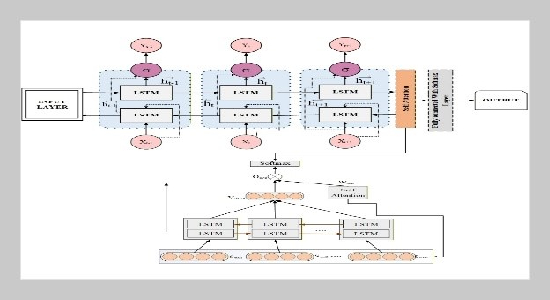
Architecture of self-attention based BILSTM
Copyright The Author(s). This is an open access article distributed under the terms of the Creative Commons Attribution License (CC BY 4.0), which permits unrestricted use, distribution, and reproduction in any medium, provided the original author and source are cited.
Download Citation: BibTeX | http://dx.doi.org/10.6180/jase.202609_32.026
The proposed AI framework for Traditional Chinese dance pose recognition uses multi-view alignment and attention-driven temporal modeling, capturing expressive motion semantics. It preprocesses, extracts features, and classifies poses to preserve cultural heritage, outperforming existing approaches in accuracy. However, existing dance recognition systems often lack robust cross-view adaptability and effective long-range temporal
modeling, limiting their ability to capture expressive motion dynamics in traditional dance. This reveals a research gap in developing a culturally adaptive and temporally attentive recognition framework. Skeletal pose sequences are normalized and segmented, with ResNet extracting discriminative spatial features. These features are modeled using BiLSTM with self-attention to capture long-range past and future temporal dependencies, enabling robust recognition of culturally expressive dance motions. Generative adversarial training using the Archive of Motion Capture as Surface Shapes (AMASS) dataset and spatial feature extraction through ResNet enhance motion realism and generalization. Evaluated across multiple dance categories, the model achieves 96% accuracy, 94.90% precision, 96.17% recall, and 95.53% F1-score, demonstrating robust classification performance. The framework supports digital preservation of Traditional Chinese dance and enables applications in interactive performances, cultural heritage initiatives, and AI-driven dance research.
Keywords: Traditional Chinese Dance; Action Recognition; Pose Estimation; Bidirectional LSTM; Self-Attention Mechanism
- [1] Y. Yu and W. Hu, (2025) “Three-Dimensional Modeling and AI-Assisted Contextual Narratives in Digital Heritage Education: Course for Enhancing Design Skill, Cultural Awareness, and User Experience” Heritage 8(7): 280. DOI: 10.3390/heritage8070280.
- [2] F. M.-Y. Chung, (2024) “Utilising technology as a transmission strategy in intangible cultural heritage: the case of Cantonese opera performances” International Journal of Heritage Studies 30(2): 210–225. DOI: 10.1080/13527258.2023.2284723.
- [3] Z. Xu and L. Jiang, (2025) “Federated learning-based fault location and identification in hybrid AC/DC distribution systems considering bidirectional power flow” J. Eng. Appl. Sci. 72(1): 133. DOI: 10.1186/s44147-025-00694-w.
- [4] Y. Zhong, X. Fu, Z. Liang, Q. Chen, R. Yao, and H. Ning, (2025) “The Application of Artificial Intelligence Technology in the Field of Dance” Applied System Innovation 8(5): DOI: 10.3390/asi8050127.
- [5] C. Xu, Y. Sun, and H. Zhou, (2025) “Artificial Aesthetics and Ethical Ambiguity: Exploring Business Ethics in the Context of AI-driven Creativity” J Bus Ethics 199(4): 671–692. DOI: 10.1007/s10551-024-05837-2.
- [6] N. Partarakis and X. Zabulis, (2024) “A Review of Immersive Technologies, Knowledge Representation, and AI for Human-Centered Digital Experiences” Electronics 13(2): 269. DOI: 10.3390/electronics13020269.
- [7] D. Kostadimas, V. Kasapakis, and K. Kotis, (2025) “A Systematic Review on the Combination of VR, IoT and AI Technologies, and Their Integration in Applications” Future Internet 17(4): 163. DOI: 10.3390/fi17040163.
- [8] R. Šajina and M. Ivašić-Kos, (2022) “3D Pose Estimation and Tracking in Handball Actions Using a Monocular Camera” Journal of Imaging 8(11): 308. DOI: 10.3390/jimaging8110308.
- [9] C. Fang, (2025) “AI-driven digital sculpture design: optimising fusion algorithms with deep learning and virtual reality” International Journal of Information and Communication Technology 26(22): 55–71. DOI: 10.1504/IJICT.2025.146908.
- [10] S. Rani, D. Jining, D. Shah, S. Xaba, and K. Shoukat, (2025) “Examining the impacts of artificial intelligence technology and computing on digital art: a case study of Edmond de Belamy and its aesthetic values and techniques” AI & Soc 40(4): 2417–2435. DOI: 10.1007/s00146-024-01996-y.
- [11] D. Horváth, (2025) “Curtain call for AI: Transforming theatre through technology” Sustainable Futures 9: 100747. DOI: 10.1016/j.sftr.2025.100747.
- [12] K. El-Raheb, L. Kougioumtzian, V. Kalampratsidou, A. Theodoropoulos, P. Kyriakoulakos, and S. Vosinakis, (2025) “Sensing the Inside Out: An Embodied Perspective on Digital Animation Through Motion Capture and Wearables” Sensors 25(7): 2314. DOI: 10.3390/s25072314.
- [13] T. Wang, (2025) “Domain Adaptive English Aspect Word Extraction Method Based On Bidirectional Long And Short-term Memory Network And Multi-head Attention Mechanism” Journal of Applied Science and Engineering 28(12): 2661–2669. DOI: 10.6180/jase.202512_28(12).0013.
- [14] Y. Zhong, X. Fu, Z. Liang, Q. Chen, R. Yao, and H. Ning, (2025) “The Application of Artificial Intelligence Technology in the Field of Dance” Applied System Innovation 8(5): 127. DOI: 10.3390/asi8050127.
- [15] S. R. Sitaraman and P. Alagarsundaram, (2024) “Advanced IoMT-Enabled Chronic Kidney Disease Prediction Leveraging Robotic Automation with Autoencoder-LSTM and Fuzzy Cognitive Maps” International Journal of Modern Electronics and Communication Engineering 12(3):
- [16] D. Chen, N. Sun, J.-H. Lee, C. Zou, and W.-S. Jeon, (2024) “Digital Technology in Cultural Heritage: Construction and Evaluation Methods of AI-Based Ethnic Music Dataset” Applied Sciences 14(23): 10811. DOI: 10.3390/app142310811.
- [17] F. Gîrbacia, (2024) “An Analysis of Research Trends for Using Artificial Intelligence in Cultural Heritage” Electronics 13(18): 3738. DOI: 10.3390/electronics13183738.
- [18] K. Zhang and F. Fassi, (2025) “Transforming Architectural Digitisation: Advancements in AI-Driven 3D Reality-Based Modelling” Heritage 8(2): 81. DOI: 10.3390/heritage8020081.
- [19] Y. Lian and J. Xie, (2024) “The Evolution of Digital Cultural Heritage: Identifying Key Trends, Hotspots, and Challenges through Bibliometric Analysis” Sustainability 16(16): 7125. DOI: 10.3390/su16167125.
- [20] Y. Cohen, A. Biton, and S. Shoval, (2025) “Fusion of Computer Vision and AI in Collaborative Robotics: A Review and Future Prospects” Applied Sciences 15(14): 7905. DOI: 10.3390/app15147905.
- [21] X. Ju, (2025) “The Application of Deep Learning in Dance Movement Design” Int J Comput Intell Syst 18(1): 183. DOI: 10.1007/s44196-025-00907-3.
- [22] Z. Yuezhou, H. Xiangzhen, M. Xianghe, L. S. Shuai, W. Jiaxin, B. Xue, M. Mengdi, L. Zhenjie, C. Ning, W. Hao, W. Lindong, and L. Xihong. Three-dimensional motion dataset of Dunhuang dance. Version V1. Accessed: 2025-12-02. 2024. DOI: 10.57760/sciencedb.j00001.01093.
- [23] C.-B. Lin, Z. Dong, W.-K. Kuan, and Y.-F. Huang, (2021) “A Framework for Fall Detection Based on OpenPose Skeleton and LSTM/GRU Models” Applied Sciences 11(1): 329. DOI: 10.3390/app11010329.
- [24] J. Liu, X. Mu, Z. Liu, and H. Li, (2023) “Human skeleton behavior recognition model based on multi-object pose estimation with spatiotemporal semantics” Machine Vision and Applications 34(3): 44. DOI: 10.1007/s00138-023-01396-0.
- [25] M.-F. R. Lee, Y.-C. Chen, and C.-Y. Tsai, (2022) “Deep Learning-Based Human Body Posture Recognition and Tracking for Unmanned Aerial Vehicles” Processes 10(11): 2295. DOI: 10.3390/pr10112295.