


1Shaoyang University, Shaoyang 422000, Hunan, China
2Shanghai Jianqiao University, Shanghai 201306, Shanghai, China
Received: January 1, 2026
Accepted: March 27, 2026
Publication Date: April 30, 2026
Computational Linguistics Integration in Translation Education
Copyright The Author(s). This is an open access article distributed under the terms of the Creative Commons Attribution License (CC BY 4.0), which permits unrestricted use, distribution, and reproduction in any medium, provided the original author and source are cited.
Download Citation: BibTeX | http://dx.doi.org/10.6180/jase.202609_32.022
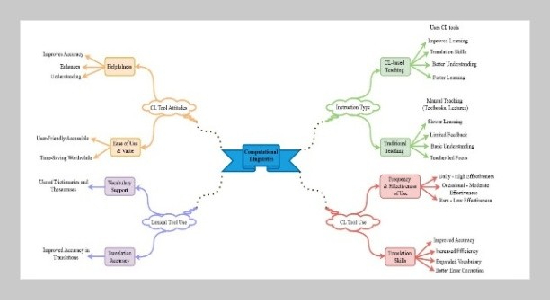
Computational Linguistics tools enhance translation teaching by improving accuracy, fluency, and vocabulary; surveys showed higher scores and fewer errors after use. TS measures translation quality; TE counts grammatical, lexical, structural errors. Results show CL-based teaching improves translation quality, increasing learning efficiency and effectiveness, and supports integrating technology-based techniques into translation pedagogy.
Keywords: Computational Linguistics, Translation Pedagogy, Machine Translation, Error Reduction, Lexical Richness
- [1] A. E. Pierson, D. B. Clark, and C. E. Brady, (2021) “Scientific modeling and translanguaging: A multilingual and multimodal approach to support science learning and engagement” Science Education 105(4): 776–813. DOI: 10.1002/sce.21622.
- [2] X. Shu and X. Gu, (2023) “An Empirical Study of A Smart Education Model Enabled by the Edu-Metaverse to Enhance Better Learning Outcomes for Students” Systems 11(2): 75. DOI: 10.3390/systems11020075.
- [3] M. R. G. Perfecto, (2022) “English language teaching and bridging in mother tongue-based multilingual education” International Journal of Multilingualism 19(1): 107–123. DOI: 10.1080/14790718.2020.1716771.
- [4] S. Badali, K. A. Rawson, and J. Dunlosky, (2022) “Do Students Effectively Regulate Their Use of Self-Testing as a Function of Item Difficulty?” Educational Psychology Review 34(3): 1651–1677. DOI: 10.1007/s10648-022-09665-6.
- [5] A. Alhassan, N. A. Ali, and H. I. H. Ali, (2021) “EFL students’ challenges in English-medium business programmes: Perspectives from students and content teachers” Cogent Education 8(1): 1888671. DOI: 10.1080/2331186X.2021.1888671.
- [6] P. K. Sah and G. Li, (2022) “Translanguaging or unequal languaging? Unfolding the plurilingual discourse of English medium instruction policy in Nepal’s public schools” International Journal of Bilingual Education and Bilingualism 25(6): 2075–2094. DOI: 10.1080/13670050.2020.1849011.
- [7] Q. Zhang, C. Osborne, L. Shao, and M. Lin, (2022) “A translanguaging perspective on medium of instruction in the CFL classroom” Journal of Multilingual and Multicultural Development 43(5): 359–372. DOI: 10.1080/01434632.2020.1737089.
- [8] S. Schwab, U. Sharma, and L. Hoffmann, (2022) “How inclusive are the teaching practices of my German, Maths and English teachers?” International Journal of Inclusive Education 26(1): 61–76. DOI: 10.1080/13603116.2019.1629121.
- [9] J. Pun, N. Thomas, and N. E. J. A. Bowen, (2022) “Questioning the Sustainability of English-Medium Instruction Policy in Science Classrooms” Sustainability 14(4): 2168. DOI: 10.3390/su14042168.
- [10] P. Shaykholeslami, A. K. Ghafi, and M. Atashafrouz, (2025) “Text-Based Simulation of Human-Computer Interaction Using Cognitive-Affective Architectures” International Journal of Sustainable Applied Science and Engineering 2(3): 70–91. DOI: 10.22034/ijsase.
v2i3.189. - [11] M. Y. Yuzlu and K. Dikilitas, (2022) “Translanguaging in the development of EFL learners’ foreign language skills in Turkish context” Innovation in Language Learning and Teaching 16(2): 176–190. DOI: 10.1080/17501229.2021.1892698.
- [12] S. García-Mateus, (2023) “Bilingual student perspectives about language expertise” International Journal of Bilingual Education and Bilingualism 26(1): 34–49. DOI: 10.1080/13670050.2020.1797627.
- [13] A. Ni and A. Cheung, (2023) “Understanding secondary students’ continuance intention to adopt AI-powered tutoring system” Education and Information Technologies 28(3): 3191–3216. DOI: 10.1007/s10639-022-11305-z.
- [14] S. Dovchin, (2021) “Translanguaging, Emotionality, and English as a Second Language Immigrants” TESOL Quarterly 55(3): 839–865. DOI: 10.1002/tesq.3015.
- [15] R. Brooks, (2021) “The construction of higher education students within national policy” Compare: A Journal of Comparative and International Education 51(2): 161–180. DOI: 10.1080/03057925.2019.1604118.
- [16] D. Zhang and B. Li, (2024) “Style-Adaptive Optimization in Software Development Using MOE Structure” Journal of Industrial Engineering and Applied Science 2(5): 33–38. DOI: 10.5281/zenodo.13845335.
- [17] A. H. Abdelrady and H. Akram, (2022) “ClassPoint Tool Application in Enhancing EFL Students’ Online Learning Satisfaction” Systems 10(5): 154. DOI: 10.3390/systems10050154.
- [18] Y. Mao, Q. Liu, and Y. Zhang, (2024) “Sentiment analysis methods, applications, and challenges: A systematic review” Journal of King Saud University – Computer and Information Sciences 36(4): 102048. DOI: 10.1016/j.jksuci.2024.102048.
- [19] Q. Ma, R. Yuan, L. Cheung, and J. Yang, (2024) “Teacher paths for developing corpus-based language pedagogy” Computer Assisted Language Learning 37(3): 461–492. DOI: 10.1080/09588221.2022.2040537.
- [20] M. Nazari and P. Alizadeh Oghyanous, (2021) “Exploring the role of experience in L2 teachers’ turnover intentions” Cogent Education 8(1): 1892943. DOI: 10.1080/2331186X.2021.1892943.
- [21] Y. Wang, (2023) “Artificial Intelligence Technologies in College English Translation Teaching” Journal of Psycholinguistic Research 52(5): 1525–1544. DOI: 10.1007/s10936-023-09960-5.
- [22] R. Kelly and H. Hou, (2022) “Empowering learners of English as an additional language” Language Education 36(6): 544–559. DOI: 10.1080/09500782.2021.1958834.
- [23] Q. Ma, J. Tang, and S. Lin, (2022) “The development of corpus-based language pedagogy for TESOL teachers” Computer Assisted Language Learning 35(9): 2731–2760. DOI: 10.1080/09588221.2021.1895225.
- [24] A. Adel, A. Ahsan, and C. Davison, (2024) “ChatGPT Promises and Challenges in Education” Education Sciences 14(8): 814. DOI: 10.3390/educsci14080814.
- [25] M. Wedyan, J. Falah, O. Elshaweesh, S. Alfalah, and M. Alazab, (2022) “Augmented Reality-Based English Language Learning” Electronics 11(17): 2692. DOI: 10.3390/electronics11172692.
- [26] Y. Xiao and Y. Zhi, (2023) “EFL Learners’ Use of ChatGPT for Language Learning Tasks” Languages 8(3): 212. DOI: 10.3390/languages8030212.
- [27] H. Crompton, A. Edmett, N. Ichaporia, and D. Burke, (2024) “AI and English language teaching: Affordances and challenges” British Journal of Educational Technology 55(6): 2503–2529. DOI: 10.1111/bjet.13460.
- [28] D. Liu, Y. Deng, and K. Wimpenny, (2024) “Students’ perceptions and experiences of translanguaging pedagogy” Teaching in Higher Education 29(5): 1234–1252. DOI: 10.1080/13562517.2022.2129961.
- [29] D. Li and Z. Liu, (2025) “A big data dynamic approach for adaptive music instruction” EURASIP Journal on Audio, Speech, and Music Processing 2025(1): 4. DOI: 10.1186/s13636-025-00391-9.