





Xue Li1, Sheng Huang2, Binghui Zhao2, Jianheng Lin3, and Yun Ren1
1Guandong Power Grid. Co., Ltd, Guangzhou, Guangdong, 510000, China
2Measurement Center of Guangdong Power Grid Co., Ltd, Guangzhou, Guangdong, 510000, China
3Jiangmen Power Supply Bureau of Guangdong Power Grid Co., Ltd. Jiangmen, Guangdong, 510030, China
Received: January 8, 2026
Accepted: March 4, 2026
Publication Date: April 30, 2026
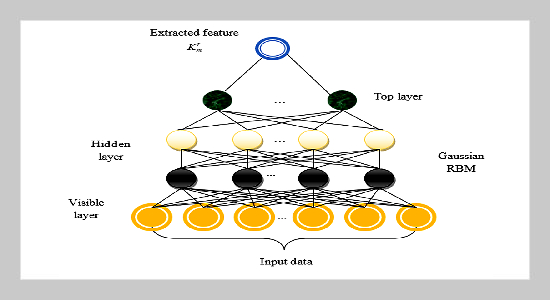
Pictorial view of RBM for feature extraction
Copyright The Author(s). This is an open access article distributed under the terms of the Creative Commons Attribution License (CC BY 4.0), which permits unrestricted use, distribution, and reproduction in any medium, provided the original author and source are cited.
Download Citation: BibTeX | http://dx.doi.org/10.6180/jase.202609_32.021
The transition toward renewable and sustainable energy sources has increased volatility and uncertainty in modern power gridoperations. The intermittent nature of renewable generation, together with rapidly changing demand patterns, necessitates the development of advanced load forecasting and scheduling models, particularly for participants in electricity spot markets. Spot trading involves real-time electricity transactions, where accurate demand prediction is essential to maximize economic returns while ensuring grid stability. Reliable load forecasting enables market participants and grid operators to anticipate demand variations, optimize generation dispatch, and reduce operational risks. Despite significant progress in forecasting techniques, unforeseen events such as extreme weather conditions, system disturbances, and market fluctuations continue to
challenge prediction accuracy. The primary objective of this study is to investigate and evaluate efficient load forecasting and scheduling models tailored for electricity spot trading systems. Additionally, the research aims to identify innovative forecasting strategies that significantly outperform conventional methods, highlighting their practical advantages. To validate the effectiveness of the proposed approach, the developed models
are benchmarked against traditional techniques. The results demonstrate that the proposed forecasting and scheduling methods achieve superior accuracy and efficiency.
Keywords: load forecasting, electricity spot trading, sustainable energy sources, scheduling model
- [1] X. Y. Tian, Y. H. Liu, J. Wang, W. W. Deng, and H. Oh, (2016) “Computational security for context-awareness in vehicular ad-hoc networks” IEEE Access 4: 5268–5279. DOI: 10.1109/ACCESS.2016.2598155.
- [2] A. Kathirgamanathan, A. Patel, A. S. Khwaja, B. Venkatesh, and A. Anpalagan, (2022) “Performance comparison of single and ensemble CNN, LSTM, and traditional ANN models for short-term electricity load forecasting” Journal of Engineering 2022: 1–12. DOI: 10.1049/tje.2.12132.
- [3] M. Wei, M. Wen, and Y. Zhang, (2023) “A novel spatial electric load forecasting method based on LDTW and GCN” IET Generation, Transmission and Distribution 17: 1–10. DOI: 10.1049/gtd2.13088.
- [4] B. Nepal, M. Yamaha, A. Yokoe, and T. Yamaji, (2019) “Electricity load forecasting using clustering and ARIMA model for energy management in buildings” Japan Architectural Review 2: 1345–1356. DOI: 10.1002/2475-8876.12135.
- [5] D. Lu, D. Zhao, and Z. Li, (2021) “Short-term nodal load forecasting based on machine learning techniques” International Transactions on Electrical Energy Systems 2021: 1–9. DOI: 10.1002/2050-7038.13016.
- [6] N. A. Mohammed and A. Al-Bazi, (2020) “An adaptive backpropagation algorithm for long-term electricity load forecasting” Neural Computing and Applications 32: 8435–8454. DOI: 10.1007/s00521-021-06384-x.
- [7] F. Mohammad and Y. C. Kim, (2019) “Energy load forecasting model based on deep neural networks for smart grids” International Journal of System Assurance Engineering and Management 10: 520–535. DOI: 10.1007/s13198-019-00884-9.
- [8] N. M. M. Bendaoud and N. Farah, (2020) “Using deep learning for short-term load forecasting” Neural Computing and Applications 32: 1241–1255. DOI: 10.1007/s00521-020-04856-0.
- [9] G. Zhang, C. Wei, C. Jing, and Y. Wang, (2022) “Short-term electrical load forecasting based on time augmented transformer” International Journal of Computational Intelligence Systems 15: 465–475. DOI: 10.1007/s44196-022-00128-y.
- [10] A. Corte-Real, G. Pontes Luz, J. M. C. Sousa, M. C. Brito, and S. M. Vieira, (2024) “Optimization of a photovoltaic-battery system using deep reinforcement learning and load forecasting” Energy and AI 14: 9–21. DOI: 10.1016/j.egyai.2024.100347.
- [11] C. Lee, S. H. Kim, and C. H. Youn, (2020) “Cooperating edge cloud-based hybrid online learning for accelerated energy data stream processing in load forecasting” IEEE Access 8: 199120–199132. DOI: 10.1109/ACCESS.2020.3035421.
- [12] Z. Hamad and I. Abdulrahman, (2022) “Deep learning-based load forecasting considering data reshaping using MATLAB/Simulink” International Journal of Energy and Environmental Engineering 13: 143–155. DOI: 10.1007/s40095-022-00480-x.
- [13] H. I. El-Azab, R. A. Swief, N. H. El-Amary, and H. K. Temraz, (2021) “Machine and deep learning approaches for forecasting electricity price and energy load assessment on real datasets” Energy Systems Policy 22: 789–800. DOI: 10.1016/j.asej.2023.102613.
- [14] B. Xiong, Y. Guo, L. Zhang, J. Li, X. Liu, and L. Cheng, (2023) “Optimizing electricity demand scheduling in microgrids using deep reinforcement learning for cost-efficiency” IET Generation, Transmission and Distribution 17: 1154–1163. DOI: 10.1049/gtd2.12866.
- [15] S. Lu, G. Lin, H. Que, L. Chen, H. Liu, C. Ye, and D. Yi, (2018) “Electric load data characterizing and forecasting based on trend index and autoencoders” Journal of Engineering 2018: 1245–1256. DOI: 10.1049/joe.2018.8350.
- [16] A. Gasparin, S. Lukovic, and C. Alippi, (2021) “Deep learning for time series forecasting: the electric load case” CAAI Transactions on Intelligence Technology 6: 47–58. DOI: 10.1049/cit.2.12060.
- [17] S. Habib, M. M. Khan, F. Abbas, A. Ali, K. Hashmi, M. U. Shahid, Q. Bo, and H. Tang, (2020) “Risk evaluation of distribution networks considering residential load forecasting with stochastic modelling of electric vehicles” Energy Technology 8: 1556–1569. DOI: 10.1002/ente.201900191.
- [18] J. Faraji, A. Ketabi, H. Hashemi-Dezaki, M. Shafie-Khah, and J. P. S. Catalão, (2020) “Optimal day-ahead scheduling and operation of the prosumer by considering corrective actions based on very short-term load forecasting” IEEE Access 8: 83561–83582. DOI: 10.1109/ACCESS.2020.2991482.
- [19] M. Jawad, M. S. A. Nadeem, and S. O. Shim, (2020) “Machine learning-based cost-effective electricity load forecasting model using correlated meteorological parameters” IEEE Access 8: 146847–146864. DOI: 10.1109/ACCESS.2020.3014086.
- [20] H. Khani and M. Farag, (2018) “Optimal day-ahead scheduling of power-to-gas energy storage and gas load management in wholesale electricity and gas markets” IEEE Transactions on Sustainable Energy 9(2): 940–951. DOI: 10.1109/TSTE.2017.2767064.
- [21] M. V. Devarajan, (2022) “An improved BP neural network algorithm for forecasting workload in intelligent cloud computing” Journal of Current Science 10(3): URL: https://www.researchgate.net/publication/389880230.
- [22] F. Wang, C. Chen, H. Zhang, and Y. Ma, (2022) “Short-term load forecasting based on variational mode decomposition and chaotic grey wolf optimization improved random forest algorithm” Journal of Applied Science and Engineering 26(1): 69–78. DOI: 10.6180/jase.202301_26(1).0008.
- [23] J. Gao, J. Yang, G. Wang, and M. Li, (2016) “A novel feature extraction method for scene recognition based on centered convolutional restricted Boltzmann machines” Neurocomputing 214: 19–25. DOI: 10.1016/j.neucom.2016.06.055.
- [24] B. B. Du, H. Peng, S. Wang, and M. Z. Alam, (2020) “Deep irregular convolutional residual LSTM for urban traffic passenger flows prediction” IEEE Transactions on Intelligent Transportation Systems 21: 972–985. DOI: 10.1109/TITS.2019.2900481.
- [25] M. Dehghani and P. Trojovský, (2023) “Osprey optimization algorithm: a new bio-inspired metaheuristic algorithm for solving engineering optimization problems” Frontiers in Mechanical Engineering 22: 45–56. DOI: 10.3389/fmech.2022.1126450.
- [26] A. H. Habib, J. Kleissl, and R. A. de Callafon, (2016) “Model predictive load scheduling using solar power forecasting” Proceedings of the American Control Conference 2016: 3200–3205. DOI: 10.1109/ACC.2016.7525410.
- [27] X. Deng, A. Ye, J. Zhong, D. Xu, W. Yang, Z. Song, Z. Zhang, J. Guo, T. Wang, Y. Tian, H. Pan, Z. Zhang, C. Wu, J. Shao, and X. Chen, (2022) “Bagging-XGBoost algorithm based extreme weather identification and short-term load forecasting model” Energy Reports 8: 8661–8674. DOI: 10.1016/j.egyr.2022.06.072.
- [28] H. Bian, Y. Zhong, J. Sun, and F. Shi, (2020) “Study on power consumption load forecast based on K-means clustering and FCM-BP model” Energy Reports 6: 693–700. DOI: 10.1016/j.egyr.2020.11.148.
- [29] X. Ge, F. Xu, Y. Wang, H. Li, F. Wang, and J. Hu, (2022) “Spatio-temporal two-dimensions data based customer baseline load estimation approach using LASSO regression” IEEE Transactions on Industry Applications 58: 3112–3122. DOI: 10.1109/TIA.2022.3148351.