




Received: January 7, 2026
Accepted: February 25, 2026
Publication Date: April 25, 2026
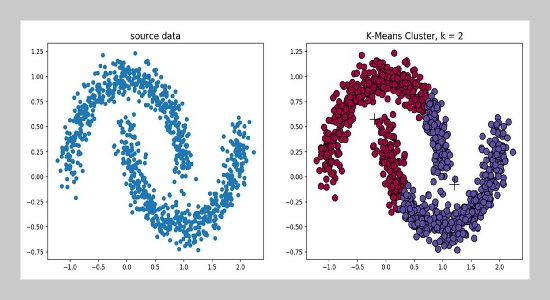
Dimension code diagram.
Copyright The Author(s). This is an open access article distributed under the terms of the Creative Commons Attribution License (CC BY 4.0), which permits unrestricted use, distribution, and reproduction in any medium, provided the original author and source are cited.
Download Citation: BibTeX | http://dx.doi.org/10.6180/jase.202609_32.015
The rapid expansion of ice and snow sports has highlighted critical challenges in the design and delivery of specialized curricula. Traditional teaching models often fall short due to fragmented structures, inconsistent resource allocation, and a lack of personalized, data-informed instructional strategies. This study proposes an intelligent, biologically-informed framework for optimizing ice and snow sports education by integrating innovation and entrepreneurship education, clustering algorithms, and big data analytics. We first explore the application of fuzzy c-means (FCM), optimized K-means, and hybrid metaheuristic algorithms in the evaluation and classification of informatization levels across specialized sports schools. Data were collected through nationwide surveys and processed using orthogonal matching pursuit and min-max normalization for standardization. Results from clustering and dimensionality reduction reveal three distinct levels of informatization application, supporting a more tailored educational model. Moreover, by embedding biological principles—such as individualized performance feedback and recovery analysis—into curriculum evaluation, the study enhances personalization and ecological adaptability in sports education.
Keywords: Intelligent Transformation; Ice and Snow Sports; Biomechanical Education; Innovation and Entrepreneurship; Curriculum Optimization
- [1] N. Wang, Y. Jiang, H. Xu, Y. Fang, Y. Zhang, and Z. Wu, (2022) “A pre-game evaluation of the tourism legacy of the Beijing 2022 Winter Olympic Games” Journal of Resources and Ecology 13(4): 578–591. DOI: 10.5814/j.issn.1674-764x.2022.04.004.
- [2] C. Tang, R. Zeng, Y. Yang, S. Xu, and X. Wang, (2022) “High-quality development paths of ice-snow tourism in China from the perspective of the Winter Olympics” Journal of Resources and Ecology 13(4): 552–563. DOI: 10.5814/j.issn.1674-764x.2022.04.002.
- [3] J. Wang and Y. Sun, (2022) “Relationships between tourist experiential value and ice-snow tourism loyalty in Zhangjiakou City, and the moderating effects of travel companions” Journal of Resources and Ecology 13(4): 646–654. DOI: 10.5814/j.issn.1674-764x.2022.04.010.
- [4] A. Lourdusamy, I. Dhivviyanandam, and L. Mathew, (2024) “NDC pebbling number for some class of graphs” Journal of Combinatorial Mathematics and Combinatorial Computing 119: 121–128. DOI: 10.61091/jcmcc119-13.
- [5] L. Wu, J. Xu, Z. Yan, S. Gao, W. Lin, and B. Xia, (2022) “The spatio-temporal evolution of ski resorts in the Beijing–Tianjin–Hebei region: Characteristics and influencing factors” Journal of Resources and Ecology 13(4): 592–602. DOI: 10.5814/j.issn.1674-764x.2022.04.005.
- [6] F. Costamagna, R. Lind, and O. Stjernström, (2019) “Livability of urban public spaces in northern Swedish cities: The case of Umeå” Planning Practice & Research 34(2): 131–148. DOI: 10.1080/02697459.2018.1548215.
- [7] A. Shaktawat and S. Vadhera, (2021) “Risk management of hydropower projects for sustainable development: A review” Environment, Development and Sustainability 23(1): 45–76. DOI: 10.1007/s10668-020-00607-2.
- [8] K. Warner, Z. Zommers, A. Wreford, M. Hurlbert, D. Viner, J. Scantlan, and C. Tamang, (2019) “Characteristics of transformational adaptation in climate–land–society interactions” Sustainability 11(2): 356. DOI: 10.3390/su11020356.
- [9] D. Li, (2024) “The comprehensive training effect of translation ability of college English majors based on machine learning” Journal of Combinatorial Mathematics and Combinatorial Computing 120: 399–410. DOI: 10.61091/jcmcc120-037.
- [10] B. Pang, J. Qian, Y. Zhang, Y. Jia, H. Ni, S. D. Pang, and Z. Liu, (2019) “5S multifunctional intelligent coating with superdurable, superhydrophobic, self-monitoring, self-heating, and self-healing properties for existing construction application” ACS Applied Materials & Interfaces 11(32): 29242–29254. DOI: 10.1021/acsami.9b08303.
- [11] L. Guo and Y. Sun, (2024) “Economic forecasting analysis of high-dimensional multifractal action based on financial time series” International Journal for Housing Science and Its Applications 45(1): 11–19. URL: https://housingscience.org/volume-45-issue-1/economic-forecasting-analysis-of-high-dimensional-multifractal-action-based-on-financial-time-series-2/.
- [12] A. Altay and İ. H. Mirici, (2024) “EFL instructors’ implementations of 21st century skills in their classes” International Journal for Housing Science and Its Applications 45(2): 37–46. URL: https://housingscience.org/2024%28issue%2029/20242-06-IJHSA.pdf.
- [13] Y. Li, L. Wang, Z. Wang, Q. Liu, G. Qin, and J. Zhang, (2025) “Intelligent optimization of track and field teaching using machine learning and wearable sensors” Scientific.
- [14] A. Ç. Seçkin, B. Ateş, and M. Seçkin, (2023) “Review on wearable technology in sports: Concepts, challenges and opportunities” Applied Sciences 13(18): 10399. DOI: 10.3390/app131810399.
- [15] J. Si and A. R. Thelkar, (2024) “Leveraging artificial neural networks for enhanced athlete performance evaluation through IMU data analysis” Heliyon 10(15): DOI: 10.1016/j.heliyon.2024.e34826.
- [16] S. H. Grandhi, B. R. Gudivaka, R. L. Gudivaka, R. K. Gudivaka, D. K. R. Basani, and M. M. Kamruzzaman, “Detection and diagnosis of ECH signal wearable system for sportsperson using improved monkey-based search support vector machine” International Journal of High Speed Electronics and Systems: 2540149. DOI: 10.1142/S0129156425401494.
- [17] Y. Wu, (2024) “Exploration of the integration and application of the modern new Chinese style interior design” International Journal for Housing Science and Its Applications 45(2): 28–36. URL: https://housingscience.org/volume-45-issue-2/exploration-of-the-integration-and-application-of-the-modern-new-chinese-style-interior-design/.
- [18] L. Fu, Y. Liu, and Z. Yang, (2022) “Influence of ice and snow sports participation experience on participation constraints among residents in southern China: A quantitative analysis based on propensity score matching” Journal of Resources and Ecology 13(4): 624–634. DOI: 10.5814/j.issn.1674-764x.2022.04.008.
- [19] M. A. S. M. Ramadan and M. El-Halaby, (2020) “Integrative relationship between environmental architecture and interior design towards sustainability” International Journal of Architectural Engineering and Urban Research 3(2): 38–46.
- [20] H. Huang, Q. Li, and Y. Zhang, (2019) “Urban residential land suitability analysis combining remote sensing and social sensing data: A case study in Beijing, China” Sustainability 11(8): 2255. DOI: 10.3390/su11082255.
- [21] S. D. Bang and D. J. Cecil, (2019) “Constructing a multifrequency passive microwave hail retrieval and climatology in the GPM domain” Journal of Applied Meteorology and Climatology 58(9): 1889–1904. DOI: 10.1175/JAMC-D-19-0042.1.
- [22] Y. Yan, K. Huang, D. Shao, Y. Xu, and W. Gu, (2019) “Monitoring the characteristics of the Bohai Sea ice using high-resolution geostationary ocean color imager (GOCI) data” Sustainability 11(3): 777. DOI: 10.3390/su11030777.
- [23] K. Zhang and J. Kevern, (2021) “Review of porous asphalt pavements in cold regions: The state of practice and case study repository in design, construction, and maintenance” Journal of Infrastructure Preservation and Resilience 2(1): 1–17. DOI: 10.1186 / s43065-021-00017-2.
- [24] J. D. Ford, D. Clark, T. Pearce, L. Berrang-Ford, L. Copland, J. Dawson, and S. L. Harper, (2019) “Changing access to ice, land and water in Arctic communities” Nature Climate Change 9(4): 335–339. DOI: 10.1038/s41558-019-0435-7.
- [25] W. Cramer, J. Guiot, M. Fader, J. Garrabou, J.-P. Gattuso, A. Iglesias, and E. Xoplaki, (2018) “Climate change and interconnected risks to sustainable development in the Mediterranean” Nature Climate Change 8(11): 972–980. DOI: 10.1038/s41558-018-0299-2.