




School of Digital Commerce and TradeChangzhou Vocational Institute of Textile and GarmentChangzhou 213164, Jiangsu, China.
Received: December 13, 2025
Accepted: March 22, 2026
Publication Date: April 12, 2026
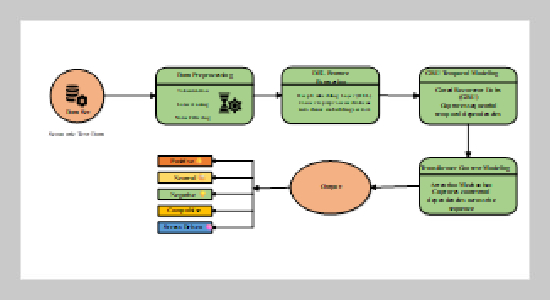
DEL-GRU-Transformer Architecture
Copyright The Author(s). This is an open access article distributed under the terms of the Creative Commons Attribution License (CC BY 4.0), which permits unrestricted use, distribution, and reproduction in any medium, provided the original author and source are cited.
Download Citation: BibTeX | http://dx.doi.org/10.6180/jase.202609_32.006
This paper proposes an AI framework analyzing psychological factors in online shopping addiction and compulsive purchasing behavior. This study utilizes an openly available Mendeley dataset containing behavioural, demographic, and emotional indicators of women’s online shopping behaviour. The DEL-GRU-Transformer model extracts emotional embeddings, models sequences, and captures context, achieving 97% accuracy. Results show strong classification of positive, neutral, negative, and stress-driven emotions with low error rates and high Area Under the Curve (AUC). The framework helps understand psychological triggers of compulsive online shopping and supports future prevention and personalized intervention strategies.
Keywords: Consumer Emotion Modelling; Dense Emotional Layer (DEL); GRU-Transformer Hybrid Model; Online Shopping Addiction
- [1] V. Vrhovac, S. Vasić, S. Milisavljević, B. Dudić, P. Štarčoň, and M. Žižakov, (2023) “Measuring E-Commerce User Experience in the Last-Mile Delivery” Mathematics 11(6): 1482. DOI: 10.3390/math11061482.
- [2] P. Cuesta-Valiño, P. Gutiérrez-Rodríguez, B. García-Henche, and E. Núñez-Barriopedro, (2024) “The impact of corporate social responsibility on consumer brand engagement and purchase intention at fashion retailers” Psychology and Marketing 41(3): 649–664. DOI: 10.1002/mar.21940.
- [3] X. Yang, B. Lai, and C. Tang, (2023) “Experiential Product Promotions on e-Commerce Platform: From the Perspective of Consumer Cognition and Emotion” SAGE Open 13(1): 21582440231153857. DOI: 10.1177/21582440231153857.
- [4] A. Bonfanti, V. Vigolo, V. Vannucci, and F. Brunetti, (2023) “Creating memorable shopping experiences to meet phygital customers’ needs: evidence from sporting goods stores” International Journal of Retail and Distribution Management 51(13): 81–100. DOI: 10.1108/IJRDM-12-2021-0588.
- [5] S. e. a. Pardini, (2022) “The Role of Personalization in the User Experience, Preferences and Engagement with Virtual Reality Environments for Relaxation” International Journal of Environmental Research and Public Health 19(12): 7237. DOI: 10.3390/ijerph19127237.
- [6] J. Yang, C. Cao, C. Ye, and Y. Shi, (2022) “Effects of Interface Design and Live Atmosphere on Consumers’ Impulse-Buying Behaviour from the Perspective of Human–Computer Interaction” Sustainability 14(12): 7110. DOI: 10.3390/su14127110.
- [7] A. Braca and D. Dondio, (2023) “Developing persuasive systems for marketing: the interplay of persuasion techniques, customer traits and persuasive message design” Italian Journal of Marketing 2023(3): 369–412. DOI: 10.1007/s43039-023-00077-0.
- [8] N. e. a. Etxaburu, (2024) “Buying-shopping disorder, impulsivity, emotional dependence and attachment in adolescents” Current Psychology 43(2): 1507–1518. DOI: 10.1007/s12144-023-04425-3.
- [9] J. Nyrhinen, K. Lonka, A. Sirola, M. Ranta, and T.-A. Wilska, (2023) “Young adults’ online shopping addiction: The role of self-regulation and smartphone use” International Journal of Consumer Studies 47(5): 1871–1884. DOI: 10.1111/ijcs.12961.
- [10] J. e. a. David, (2024) “Emotional difficulties mediate the impact of adverse childhood experiences on compulsive buying-shopping problems” Journal of Behavioral Addictions 13(4): 1064–1073. DOI: 10.1556/2006.2024.00056.
- [11] D. Vrtana and A. Krizanova, (2023) “The Power of Emotional Advertising Appeals: Examining Their Influence on Consumer Purchasing Behavior and Brand–Customer Relationship” Sustainability 15(18): 13337. DOI: 10.3390/su151813337.
- [12] B. Bharadwaj, S. Nayak, and P. K. Panigrahi, (2025) “Sentiment analysis for identifying depression through social media texts using machine learning” Big Data Computing and Visualization 5(2): 102–118. DOI: 10.22105/bdcv.2025.499270.1239.
- [13] J. Sathya, M. Babu, J. Gayathri, G. Indhumathi, Z. A. Samad, and E. Anandhi, (2023) “Compulsive buying behavior and online shopping addiction of women” Information Science Letters 12(5): 1641–1650. DOI: 10.17632/m4bp9p2n8j.1.
- [14] S.-V. Oprea and A. Bâra, (2025) “Extracting Emotions from Customer Reviews Using Text Mining, Large Language Models and Fine-Tuning Strategies” Journal of Theoretical and Applied Electronic Commerce Research 20(3): 221. DOI: 10.3390/jtaer20030221.
- [15] P. Patel et al., (2025) “Application of supervised machine learning models in human emotion classification using Tsallis entropy as a feature” Journal of Big Data 12(1): 126. DOI: 10.1186/s40537-025-01177-8.