




Basori1, Wan Mohd Farid Wan Mohamad2,3, Noreffendy Tamaldin2,3, Muhd Ridzuan Mansor2,3, Maman Kartaman Ajiriyanto4, Arif Nugroho4, Rosika Kriswarini4, Juan Carlos
Sihotang4, Sigit Dwi Yudanto5, Cahaya Rosyidan6, and Ferry Budhi Susetyo7
1Department of Mechanical Engineering, Universitas Nasional, 12520, Indonesia
2Faculty of Mechanical Technology and Engineering, Universiti Teknikal Malaysia Melaka, Hang Tuah Jaya, 76100 Durian Tunggal, Melaka, Malaysia
3Centre for Advanced Research on Energy, Universiti Teknikal Malaysia Melaka, Hang Tuah Jaya, 76100 Durian Tunggal, Melaka, Malaysia
4Research Center for Nuclear Material and Radioactive Waste Technology – National Research and Innovation Agency, 15314, Indonesia
5Research Center for Metallurgy – National Research and Innovation Agency, 15314, Indonesia
6Department of Petroleum Engineering, Universitas Trisakti, 11440, Indonesia
7Department of Mechanical Engineering, Universitas Negeri Jakarta, 13220, Indonesia
Received: August 15, 2024
Accepted: December 23, 2024
Publication Date: April 6, 2026
Location of the KVMRT project
Copyright The Author(s). This is an open access article distributed under the terms of the Creative Commons Attribution License (CC BY 4.0), which permits unrestricted use, distribution, and reproduction in any medium, provided the original author and source are cited.
Download Citation: BibTeX | http://dx.doi.org/10.6180/jase.202510_28(10).0010
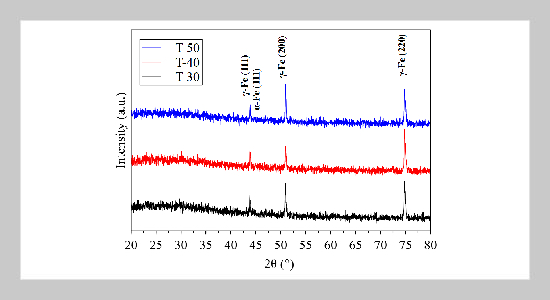
This study deals with the electrochemical behaviors of SS316L at various temperatures in a 3M KOH solution. The mounted SS316L was subjected to electrochemical measurement using a Potentiostat with an exposure area of 1 cm2. Following electrochemical measurements, the samples were analyzed with a Scanning electron microscope equipped with Energy dispersive spectroscopy (SEM-EDS) to observe the surface morphology and element distribution. Identifying the phases present in the samples is done through X-ray diffraction (XRD). On the basis of SEM images, the surface roughness was also examined. According to OCP investigations, only the lowest solution temperature sample (30 °C) show that they are moving forward in a positive direction. Shifting to a higher solution temperature (from 30 to 50 °C) led to an increase in passive current density according to LSV oxidation measurement. The lowest solution temperature sample (30 °C) shows the lowest corrosion rate and a higher capacitive arc. In contrast, higher hydrogen production is seen in the highest solution temperature sample (50 °C). Moreover, all samples shows p-type and n-type semiconducting properties. According to EDS measurements, the Mn element was not detected in all samples after the electrochemical test due to was sacrificing during corrosion occurs. All samples contain face-centered cubic (fcc)-austenite (γ − Fe) as its main phase. The surface of SS316L did not show any oxides to form, probably due to an excessively thin or nanoscale oxide layer on the surface.
Keywords: Electrochemical behavior; Semiconducting; Surface morphology; Element; Structure
- [1] X. An, Q. Zhao, and X. Li, (2024) “Feasibility Study of Using Industrial Wind Turbine in Manjil City by Energy, Exergy, Economic and Exergy Destruction Analysis” Journal of Applied Science and Engineering 27: 2713–2723. DOI: 10.6180/jase.202406_27(6).0011.
- [2] K. B. M. Kiran, M. S. Indira, and R. Nagaraja, (2022) “Mathematical Modeling and Evaluation of Performance Characteristics of a Hybrid Solar PV and Wind Energy System” Journal of Applied Science and Engineering 25: 785–797. DOI: 10.6180/jase.202208_25(4).0014.
- [3] F. Dawood, M. Anda, and G. Shafiullah, (2020) “Hydrogen Production for Energy: An Overview” International Journal of Hydrogen Energy 45: 3847–3869. DOI: 10.1016/j.ijhydene.2019.12.059.
- [4] I. Puspitasari, N. Wahyudi, Y. A. Fakhrudi, and G. P. Wicaksono, (2021) “Design of Generator HHO Dry Cell Type and Application on 110 CC Engined Vehicles Towards Gas Emissions” Journal of Physics: Conference Series 1845: 012002. DOI: 10.1088/1742-6596/1845/1/012002.
- [5] S. A. Musmar and A. A. Al-Rousan, (2011) “Effect of HHO Gas on Combustion Emissions in Gasoline Engines” Fuel 90: 3066–3070. DOI: 10.1016/j.fuel.2011.05.013.
- [6] C.-W. Sun and S.-S. Hsiau, (2018) “Effect of Electrolyte Concentration Difference on Hydrogen Production During PEM Electrolysis” Journal of Electrochemical Science and Technology 9: 99–108. DOI: 10.5229/JECST.2018.9.2.99.
- [7] I. Hamidah, A. Solehudin, and A. Setiawan, (2016) “Effect of Variation of Kalium Hydroxide Solution Concentration and Temperature to the Corrosion Resistance of AISI 304, AISI 316, and Copper Alloys in Water Electrolysis Apparatus” ARPN Journal of Engineering and Applied Science 11: 972–977.
- [8] M. H. Sellami and K. Loudiyi, (2017) “Electrolytes Behavior during Hydrogen Production by Solar Energy” Renewable and Sustainable Energy Reviews 70: 1331–1335. DOI: 10.1016/j.rser.2016.12.034.
- [9] A. Budiman, M. Yerizam, and Y. Bow, (2021) “Design of Dry Cell HHO Generator using NaCl Solution for Hydrogen Production” Indonesian Journal of Fundamental And Applied Chemistry (IJFAC) 7: 8–15. DOI: 10.24845/ijfac.v7.i1.8.
- [10] A. B. Vethamony and V. Thangavel, (2023) “Experiments on the Effect of Temperature on HHO Production by Alkaline Water Electrolysis” Materials Today: Proceedings: DOI: 10.1016/j.matpr.2023.03.771.
- [11] A. El Soly, M. El Kady, A. E. F. Farrag, and M. Gad, (2021) “Comparative Experimental Investigation of Oxyhydrogen (HHO) Production Rate using Dry and Wet
Cells” International Journal of Hydrogen Energy 46: 12639–12653. DOI: 10.1016/j.ijhydene.2021.01.110. - [12] B. Basori, W. M. Mohamad, M. R. Mansor, N. Tamaldin, A. Iswandi, M. K. Ajiriyanto, and F. B. Susetyo, (2023) “Effect of KOH Concentration on Corrosion Behavior and Surface Morphology of Stainless Steel 316L for HHO Generator Application” Journal of Electrochemical Science and Engineering 13: 451–467. DOI: 10.5599/jese.1615.
- [13] M. BenSalah, R. Sabot, E. Triki, L. Dhouibi, P. Refait, and M. Jeannin, (2014) “Passivity of Sanicro28 (UNS N-08028) Stainless Steel in Polluted Phosphoric Acid at Different Temperatures Studied by Electrochemical Impedance Spectroscopy and Mott-Schottky Analysis” Corrosion Science 86: 61–70. DOI: 10.1016/j.corsci.2014.04.056.
- [14] C. Escrivà-Cerdán, E. Blasco-Tamarit, D. M. GarcíaGarcía, J. García-Antón, and A. Guenbour, (2012) “Passivation Behaviour of Alloy 31 (UNS N08031) in Polluted Phosphoric Acid at Different Temperatures” Corrosion Science 56: 114–122. DOI: 10.1016/j.corsci.2011.11.014.
- [15] Z. Wang, Z. Feng, and L. Zhang, (2020) “Effect of High Temperature on the Corrosion Behavior and Passive Film Composition of 316 L Stainless Steel in High
H2S-containing Environments” Corrosion Science 174: 108844. DOI: 10.1016/j.corsci.2020.108844. - [16] H. Krungkarnchana and C. Kongvarhodom, (2019) “Low Temperature Corrosion: Oxidation of Carbon Steel and Stainless Steel in Air” Applied Science and Engineering Progress 12: 44–51. DOI: 10.14416/j.ijast.2018.05.001.
- [17] B. Basori, W. Mohamad, N. Tamaldin, M. Mansor, M. Ajiriyanto, S. Yudanto, and F. Susetyo, (2023) “Influence of Temperature and Azithromycin on the Surface of SS 316L in a KOH Solution” International Journal of Corrosion and Scale Inhibition 12: 258–274. DOI: 10.17675/2305-6894-2023-12-1-15.
- [18] Z. Ahmad, (2006) “Principles of Corrosion Engineering and Corrosion Control”: 1–656. DOI: 10.1016/b978-0-7506-5924-6.x5000-4.
- [19] M. Talha, C. Behera, and O. Sinha, (2012) “Potentiodynamic Polarization Study of Type 316L and 316LVM Stainless Steels for Surgical Implants in Simulated Body Fluids” Journal of Chemical and Pharmaceutical Research 4: 203–208.
- [20] Ž. Z. Tasić, M. B. P. Mihajlović, M. B. Radovanović, and M. M. Antonijević, (2018) “Electrochemical Investigations of Copper Corrosion Inhibition by Azithromycin
in 0.9% NaCl” Journal of Molecular Liquids 265: 687–692. DOI: 10.1016/j.molliq.2018.03.116. - [21] F. Arjmand, L. Zhang, and J. Wang, (2017) “Effect of Temperature, Chloride and Dissolved Oxygen Concentration on the Open Circuit and Transpassive Potential Values of 316L Stainless Steel at High-Temperature Pressurized Water” Nuclear Engineering and Design 322: 215–226. DOI: 10.1016/j.nucengdes.2017.06.048.
- [22] H. Iken, R. Basseguy, A. Guenbour, and A. B. Bachir, (2007) “Classic and Local Analysis of Corrosion Behaviour of Graphite and Stainless Steels in Polluted Phosphoric Acid” Electrochimica Acta 52: 2580–2587. DOI: 10.1016/j.electacta.2006.09.013.
- [23] Z. Wang, L. Zhang, X. Tang, Z.-y. Cui, J.-p. Xue, and M.-x. Lu, (2017) “Investigation of the Deterioration of Passive Films in H2S-containing Solutions” International Journal of Minerals, Metallurgy, and Materials 24: 943–953. DOI: 10.1007/s12613-017-1482-6.
- [24] R. D. Monteiro, J. V. D. Wetering, B. Krawczyk, and D. L. Engelberg, (2019) “Corrosion Behaviour of Type 316L Stainless Steel in Hot Caustic Aqueous Environments” Metals and Materials International 26: 630– 640. DOI: 10.1007/s12540-019-00403-2.
- [25] Y. Yang, L. Guo, and H. Liu, (2011) “The Effect of Temperature on Corrosion Behavior of SS316L in the Cathode Environment of Proton Exchange Membrane Fuel Cells” Journal of Power Sources 196: 5503–5510. DOI: 10.1016/j.jpowsour.2011.02.070.
- [26] M. Ridha, S. Fonna, S. Huzni, J. Supardi, and A. Ariffin, (2013) “Atmospheric Corrosion of Structural Steels Exposed in the 2004 Tsunami-affected Areas of Aceh” International Journal of Automotive and Mechanical Engineering 7: 1014–1022. DOI: 10.15282/ijame.7.2012.17.0082.
- [27] X.-x. Fang, H.-z. Zhou, and Y.-j. Xue, (2015) “Corrosion Properties of Stainless Steel 316L/Ni-Cu-P Coatings in Warm Acidic Solution” Transactions of Nonferrous Metals Society of China 25: 2594–2600. DOI: 10.1016/S1003-6326(15)63880-8.
- [28] A. Hossain, F. Gulshan, and A. S. W. Kurny, (2015) “Electrochemical Corrosion Behavior of Ni-containing Hypoeutectic Al-Si Alloy” Journal of Electrochemical
Science and Engineering 5: 173–179. DOI: 10.5599/jese.174. - [29] J. Huang, X. Wu, and E.-H. Han, (2009) “Influence of pH on Electrochemical Properties of Passive Films Formed on Alloy 690 in High Temperature Aqueous Environments” Corrosion Science 51: 2976–2982. DOI: 10.1016/j.corsci.2009.08.002.
- [30] T. Dan, T. Shoji, Z. Lu, K. Sakaguchi, J. Wang, E.-H. Han, and W. Ke, (2010) “Effects of Hydrogen on the Anodic Behavior of Alloy 690 at 60 °C” Corrosion Science 52: 1228–1236. DOI: 10.1016/j.corsci.2009.11.039.
- [31] Z. Feng, X. Cheng, C. Dong, L. Xu, and X. Li, (2010) “Passivity of 316L Stainless Steel in Borate Buffer Solution Studied by Mott–Schottky Analysis, Atomic Absorption Spectrometry and X-ray Photoelectron Spectroscopy” Corrosion Science 52: 3646–3653. DOI: 10.1016/j.corsci.2010.07.013.
- [32] N. Hakiki, S. Boudin, B. Rondot, and M. D. C. Belo, (1995) “The Electronic Structure of Passive Films Formed on Stainless Steels” Corrosion Science 37: 1809–1822. DOI: 10.1016/0010-938X(95)00084-W.
- [33] C. Sunseri, S. Piazza, and F. Di Quarto, (1990) “Photocurrent Spectroscopic Investigations of Passive Films on Chromium” Journal of the Electrochemical Society 137: 2411–2417. DOI: 10.1149/1.2086952.
- [34] C. H. Ng, O. Winther-Jensen, C. A. Ohlin, and B. Winther-Jensen, (2015) “Exploration and Optimisation of Poly(2,2-bithiophene) as a Stable Photo-electrocatalyst for Hydrogen Production” Journal of Materials Chemistry A 3: 11358–11366. DOI: 10.1039/c5ta00291e.
- [35] K. Zeng and D. Zhang, (2010) “Recent Progress in Alkaline Water Electrolysis for Hydrogen Production and Applications” Progress in Energy and Combustion Science 36: 307–326. DOI: 10.1016/j.pecs.2009.11.002.
- [36] S. Marini, P. Salvi, P. Nelli, R. Pesenti, M. Villa, M. Berrettoni, G. Zangari, and Y. Kiros, (2012) “Advanced Alkaline Water Electrolysis” Electrochimica Acta 82: 384–391. DOI: 10.1016/j.electacta.2012.05.011.
- [37] W.-X. Chen, (2001) “Kinetics of Hydrogen Evolution Reaction on Hydrogen Storage Alloy Electrode in Alkaline Solution and Effects of Surface Modification on the Electrocatalytic Activity for Hydrogen Evolution Reaction” International Journal of Hydrogen Energy 26: 603–608. DOI: 10.1016/S0360-3199(00)00119-1.
- [38] V. Protsenko, L. Bobrova, T. Butyrina, and F. Danilov, (2019) “Hydrogen Evolution Reaction on Cr-C Electrocatalysts Electrodeposited from a Choline Chloride Based Trivalent Chromium Plating Bath” Voprosy Khimii i Khimicheskoi Tekhnologii: 61–66. DOI: 10.32434/0321-4095-2019-122-1-61-66.
- [39] Y.-g. Huang, H.-l. Fan, Z.-k. Chen, C.-b. Gu, M.-x. Sun, H.-q. Wang, and Q.-y. Li, (2016) “The Effect of Graphene for the Hydrogen Evolution Reaction in Alkaline Medium” International Journal of Hydrogen Energy 41: 3786–3793. DOI: 10.1016/j.ijhydene.2015.12.113.
- [40] S. Oh, D. Kim, K. Kim, D.-I. Kim, W. Chung, and B.-H. Shin, (2023) “The Effect of Surface Roughness on Re-passivation and Pitting Corrosion of Super Duplex
Stainless Steel UNS S 32760″ International Journal of Electrochemical Science 18: 100351. DOI: 10.1016/j.ijoes.2023.100351. - [41] A. Toloei, V. Stoilov, and D. Northwood, (2013) “The Relationship Between Surface Roughness and Corrosion” ASME International Mechanical Engineering
Congress and Exposition 56192: V02BT02A054. DOI: 10.1115/IMECE2013-65498. - [42] S. Cihangir, Y. Say, I. Ozkul, O. Guler, and S. H. Guler, (2022) “Microstructure and Corrosion Investigation of FeCoCrNiMo0,5(MnAl)0,3 High Entropy Alloy Produced by 316 L Stainless Steel Scrap” Materials Today Communications 33: 104360. DOI: 10.1016/j.mtcomm.2022.104360.
- [43] C. Ni and L. Lu, (2014) “Electrochemical Impedance and Modelling Studies of the Corrosion of Three Commercial Stainless Steels in Molten Carbonate” International Journal of Corrosion 2014: 721208. DOI: 10.1155/2014/721208.
- [44] S. Choudhary, R. Kelly, and N. Birbilis, (2024) “On the Origin of Passive Film Breakdown and Metastable Pitting for Stainless Steel 316L” Corrosion Science 230: 111911. DOI: 10.1016/j.corsci.2024.111911.
- [45] G. Jiang, D. Xu, J. Liu, J. Yang, Y. Li, and W. Kuang, (2024) “Corrosion Protection and Failure Mechanism of ZrO2 Coating on Zirconium Alloy Zry-4 under Varied
LiOH Concentrations in Lithiated Water at 360 °C/18.5 MPa” Applied Surface Science 650: 159173. DOI: 10.1016/j.apsusc.2023.159173. - [46] G. Jiang, D. Xu, S. Guo, L. Liu, B. Hao, and M. Wang, (2022) “Corrosion Behavior and Mechanisms of Al2O3 and Mo Coated Zircaloy-4 in High-temperature Lithiated Water” Corrosion Science 201: 110270. DOI: 10.1016/j.corsci.2022.110270.
- [47] R. Santamaria, K. Wang, M. Salasi, M. Iannuzzi, M. Y. Mendoza, and M. Z. Quadir, (2023) “Stress Corrosion Cracking of 316L Stainless Steel Additively Manufactured with Sinter-based Material Extrusion” Materials 16: 4006. DOI: 10.3390/ma16114006.
- [48] S.-J. Lee and Y.-K. Lee, (2005) “Quantitative Analyses of Ferrite Lattice Parameter and Solute Nb Content in Low Carbon Microalloyed Steels” Scripta Materialia 52: 973–976. DOI: 10.1016/j.scriptamat.2005.01.028.
- [49] I. Seki and K. Nagata, (2005) “Lattice Constant of Iron and Austenite Including its Supersaturation Phase of Carbon” ISIJ international 45: 1789–1794. DOI: 10.2355/isijinternational.45.1789.
- [50] V. Lobodyuk, Y. Y. Meshkov, and E. Pereloma, (2019) “On Tetragonality of the Martensite Crystal Lattice in Steels” Metallurgical and Materials Transactions A 50: 97–103. DOI: 10.1007/s11661-018-4999-z.