


Received: February 2, 2021
Accepted: March 4, 2021
Publication Date: May 7, 2026
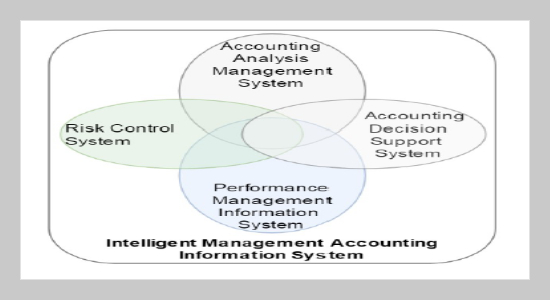
Intelligent management accounting information system.
Copyright The Author(s). This is an open access article distributed under the terms of the Creative Commons Attribution License (CC BY 4.0), which permits unrestricted use, distribution, and reproduction in any medium, provided the original author and source are cited.
Download Citation: BibTeX | http://dx.doi.org/10.6180/jase.202110_24(5).0018
In the traditional management accounting information processing method, the method used to solve the problem is often fixed due to excessive assumptions. In order to improve its operating efficiency, combined with artificial intelligence information technology, this paper uses data mining algorithms to conduct data acquisition and rule exploration. Moreover, this paper uses statistics, machine learning and other techniques to analyze the correlation between attribute values and transform data into knowledge needed for decision-making. In addition, this paper combines machine learning algorithms to build an intelligent management accounting information system and realizes the close connection between corporate finance and business, which helps to form a closed-loop management between financial analysis, risk management, performance management, and decision-making. Finally, this paper designs experiments to verify the performance of the model. The research results show that the system constructed in this paper satisfies the intelligent demand of accounting information.
Keywords: Data Mining, Machine Learning, Management Accounting, Information System
- [1] Jie Cai, Jiawei Luo, Shulin Wang, and Sheng Yang. Feature selection in machine learning: A new perspective. Neurocomputing, 300:70–79, 2018.
- [2] J. N. Goetz, A Brenning, H Petschko, and P. Leopold. Evaluating machine learning and statistical prediction techniques for landslide susceptibility modeling. Computers and Geosciences, 81:1–11, 2015.
- [3] Hamid Darabi, Bahram Choubin, Omid Rahmati, Ali Torabi Haghighi, Biswajeet Pradhan, and Bjørn Kløve. Urban flood risk mapping using the GARP and QUEST models: A comparative study of machine learning techniques. Journal of Hydrology, 569:142–154, 2019.
- [4] Alvin Rajkomar, Jeffrey Dean, and Isaac Kohane. Machine learning in medicine. England Journal of Medicine, 380(14):1347–58, apr 2019.
- [5] Yang Xin, Lingshuang Kong, Zhi Liu, Yuling Chen, Yanmiao Li, Hongliang Zhu, Mingcheng Gao, Haixia Hou, and Chunhua Wang. Machine Learning and Deep Learning Methods for Cybersecurity. IEEE Access, 6:35365–35381, 2018.
- [6] Logan Ward, Ankit Agrawal, Alok Choudhary, and Christopher Wolverton. A general-purpose machine learning framework for predicting properties of inorganic materials. npj Computational Materials, 2, 2016.
- [7] Puyu Feng, Bin Wang, De Li Liu, Cathy Waters, and Qiang Yu. Incorporating machine learning with biophysical model can improve the evaluation of climate extremes impacts on wheat yield in south-eastern Australia. Agricultural and Forest Meteorology, 275:100–113, 2019.
- [8] Konstantina Kourou, Themis P. Exarchos, Konstantinos P. Exarchos, Michalis V. Karamouzis, and Dimitrios I. Fotiadis. Machine learning applications in cancer prognosis and prediction, 2015.
- [9] Saleema Amershi, Maya Cakmak, W. Bradley Knox, and Todd Kulesza. Power to the people: The role of
humans in interactive machine learning. AI Magazine, 35(4):105–120, 2014. - [10] V Rodriguez-Galiano, M. Sanchez-Castillo, M. ChicaOlmo, and M. Chica-Rivas. Machine learning predictive models for mineral prospectivity: An evaluation of neural networks, random forest, regression trees and support vector machines. Ore Geology Reviews, 71:804–818, 2015.
- [11] Connor W Coley, Regina Barzilay, Tommi S Jaakkola, William H Green, and Klavs F Jensen. Prediction of Organic Reaction Outcomes Using Machine Learning. ACS Central Science, 3(5):434–443, may 2017.
- [12] Aritra Chowdhury, Elizabeth Kautz, Bülent Yener, and Daniel Lewis. Image driven machine learning methods for microstructure recognition. Computational Materials Science, 123:176–187, 2016.