




Qu Meili1, Chang Ning1, Xing Enqian1, and Gao Xuan2
1College of Physical Education, Yanching Institute of Technology, Langfang, Hebei 065201, China
2P.E. Department, Hebei University of Water Resources and Electric Engineering, Cangzhou, Hebei, 061000, China
Received: November 3, 2025
Accepted: January 3, 2026
Publication Date: July 25, 2026
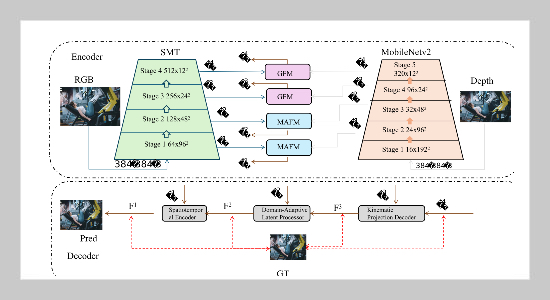
Schematic diagram of the Kinematic-Aware Neural Projection Network (KANet) architecture
Copyright The Author(s). This is an open access article distributed under the terms of the Creative Commons Attribution License (CC BY 4.0), which permits unrestricted use, distribution, and reproduction in any medium, provided the original author and source are cited.
Download Citation: BibTeX | http://dx.doi.org/10.6180/jase.202610_33.056
In the evolving landscape of intelligent computing and digital modeling, simulating complex human activities requires a synthesis of physical accuracy and data-driven generalization, particularly in fields such as athletic performance analysis. Within the broader context of trustworthy intelligent systems and applied AI frameworks, this work focuses on the computational modeling of structured human motion through an integrated architecture that simulates and adapts physical postures in dynamic environments. Traditional approaches to motion simulation often lack adaptability across diverse morphological profiles and task semantics, resulting in reduced biomechanical plausibility and limited contextual alignment. These methods frequently overlook higher-order kinematic constraints, rely excessively on frame-wise prediction, and exhibit poor cross-domain generalization. To address these challenges, a hybrid framework is proposed, comprising a Kinematic-Aware Neural Projection Network (KANet) and a Biomechanically-Constrained Latent Adaptation (BCLA) module. KANet preserves temporal and anatomical dependencies via a dual-stream attention mechanism and graph-based encoding, enabling precise motion sequence synthesis within a symbolic latent space. By embedding structural priors and joint-specific constraints directly into the modeling process, it enhances interpretability and physical fidelity. BCLA complements this by introducing a contextual adaptation layer that integrates biomechanical heuristics and soft constraints to couple motion trajectories with personalized physical parameters and task conditions. Expressing adaptation as a residual transformation across the latent motion manifold, BCLA enhances robustness and zero-shot generalizability. Experimental results demonstrate significant improvements in biomechanical plausibility, motion smoothness, and contextual adaptability compared to state-of-the-art generative models.
Keywords: Symbolic Modeling, Biomechanical Constraint, Motion Adaptation, Generative Learning, Intelligent Systems
- [1] H. Liu, K. Chen, Y. Li, Z. Huang, J. Duan, and J. Ma. “Integrated behavior planning and motion control for autonomous vehicles with traffic rules compliance”. In: 2023 IEEE International Conference on Robotics and Biomimetics (ROBIO). IEEE. 2023, 1–7. DOI: 10.1109/ROBIO58561.2023.10354858.
- [2] M. A. Ur Rahman Efti and M. I. Hosen, (2023) “3DOF Intelligent Rehabilitation Robot Design for Knee and Ankle” Journal of Artificial Intelligence and System Modelling 1(01): 15–31. DOI: 10.22034/jaism.2023.423292.1005.
- [3] J. Shi, T. Zhang, J. Zhan, S. Chen, J. Xin, and N. Zheng. “Efficient lane-changing behavior planning via reinforcement learning with imitation learning initialization”. In: 2023 IEEE Intelligent Vehicles Symposium (IV). IEEE. 2023, 1–8. DOI: 10.1109/IV55152.2023.10186577.
- [4] Z. Huang, H. Liu, J. Wu, and C. Lv, (2023) “Conditional predictive behavior planning with inverse reinforcement learning for human-like autonomous driving” IEEE Transactions on Intelligent Transportation Systems 24(7): 7244–7258. DOI: 10.1109/TITS.2023.3254579.
- [5] M. Klimke, B. Völz, and M. Buchholz. “Cooperative behavior planning for automated driving using graph neural networks”. In: 2022 IEEE Intelligent Vehicles Symposium (IV). IEEE. 2022, 167–174. DOI: 10.1109/IV51971.2022.9827230.
- [6] Z. Qiao, J. Schneider, and J. M. Dolan. “Behavior planning at urban intersections through hierarchical reinforcement learning”. In: 2021 IEEE International Conference on Robotics and Automation (ICRA). IEEE. 2021, 2667–2673. DOI: 10.1109/ICRA48506.2021.9561095.
- [7] J. Li, L. Sun, W. Zhan, and M. Tomizuka. “Interaction-aware behavior planning for autonomous vehicles validated with real traffic data”. In: Dynamic Systems and Control Conference. 84287. American Society of Mechanical Engineers. 2020, V002T31A005. DOI: 10.1115/DSCC2020-3328.
- [8] K. Esterle, T. Kessler, and A. Knoll. “Optimal behavior planning for autonomous driving: A generic mixed-integer formulation”. In: 2020 IEEE Intelligent Vehicles Symposium (IV). IEEE. 2020, 1914–1921. DOI: 10.1109/IV47402.2020.9304743.
- [9] M. Janner, Y. Du, J. B. Tenenbaum, and S. Levine, (2022) “Planning with diffusion for flexible behavior synthesis” arXiv preprint arXiv:2205.09991: DOI: 10.48550/arXiv.2205.09991.
- [10] N. Ahmed, C. Li, A. Khan, S. A. Qalati, S. Naz, and F. Rana, (2021) “Purchase intention toward organic food among young consumers using theory of planned behavior: role of environmental concerns and environmental awareness” Journal of Environmental Planning and Management 64(5): 796–822. DOI: 10.1080/09640568.2020.1785404.
- [11] M. Chignoli, D. Kim, E. Stanger-Jones, and S. Kim. “The MIT humanoid robot: Design, motion planning, and control for acrobatic behaviors”. In: 2020 IEEE-RAS 20th International Conference on Humanoid Robots (Humanoids). IEEE. 2021, 1–8. DOI: 10.1109/HUMANOIDS47582.2021.9555782.
- [12] R. Lavuri, (2022) “Extending the theory of planned behavior: factors fostering millennials’ intention to purchase eco-sustainable products in an emerging market” Journal of Environmental Planning and Management 65(8): 1507–1529. DOI: 10.1080/09640568.2021.1933925.
- [13] W. Ding, L. Zhang, J. Chen, and S. Shen, (2021) “Epsilon: An efficient planning system for automated vehicles in highly interactive environments” IEEE Transactions on Robotics 38(2): 1118–1138. DOI: 10.1109/TRO.2021.3104254.
- [14] K. Hamilton, A. van Dongen, and M. S. Hagger, (2020) “An extended theory of planned behavior for parent-for-child health behaviors: A meta-analysis.” Health psychology 39(10): 863. DOI: 10.1037/hea0000940.
- [15] S. Zhu and B. Aksun-Guvenc, (2020) “Trajectory planning of autonomous vehicles based on parameterized control optimization in dynamic on-road environments” Journal of Intelligent & Robotic Systems 100(3): 1055–1067. DOI: 10.1007/s10846-020-01215-y.
- [16] T. Salzmann, B. Ivanovic, P. Chakravarty, and M. Pavone. “Trajectron++: Dynamically-feasible trajectory forecasting with heterogeneous data”. In: European Conference on Computer Vision. Springer. 2020, 683–700. DOI: 10.1007/978-3-030-58523-5_40.
- [17] Z. Liu and A. Cui, (2025) “An effective evaluation method of college students’ innovation and entrepreneurship education based on data mining algorithm” International Journal of High Speed Electronics and Systems: 2540405. DOI: 10.1142/S012915642540405X.
- [18] C.-Q. Zhang, R. Fang, R. Zhang, M. S. Hagger, and K. Hamilton, (2020) “Predicting hand washing and sleep hygiene behaviors among college students: Test of an integrated social-cognition model” International journal of environmental research and public health 17(4): 1209. DOI: 10.3390/ijerph17041209.
- [19] J. S. Park, J. O’Brien, C. J. Cai, M. R. Morris, P. Liang, and M. S. Bernstein. “Generative agents: Interactive simulacra of human behavior”. In: Proceedings of the 36th annual acm symposium on user interface software and technology. 2023, 1–22. DOI: 10.1145/3586183.3606763.
- [20] L. Wang, (2025) “A Method for Pushing Interest Points of English Learning Resources Based on Mobile Terminal User Profiles” International Journal of High Speed Electronics and Systems: 2540406. DOI: 10.1142/S0129156425404061.
- [21] I. Ajzen, (2020) “The theory of planned behavior: Frequently asked questions” Human behavior and emerging technologies 2(4): 314–324. DOI: 10.1002/hbe2.195.
- [22] M. S. Hagger, M. W.-L. Cheung, I. Ajzen, and K. Hamilton, (2022) “Perceived behavioral control moderating effects in the theory of planned behavior: A meta-analysis.” Health Psychology 41(2): 155. DOI: 10.1037/hea0001153.
- [23] H. Han, (2021) “Consumer behavior and environmental sustainability in tourism and hospitality: A review of theories, concepts, and latest research” Journal of Sustainable Tourism: 1–22. DOI: 10.1080/09669582.2021.1903019.
- [24] M. Bosnjak, I. Ajzen, and P. Schmidt, (2020) “The theory of planned behavior: Selected recent advances and applications” Europe’s journal of psychology 16(3): 352. DOI: 10.5964/ejop.v16i3.3107.
- [25] A. Yuriev, M. Dahmen, P. Paillé, O. Boiral, and L. Guillaumie, (2020) “Pro-environmental behaviors through the lens of the theory of planned behavior: A scoping review” Resources, Conservation and Recycling 155: 104660. DOI: 10.1016/j.resconrec.2019.104660.
- [26] F. La Barbera and I. Ajzen, (2020) “Control interactions in the theory of planned behavior: Rethinking the role of subjective norm” Europe’s Journal of Psychology 16(3): 401. DOI: 10.5964/ejop.v16i3.2056.
- [27] S. Karaman, M. R. Walter, A. Perez, E. Frazzoli, and S. Teller. “Anytime motion planning using the RRT*”. In: 2011 IEEE international conference on robotics and automation. ieee. 2011, 1478–1483. DOI: 10.1109/ICRA.2011.5980479.
- [28] A. Sadat, S. Casas, M. Ren, X. Wu, P. Dhawan, and R. Urtasun. “Perceive, predict, and plan: Safe motion planning through interpretable semantic representations”. In: European Conference on Computer Vision. Springer. 2020, 414–430. DOI: 10.1007/978-3-030-58592-1_25.
- [29] H. B. Taing and Y. Chang, (2021) “Determinants of tax compliance intention: Focus on the theory of planned behavior” International journal of public administration 44(1): 62–73. DOI: 10.1080/01900692.2020.1728313.
- [30] P. Hang, C. Lv, C. Huang, J. Cai, Z. Hu, and Y. Xing, (2020) “An integrated framework of decision making and motion planning for autonomous vehicles considering social behaviors” IEEE transactions on vehicular technology 69(12): 14458–14469. DOI: 10.1109/TVT.2020.3040398.
- [31] L. Canova, A. Bobbio, and A. M. Manganelli, (2020) “Buying organic food products: the role of trust in the theory of planned behavior” Frontiers in psychology 11: 575820. DOI: 10.3389/fpsyg.2020.575820.
- [32] F. La Barbera and I. Ajzen, (2021) “Moderating role of perceived behavioral control in the theory of planned behavior: A preregistered study” Journal of Theoretical Social Psychology 5(1): 35–45. DOI: 10.1002/jts5.83.
- [33] E. N. Çoker and S. van der Linden, (2022) “Fleshing out the theory of planned behavior: Meat consumption as an environmentally significant behavior” Current Psychology 41(2): 681–690. DOI: 10.1007/s12144-019-00593-3.
- [34] A. Bagheri, N. Emami, and C. A. Damalas, (2021) “Farmers’ behavior towards safe pesticide handling: An analysis with the theory of planned behavior” Science of the total Environment 751: 141709. DOI: 10.1016/j.scitotenv.2020.141709.
- [35] M. A. Ur Rahman Efti and M. I. Hosen, (2023) “3DOF Intelligent Rehabilitation Robot Design for Knee and Ankle” Journal of Artificial Intelligence and System Modelling 1(01): 15–31. DOI: 10.22034/jaism.2023.423292.1005.
- [36] Z. Ren, M. Jin, H. Nie, J. Shen, A. Dong, and Q. Zhang, (2025) “Towards Realistic Human Motion Prediction with Latent Diffusion and Physics-Based Models” Electronics 14(3): 605. DOI: 10.3390/electronics14030605.
- [37] Y. Jia, (2025) “Transformer-based video generation technique for biomechanical motion analysis” Molecular & Cellular Biomechanics 22(4): DOI: 10.62617/mcb1581.
- [38] D. Bose, B. Arora, A. K. Srivastava, and P. Garg. “A Computer Vision Based Framework for Posture Analysis and Performance Prediction in Athletes”. In: 2024 International Conference on Communication, Computer Sciences and Engineering (IC3SE). IEEE. 2024, 942–947. DOI: 10.1109/IC3SE62002.2024.10593041.
- [39] Z. Tian, F. Dong, D. Li, and C. Liu, (2024) “RETRACTED ARTICLE: 3D motion trajectory prediction based on optical image remote sensing data in sports training simulation” Optical and Quantum Electronics 56(3): 305. DOI: 10.1007/s11082-023-05995-z.
- [40] A. A. Phatak, F.-G. Wieland, K. Vempala, F. Volkmar, and D. Memmert, (2021) “Artificial intelligence based body sensor network framework—narrative review: proposing an end-to-end framework using wearable sensors, real-time location systems and artificial intelligence/machine learning algorithms for data collection, data mining and knowledge discovery in sports and healthcare” Sports Medicine-Open 7(1): 79. DOI: 10.1186/s40798-021-00372-0.
- [41] X. Lei, F. Xie, and C. Jin, (2024) “Gram Angle Field-Based Siamese Graph Convolutional Neural Network for Hyperspectral Images Classification” IEEE Geoscience and Remote Sensing Letters: DOI: 10.1109/LGRS.2024.3521461.
- [42] B. C. Schwartzman. An apprenticeship-model employment program for adults with developmental disabilities: An exploratory study. University of California, Los Angeles, 2015.
- [43] J. Xu, (2024) “Analysis and Improvement of the Application of Playground Sports Posture Detection Technology in Physical Education Teaching and Training” EAI Endorsed Transactions on Pervasive Health & Technology 10(1): DOI: 10.4108/eetpht.10.5161.
- [44] Y. Li and W. Jing. “Human Motion Posture Recognition based on Spatiotemporal Graph CNN”. In: 2025 3rd International Conference on Data Science and Information System (ICDSIS). IEEE. 2025, 1–5. DOI: 10.1109/ICDSIS65355.2025.11070350.
- [45] S. Wei and X. Li, (2024) “RETRACTED ARTICLE: Simulation of optical fiber sensor in motion training image analysis system based on human posture tracking algorithm” Optical and Quantum Electronics 56(3): 299. DOI: 10.1007/s11082-023-05996-y.
- [46] Z. Chen and Y. Pan. “Construction of Sports Training Evaluation System Based on Virtual Reality and Motion Capture”. In: 2023 2nd International Conference on 3D Immersion, Interaction and Multi-sensory Experiences (ICDIIME). IEEE. 2023, 50–54. DOI: 10.1109/ICDIIME59043.2023.00016.
- [47] W. Zhang. “Research on Sports Video Image Teaching System Based on Computer 3D Technology”. In: 2023 IEEE 2nd International Conference on Electrical Engineering, Big Data and Algorithms (EEBDA). IEEE. 2023, 1721–1725. DOI: 10.1109/EEBDA56825.2023.10090695.