




Received: April 8, 2026
Accepted: May 25, 2026
Publication Date: July 25, 2026
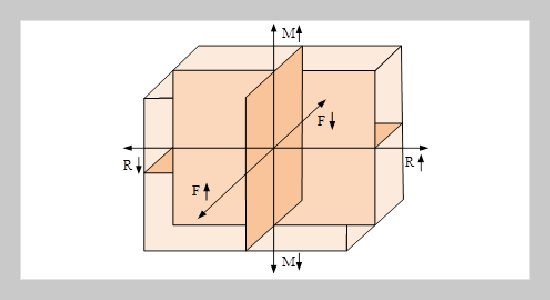
Schematic diagram of RFM model.
Copyright The Author(s). This is an open access article distributed under the terms of the Creative Commons Attribution License (CC BY 4.0), which permits unrestricted use, distribution, and reproduction in any medium, provided the original author and source are cited.
Download Citation: BibTeX | http://dx.doi.org/10.6180/jase.202610_33.054
In order to improve the sales level of e-commerce platform products and promote the healthy development of e-commerce platform, a construction method of e-commerce affective precision system based on Hierarchical Clustering K-means algorithm (HC K means) is proposed. This method first combines the weighted Euclidean distance with the Recency, Frequency, and Monetary (RFM) model and adopts an entropy-weighted method to improve the evaluation dimension of customer value. Further, the density index and the maximum-minimum distance method are introduced to optimize the selection of initial cluster centers, and a dynamic radius adjustment mechanism is designed to adapt to the data distribution, to solve the defects of the traditional algorithm being sensitive to the initial centers and having unstable clustering results. Experimental results based on 100,000 real transaction records from an e-commerce platform show that the HC K-means algorithm has a customer data classification detection rate of 91.83%, which is 10.86 and 6.54 percentage points higher than GMDA(80.%) and TSCEA (85.29%), respectively. The false detection rate is only 2.91%, which is lower than GMDA (5.86%) and TSCEA (8.92%). In customer value segmentation, the accuracy of potential customer value classification is 93%, the current value classification accuracy of core customers is 91%, and the customer loyalty classification accuracy is 93%. Main contributions: An improved HC K-means clustering framework is proposed, through density-guided initial center selection and dynamic radius adjustment, significantly improving the accuracy of e-commerce customer segmentation and marketing conversion efficiency, providing quantifiable decision support for enterprises’ precise marketing.
Keywords: Statistics; K-means clustering algorithm; e-commerce platform; affective precision; RFM system; HC K-means algorithm
- [1] Y. Wang, R. Zou, F. Liu, L. Zhang, and Q. Liu, (2021) “A Review of Wind Speed and Wind Power Forecasting with Deep Neural Networks” Applied Energy 304: 117766. DOI: 10.1016/j.apenergy.2021.117766.
- [2] A. Sarkar, A. Biswas, and M. Kundu, (2022) “Development of q-rung orthopair trapezoidal fuzzy Einstein aggregation operators and their application in MCGDM problems” Journal of Computational and Cognitive Engineering 1(3): 109–121. DOI: 10.47852/bonviewJCCE2202162.
- [3] J. Zoroja, I. Klopotan, and S. Ana-Marija, (2020) “Quality of e-commerce practices in European enterprises: Cluster analysis approach” Interdisciplinary Description of Complex Systems: INDECS 18(2-B): 312–326. DOI: 10.7906/indecs.18.2.17.
- [4] A. Mukhayaroh, S. Marlina, S. Hartini, S. Muryani, A. Sinnun, S. Nurajizah, C. Adiwardaja, et al., (2020) “Implementation of clustering algorithm method for customer segmentation” Journal of Computational and Theoretical Nanoscience 17(2-3): 1388–1395. DOI: 10.1166/jctn.2020.8815.
- [5] K. H. Leung, D. Y. Mo, G. T. Ho, C.-H. Wu, and G. Q. Huang, (2020) “Modelling near-real-time order arrival demand in e-commerce context: a machine learning predictive methodology” Industrial Management & Data Systems 120(6): 1149–1174. DOI: 10.1108/IMDS-12-2019-0646.
- [6] S. Sieranoja, (2019) “How much k-means can be improved by using better initialization and repeats?” Pattern Recogn 93(04): DOI: 10.1016/j.patcog.2019.04.014.
- [7] Y. Huang. “Research on e-commerce precision marketing strategy based on big data technology”. In: 2021 2nd International Conference on E-Commerce and Internet Technology (ECIT). IEEE. 2021, 87–90. DOI: 10.1109/ECIT52743.2021.00026.
- [8] W. Jun, S. Li, Y. Yanzhou, E. D. S. Gonzalezc, H. Weiyi, S. Litao, and Y. Zhang, (2021) “Evaluation of precision marketing effectiveness of community e-commerce—An AISAS based model” Sustainable Operations and Computers 2: 200–205. DOI: 10.1016/j.susoc.2021.07.007.
- [9] S. Wang and Y. Yang, (2021) “M-GAN-XGBOOST model for sales prediction and precision marketing strategy making of each product in online stores” Data Technologies and Applications 55(5): 749–770. DOI: 10.1108/DTA-11-2020-0286.
- [10] X. Yang, P. Gong, et al., (2020) “Marketing strategy of green agricultural products based on consumption intention” Agricultural & Forestry Economics and Management 3: 16–24. DOI: 10.23977/agrfem.2020.030103.
- [11] R. P. Chatterjee, K. Deb, S. Banerjee, A. Das, and R. Bag, (2019) “Web mining using k-means clustering and latest substring association rule for e-commerce” Journal of Mechanics of Continua and Mathematical Sciences 14(6): 28–44. DOI: 10.26782/jmcms.2019.12.00003.
- [12] H. Liu, J. Chen, J. Dy, and Y. Fu, (2023) “Transforming complex problems into K-means solutions” IEEE transactions on pattern analysis and machine intelligence 45(7): 9149–9168. DOI: 10.1109/TPAMI.2023.3237667.
- [13] J. Niu, (2021) “Intelligent evaluation model of e-commerce transaction volume based on the combination of k-means and SOM algorithms” International Journal of Information and Communication Technology 18(2): 189–206. DOI: 10.1504/ijict.2021.113043.
- [14] P. Wang, B. Cao, T. Ma, B. Wang, Q. Zhang, and P. Zheng, (2023) “DUHI: Dynamically updated hash index clustering method for DNA storage” Computers in Biology and Medicine 164: 107244. DOI: 10.1016/j.compbiomed.2023.107244.
- [15] D. K. Sharma, S. Lohana, S. Arora, A. Dixit, M. Tiwari, and T. Tiwari, (2022) “E-Commerce product comparison portal for classification of customer data based on data mining” Materials Today: Proceedings 51: 166–171. DOI: 10.1016/j.matpr.2021.05.068.
- [16] H. P. Patra and K. Nikitha, (2022) “Analyse k-means algorithm and implementing a new clustering algorithm” International Journal of Computational Systems Engineering 6(4): 178–181. DOI: 10.1504/IJSYSE.2021.120288.
- [17] S. S. Prasetyo, M. Mustafid, and A. R. Hakim, (2020) “Penerapan fuzzy c-means kluster untuk segmentasi pelanggan e-commerce dengan metode recency frequency monetary (rfm)” Jurnal Gaussian 9(4): 421–433. DOI: 10.14710/j.gauss.v9i4.29445.
- [18] S. N. Sharma and P. Sadagopan, (2022) “Influence of conditional holoentropy-based feature selection on automatic recommendation system in E-commerce sector” Journal of King Saud University-Computer and Information Sciences 34(8): 5564–5577. DOI: 10.1016/j.jksuci.2020.12.022.
- [19] M. Rezaei and P. Fränti, (2023) “K-sets and k-swaps algorithms for clustering sets” Pattern Recognition 139: 109454. DOI: 10.1016/j.patcog.2023.109454.
- [20] P. Fränti and S. Sieranoja, (2023) “K-means properties on six clustering benchmark datasets: P. Fränti, S. Sieranoja” Applied intelligence 48(12): 4743–4759. DOI: 10.1007/s10489-018-1238-7.
- [21] W. Haibin, G. Xin, Y. Xiao, L. Shuangming, and S. Guidong, (2024) “A GMDA clustering algorithm based on evidential reasoning architecture” Chinese Journal of Aeronautics 37(1): 300–311. DOI: 10.1016/j.cja.2023.09.015.
- [22] C. Liu and S. Yang, (2024) “A two-stage clustering ensemble algorithm applicable to risk assessment of railway signaling faults” Expert Systems with Applications 249: 123500. DOI: 10.1016/j.eswa.2024.123500.
- [23] P. Fränti, (2018) “Efficiency of random swap clustering” Journal of big data 5(1): 1–29. DOI: 10.1186/s40537-018-0122-y.
- [24] A. Rodriguez and A. Laio, (2014) “Clustering by fast search and find of density peaks” science 344(6191): 1492–1496. DOI: 10.1126/science.1242072.
- [25] S. Sieranoja and P. Fränti, (2010) “Fast and general density peaks clustering” Pattern recognition letters 128: 551–558. DOI: 10.1016/j.patrec.2019.10.019.