





Jie Han1 , Shiqi Tang1, Peng Wang2, and Zheng Yao3
1China Mobile (Shanghai) Information Communication Technology Co.,Ltd, Shanghai, 2002131, China
2China Datang Corporation Limited Zhejiang Branch, Hangzhou, Zhejiang, 310016, China
3Zhejiang Datang Energy Marketing Co.,Ltd, Hangzhou, Zhejiang, 310016, China
Received: April 1, 2026
Accepted: April 28, 2026
Publication Date: July 12, 2026
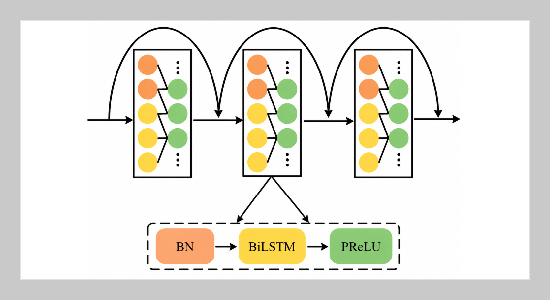
Architecture of the BiGRU-based temporal modeling
Copyright The Author(s). This is an open access article distributed under the terms of the Creative Commons Attribution License (CC BY 4.0), which permits unrestricted use, distribution, and reproduction in any medium, provided the original author and source are cited.
Download Citation: BibTeX | http://dx.doi.org/10.6180/jase.202610_33.041
Electricity market price forecasting plays a vital role in power system dispatch and energy management. However, accurate forecasting is challenging due to the non-stationarity, multi-scale volatility, and complex nonlinear characteristics of electricity price data. This study presents a CEEMDAN-BiGRU-based approach to address these challenges. Themethodfirstdecomposestheelectricitypricesequenceintomultipleintrinsic mode functions (IMFs) using complete ensemble empirical mode decomposition (CEEMDAN), which captures features across different time scales and mitigates non-stationarity. A bidirectional gated recurrent unit (BiGRU) is then used for time-series modeling of each component, capturing both forward and backward time dependencies. The individual forecasts of each component are reconstructed to provide the final forecast. Experimental results across various electricity market datasets show that the proposed method outperforms comparative models in terms of RMSE, MAE, MAPE, and trend accuracy, demonstrating robust performance and generalization across different seasons and time periods.
Keywords: Electricity price forecasting; CEEMDAN; BiGRU; multi-scale modeling; non-stationary time series; electricity market
- [1] Z. Li et al., (2026) “Hybrid Framework for Wind Power Forecasting and Peer-to-Peer Energy Trading to Enhance Grid Stability and Market Efficiency” Smart Grids and Sustainable Energy 11(1): 2. DOI: 10.1007/s40866-025-00316-7.
- [2] H. J. Kim and M. K. Kim, (2025) “Data-Driven Virtual Power Plant Bidding Strategy in Electricity Markets Integrating Hybrid Forecasting Model and Customized Incentive Demand Response” IEEE Internet of Things Journal 12(10): 13851-13869. DOI: 10.1109/JIOT.2024.3525060.
- [3] F. A. Nahid et al., (2024) “Short-Term Customer-Centric Electric Load Forecasting for Low Carbon Microgrids Using a Hybrid Model” Energy Systems: 1-57. DOI: 10.1007/s12667-024-00704-5.
- [4] V. Arabzadeh and R. Frank, (2025) “A Four-Dimensional Analysis of Explainable AI in Energy Forecasting: A Domain-Specific Systematic Review” Machine Learning and Knowledge Extraction 7(4): 153. DOI: 10.3390/make7040153.
- [5] M. A. El-Shorbagy et al., (2024) “Bald Eagle Search Algorithm: A Comprehensive Review with Its Variants and Applications” Systems Science & Control Engineering 12(1): 2385310. DOI: 10.1080/21642583.2024.2385310.
- [6] X. Mao et al., (2025) “Simplicity in Dynamic and Competitive Electricity Markets: A Case Study on Enhanced Linear Models versus Complex Deep-Learning Models for Day-Ahead Electricity Price Forecasting” Applied Energy 383: 125201. DOI: 10.1016/j.apenergy.2024.125201.
- [7] Q. Tang et al., (2024) “Forecasting Individual Bids in Real Electricity Markets through Machine Learning Framework” Applied Energy 363: 123053. DOI: 10.1016/j.apenergy.2024.123053.
- [8] F. Li et al., (2024) “Optimization of Electricity Retail Packages under the Spot Market Mode Accounting for Customer Response” IEEE Access 12: 90112-90123. DOI: 10.1109/ACCESS.2024.3410991.
- [9] A. Mohsenimanesh, C. McNevin, and E. Entchev, (2025) “EV and Renewable Energy Integration in Residential Buildings: A Global Perspective on Deep Learning, Strategies, and Challenges” World Electric Vehicle Journal 16(11): 603. DOI: 10.3390/wevj16110603.
- [10] S. Makaremi, (2025) “A Multi-Output Deep Learning Model for Energy Demand and Port Availability Forecasting in EV Charging Infrastructure” Energy 317: 134582. DOI: 10.1016/j.energy.2025.134582.
- [11] M. R. Mansor, M. K. Ajiriyanto, R. Kriswarini, B. Soegijono, S. D. Yudanto, D. Nanto, C. Rosyidan, and F. B. Susetyo, (2025) “Ni Layer Fabrication in Various Temperature of Watts Solution” 28(4): 853-864. DOI: 10.6180/jase.202504_28(4).0016.
- [12] S. Alshahr et al., (2026) “Dynamic Renewable Energy Integration for EV Charging via Model-Based Reinforcement Learning” Ain Shams Engineering Journal 17(3): 104040. DOI: 10.1016/j.asej.2026.104040.
- [13] M. Waqar, Y.-W. Kim, and Y.-C. Byun, (2026) “A Hybrid Deep Learning Framework for Multivariate Energy Forecasting and Peak Load Prediction in Electric Vehicle Charging Infrastructure” Applied Energy 402: 126964. DOI: 10.1016/j.apenergy.2025.126964.
- [14] F. Aksan, V. Suresh, and P. Janik, (2024) “Optimal Capacity and Charging Scheduling of Battery Storage through Forecasting of Photovoltaic Power Production and Electric Vehicle Charging Demand with Deep Learning Models” Energies 17(11): 2718. DOI: 10.3390/en17112718.
- [15] N. Tsalikidis et al. “Hybrid CNN-LSTM Forecasting Model for Electric Vehicle Charging Demand in Smart Buildings”. In: Proceedings of the 6th Global Power, Energy and Communication Conference (GPECOM). 2024, 590–595. DOI: 10.1109/GPECOM61896.2024.10582629.