




Yuanyuan Xiao, Tingting Liu, and Mengmeng Li
Shandong Huayu University of Technology, Dezhou, Shandong, 253000, China
Received: August 3, 2025
Accepted: August 20, 2026
Publication Date: October 09, 2026
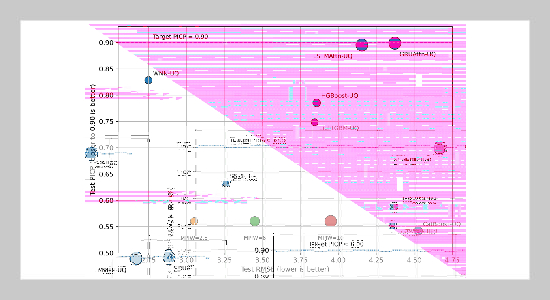
Test-set comparison of predictive accuracy and uncertainty performance across the six UQ-enabled models
Copyright The Author(s). This is an open access article distributed under the terms of the Creative Commons Attribution License (CC BY 4.0), which permits unrestricted use, distribution, and reproduction in any medium, provided the original author and source are cited.
Download Citation: BibTeX | http://dx.doi.org/10.6180/jase.202701_36.010
The concentration of Fine Particulate Matter (PM2.5) and Indoor Air Quality (IAQ) has a great influence on human health and cognitive performance. Making PM2.5 predictions with meaningful Uncertainty Quantification (UQ) is essential to proactive IAQ management. This paper is an in-depth assessment of deep learning (LSTMAttn-UQ, GRUAttn-UQ, WNN-UQ) and machine learning (CatBoost-UQ, LightGBM-UQ, HGBoost-UQ) to predict indoor PM2.5 concentrations and related uncertainties, based on a publicly available time-series dataset. The measurement of performance was conducted through standard regression measurements and UQ measurements, including Prediction Interval Coverage Probability (PICP) and Mean Prediction Interval Width (MPIW), with a target PICP of 0.90. Test set: It was found that LSTMAttn-UQ and GRUAttn-UQ showed better UQ calibration (PICP 0.895-0.899), which means that uncertainty estimates are good. On the other hand, WNN-UQ exhibited the highest point-prediction accuracy (e.g., the lowest Root Mean Squared Error (RMSE) of 2.7495) and computation efficiency, but with a relatively lower PICP (0.8285). The other ensemble models demonstrated bad generalization of UQ. These results indicate a critical trade-off, which is understandable when modeling selection is concerned with a preference in the achievement of either UQ reliability or point prediction accuracy and efficiency for IAQ applications.
Keywords: IAQ, UQ, Machine Learning (ML), Deep Learning (DL), PM2.5 forecasting
- [1] N. E. Klepeis, W. C. Nelson, W. R. Ott, J. P. Robinson, A. M. Tsang, P. Switzer, J. V. Behar, S. C. Hern, and W. H. Engelmann, (2001) “The National Human Activity Pattern Survey (NHAPS): a resource for assessing exposure to environmental pollutants” Journal of Exposure Science & Environmental Epidemiology 11: 231-252. DOI: https://doi.org/10.1038/sj.jea.7500165.
- [2] Y. Zhu, S. A. Al-Ahmed, M. Z. Shakir, and J. I. Olszewska, (2022) “LSTM-based IoT-enabled CO2 steady-state forecasting for indoor air quality monitoring” Electronics 12: 107. DOI: https://doi.org/10.3390/electronics12010107.
- [3] J. Yuan and K. H. Pho, (2023) “Temperature estimation of smart homes with sensors in Internet of Things environment based on block chain” Advances in Engineering and Intelligence Systems 2: 1-12. DOI: https://doi.org/10.22034/aeis.2023.369496.1053.
- [4] J. He, L. Xu, P. Wang, and Q. Wang, (2017) “A high precise E-nose for daily indoor air quality monitoring in living environment” Integration 58: 286-294. DOI: https://doi.org/10.1016/j.vlsi.2016.12.010.
- [5] M. Islam, M. M. R. Palash, R. Sarker, and M. M. R. Parag, (2025) “Explainable machine learning using real and synthetic dataset to enhance environmental sustainability through Co2 emission and smog rate predictions for cars” Expertise Engineering Measurements and Applications 1: 1-25. DOI: https://doi.org/10.22034/eema.2025.519301.1007.
- [6] M. F. El-Sharkawy and M. E. H. Noweir, (2014) “Indoor air quality levels in a University Hospital in the Eastern Province of Saudi Arabia” Journal of Family & Community Medicine 21: 39. DOI: https://doi.org/10.4103/2230-8229.128778.
- [7] V. V. Tran, D. Park, and Y.-C. Lee, (2020) “Indoor air pollution, related human diseases, and recent trends in the control and improvement of indoor air quality” International Journal of Environmental Research and Public Health 17: 2927. DOI: https://doi.org/10.3390/ijerph17082927.
- [8] U. Satish, M. J. Mendell, K. Shekhar, T. Hotchi, D. Sullivan, S. Streufert, and W. J. Fisk, (2012) “Is CO2 an indoor pollutant? Direct effects of low-to-moderate CO2 concentrations on human decision-making performance” Environmental Health Perspectives 120: 1671. DOI: https://doi.org/10.1289/ehp.1104789.
- [9] J. G. Allen, P. MacNaughton, U. Satish, S. Santanam, J. Vallarino, and J. D. Spengler, (2016) “Associations of cognitive function scores with carbon dioxide, ventilation, and volatile organic compound exposures in office workers: a controlled exposure study of green and conventional office environments” Environmental Health Perspectives 124: 805-812. DOI: https://doi.org/10.1289/ehp.1510037.
- [10] A. Persily, (2015) “Challenges in developing ventilation and indoor air quality standards: The story of ASHRAE Standard 62” Building and Environment 91: 61-69. DOI: https://doi.org/10.1016/j.buildenv.2015.02.026.
- [11] Z. Peng and J. L. Jimenez, (2021) “Exhaled CO2 as a COVID-19 infection risk proxy for different indoor environments and activities” Environmental Science & Technology Letters 8: 392-397. DOI: https://doi.org/10.1021/acs.estlett.1c00183.
- [12] A. Franco and F. Leccese, (2020) “Measurement of CO2 concentration for occupancy estimation in educational buildings with energy efficiency purposes” Journal of Building Engineering 32: 101714. DOI: https://doi.org/10.1016/j.jobe.2020.101714.
- [13] V. Congradac and F. Kulic, (2009) “HVAC system optimization with CO2 concentration control using genetic algorithms” Energy and Buildings 41: 571-577. DOI: https://doi.org/10.1016/j.enbuild.2008.12.004.
- [14] Z. D. Tekler and A. Chong, (2022) “Occupancy prediction using deep learning approaches across multiple space types: A minimum sensing strategy” Building and Environment 226: 109689. DOI: https://doi.org/10.1016/j.buildenv.2022.109689.
- [15] A. Pastor-Fernandez, A. Cerezo-Narvaez, P. Montero-Gutierrez, P. Ballesteros-Perez, and M. Otero-Mateo, (2022) “Use of low-cost devices for the control and monitoring of CO2 concentration in existing buildings after the COVID era” Applied Sciences 12: 3927. DOI: https://doi.org/10.3390/app12083927.
- [16] L. C. Tagliabue, F. R. Cecconi, S. Rinaldi, and A. L. C. Ciribini, (2021) “Data driven indoor air quality prediction in educational facilities based on IoT network” Energy and Buildings 236: 110782. DOI: https://doi.org/10.1016/j.enbuild.2021.110782.
- [17] R. Mumtaz, S. M. H. Zaidi, M. Z. Shakir, U. Shafi, M. M. Malik, A. Haque, S. Mumtaz, and S. A. R. Zaidi, (2021) “Internet of things (IoT) based indoor air quality sensing and predictive analytic-A COVID-19 perspective” Electronics 10: 184. DOI: https://doi.org/10.3390/electronics10020184.
- [18] J. Ahn, D. Shin, K. Kim, and J. Yang, (2017) “Indoor air quality analysis using deep learning with sensor data” Sensors 17: 2476. DOI: https://doi.org/10.3390/s17112476.
- [19] J. Kallio, J. Tervonen, P. Räsänen, R. Mäkynen, J. Koivusaari, and J. Peltola, (2021) “Forecasting office indoor CO2 concentration using machine learning with a one-year dataset” Building and Environment 187: 107409. DOI: https://doi.org/10.1016/j.buildenv.2020.107409.
- [20] A. Murad, F. A. Kraemer, K. Bach, and G. Taylor, (2021) “Probabilistic deep learning to quantify uncertainty in air quality forecasting” Sensors 21: 8009. DOI: https://doi.org/10.3390/s21238009.
- [21] D. Latoń, J. Grela, A. Ożadowicz, and L. Wisniewski, (2025) “Artificial intelligence and machine learning approaches for indoor air quality prediction: a comprehensive review of methods and applications” Energies 18: 5194. DOI: https://doi.org/10.3390/en18195194.
- [22] P. Hernandez-Cruz, A. Erkoreka-Gonzalez, C. Giraldo-Soto, L. Mora, and P. Eguía-Oller, (2024) “Measurement uncertainty and behaviour analysis of indoor air quality variables of thermal zones of an in-use mechanically ventilated building” Building and Environment 254: 111366. DOI: https://doi.org/10.1016/j.buildenv.2024.111366.
- [23] A. Garcia, Y. Saez, I. Harris, X. Huang, and E. Collado, (2025) “Advancements in air quality monitoring: a systematic review of IoT-based air quality monitoring and AI technologies” Artificial Intelligence Review 58: 275. DOI: https://doi.org/10.1007/s10462-025-11277-9.
- [24] D. Lee and B. Lee, (2024) “Building reliable AI for quantifying uncertainty in particulate matter predictions with deep learning” Journal of Cleaner Production 473: 143457. DOI: https://doi.org/10.1016/j.jclepro.2024.143457.
- [25] Q.-O. Lu, W.-H. Chang, H.-J. Chu, and C.-C. Lee, (2024) “Enhancing indoor PM2.5 predictions based on land use and indoor environmental factors by applying machine learning and spatial modeling approaches” Environmental Pollution 363: 125093. DOI: https://doi.org/10.1016/j.envpol.2024.125093.
- [26] H. Dai, Y. Liu, J. Wang, J. Ren, Y. Gao, Z. Dong, and B. Zhao, (2023) “Large-scale spatiotemporal deep learning predicting urban residential indoor PM2.5 concentration” Environment International 182: 108343. DOI: https://doi.org/10.1016/j.envint.2023.108343.
- [27] J. Wang, D. Wang, F. Zhang, C. Yoo, and H. Liu, (2024) “Soft sensor for predicting indoor PM2.5 concentration in subway with adaptive boosting deep learning model” Journal of Hazardous Materials 465: 133074. DOI: https://doi.org/10.1016/j.jhazmat.2023.133074.
- [28] B. Naeim, M. R. Akbarzadeh, and V. Jahangiri, (2024) “Machine learning-based prediction of seismic response of elevated steel tanks” Structures 70: 107649. DOI: https://doi.org/10.1016/j.istruc.2024.107649.
- [29] L. Prokhorenkova, G. Gusev, A. Vorobev, A. V. Dorogush, and A. Gulin, (2018) “CatBoost: unbiased boosting with categorical features” Advances in Neural Information Processing Systems 31. DOI: https://doi.org/10.48550/arXiv.1706.09516.
- [30] J. Fan, X. Ma, L. Wu, F. Zhang, X. Yu, and W. Zeng, (2019) “Light Gradient Boosting Machine: An efficient soft computing model for estimating daily reference evapotranspiration with local and external meteorological data” Agricultural Water Management 225: 105758. DOI: https://doi.org/10.1016/j.agwat.2019.105758.
- [31] S. P. Patro, N. Padhy, and R. D. Sah, (2022) “An ensemble approach for prediction of cardiovascular disease using meta classifier boosting algorithms” International Journal of Data Warehousing and Mining 18: 1-29. DOI: https://doi.org/10.4018/IJDWM.316145.
- [32] J. Liu, P. Li, X. Tang, J. Li, and J. Chen, (2021) “Research on improved convolutional wavelet neural network” Scientific Reports 11: 17941. DOI: https://doi.org/10.1038/s41598-021-97195-6.
- [33] K. Cho, B. V. Merriënboer, Ç. Gulçehre, D. Bahdanau, F. Bougares, H. Schwenk, and Y. Bengio, (2014) “Learning phrase representations using RNN encoder-decoder for statistical machine translation” Proceedings of the 2014 Conference on Empirical Methods in Natural Language Processing (EMNLP): 1724-1734. DOI: https://doi.org/10.3115/v1/D14-1179.
- [34] S. Hochreiter and J. Schmidhuber, (1997) “Long Short-Term Memory” Neural Computation 9(8): 1735-1780. DOI: https://doi.org/10.1007/978-3-642-24797-2_4.
- [35] F. A. Gers, J. Schmidhuber, and F. Cummins, (2000) “Learning to forget: Continual prediction with LSTM” Neural Computation 12: 2451-2471. DOI: https://doi.org/10.1162/089976600300015015.
- [36] X. Yuan, C. Chen, X. Lei, Y. Yuan, and R. M. Adnan, (2018) “Monthly runoff forecasting based on LSTM-ALO model” Stochastic Environmental Research and Risk Assessment 32: 2199-2212. DOI: https://doi.org/10.1007/s00477-018-1560-y.