




Pengjie Zhang, Hui Ma, Shaobin Zhang, and Yan Wang
Hebei Agricultural University, Baoding 071000, China
Received: June 05, 2026
Accepted: August 08, 2026
Publication Date: September 06, 2026
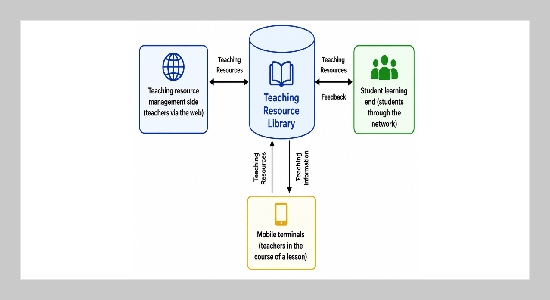
Overall architecture design.
Copyright The Author(s). This is an open access article distributed under the terms of the Creative Commons Attribution License (CC BY 4.0), which permits unrestricted use, distribution, and reproduction in any medium, provided the original author and source are cited.
Download Citation: BibTeX | http://dx.doi.org/10.6180/jase.202612_35.019
With the increasing demand for precision and personalization in physical education, biomechanics has emerged as a pivotal discipline in enhancing the quality of sports dance instruction. This study investigates the integration of biomechanical analysis and intelligent mobile terminals into sports dance pedagogy. It first proposes a system architecture that leverages wearable devices and multimedia teaching terminals to enable real-time feedback, kinematic analysis, and personalized instructional support. Based on national curriculum standards and pedagogical theory, a hierarchical indicator system comprising 3 primary, 10 secondary, and 32 tertiary teaching strategy indicators was constructed and validated using expert consultation and Kendall’s concordance test (W > 0.75). A weighting system was then applied to rank the importance of each indicator. A case study involving 25 physical dance instructors across six universities was conducted to evaluate current teaching practices and assess the applicability of the proposed strategy framework. Results indicate that most instructors rely heavily on traditional methods such as demonstration and verbal instruction, with limited use of multimedia or theoretical integration.
Keywords: biomechanics; sports dance; wearable devices; intelligent mobile terminals; motion analysis
- [1] X. Gao, D. Xu, F. Li, J. S. Baker, J. Li, and Y. Gu, (2023) “Biomechanical Analysis of Latin Dancers’ Lower Limb during Normal Walking” Bioengineering 10(10): 1128. DOI: https://doi.org/10.3390/bioengineering10101128.
- [2] R. L. Vancini, M. S. Andrade, C. A. B. De Lira, and T. Russomano, (2023) “Recent Advances in Biomechanics Research: Implications for Sports Performance and Injury Prevention” Health Nexus 1(3): 7-20. DOI: https://doi.org/10.32782/olimpspu/2025.2.7.
- [3] T. Mattsson and H. Larsson, (2021) “There is No Right or Wrong Way: Exploring Expressive Dance Assignments in Physical Education” Physical Education and Sport Pedagogy 26(2): 123-136. DOI: https://doi.org/10.1080/17408989.2020.1752649.
- [4] R. D. Neville and K. Makopoulou, (2021) “Effect of a Six-Week Dance-Based Physical Education Intervention on Primary School Children’s Creativity: A Pilot Study” European Physical Education Review 27(1): 203-220. DOI: https://doi.org/10.1177/1356336X20939586.
- [5] A. M. Zaferiou, (2023) “Dance-Themed National Biomechanics Day Community Engagement to Inspire our Future STEAM Leaders” Journal of Biomechanics 150: 111511. DOI: https://doi.org/10.1016/j.jbiomech.2023.111511.
- [6] S. N. Alsubari, S. N. Deshmukh, A. A. Alqarni, N. Alsharif, and H. T., (2022) “Data Analytics for the Identification of Fake Reviews Using Supervised Learning” CMC-Computers, Materials & Continua 70(2): 3189. DOI: https://doi.org/10.32604/cmc.2022.019625.
- [7] V. Potop, L. E. Mihailescu, I. Mihaila, M. Zawadka-Kunikowska, W. Jagiello, A. Chernozub, and A. Ascinte, (2024) “Applied Biomechanics within the Kinesiology Discipline in Higher Education” Physical Education of Students 28(2): 106-119. DOI: https://doi.org/10.15561/20755279.2024.0208.
- [8] X. Liang et al., (2023) “YOLOD: A Task Decoupled Network Based on YOLOv5” IEEE Transactions on Consumer Electronics 69(4): 775-785. DOI: https://doi.org/10.1109/TCE.2023.3278264.
- [9] B. Guo, (2020) “Analysis on Influencing Factors of Dance Teaching Effect in Colleges Based on Data Analysis and Decision Tree Model” International Journal of Emerging Technologies in Learning 15(9): 245-257. DOI: https://doi.org/10.3991/ijet.v15i09.14033.
- [10] E. J. Luo, K. Kutzer, K. A. Carvalho, G. M. Talaski, M. Ungs, C. Zirbes, and C. de Cesar Netto, (2024) “Poetry of Motion: Ankle Biomechanics in Ballet Dance” Foot & Ankle Orthopaedics 9(4). DOI: https://doi.org/10.1177/2473011424500434.
- [11] J. Kim and A. Hong, (2020) “How Can We Lead Creative Choreography?: Narrative Inquiry of Dance Educators’ Teaching Experiences in Dance Class for Students with Intellectual Disabilities” Research in Dance and Physical Education 4(1): 57-70. DOI: https://doi.org/10.26584/RDPE.2020.4.1.57.
- [12] C. Zhang, Q. Su, and Y. Zhu, (2023) “Urban Park System on Public Health: Underlying Driving Mechanism and Planning Thinking” Frontiers in Public Health 11: 1193604. DOI: https://doi.org/10.3389/fpubh.2023.1193604.
- [13] X. Li, (2023) “Optimization of the College Basketball Teaching Mode Based on the Applied Explainable Association Rule Algorithm and Cluster Analysis in Mobile Computing Environments” Applied Artificial Intelligence 37(1): 2214768. DOI: https://doi.org/10.1080/08839514.2023.2214768.
- [14] M. Guettala, S. Bourekkache, O. Kazar, and S. Harous, (2024) “Generative Artificial Intelligence in Education: Advancing Adaptive and Personalized Learning” Acta Informatica Pragensia 13(3): 460-489. DOI: https://doi.org/10.18267/j.aip.235.
- [15] F. Naseer, M. N. Khan, M. Tahir, A. Addas, and S. H. Aejaz, (2024) “Integrating Deep Learning Techniques for Personalized Learning Pathways in Higher Education” Heliyon 10(12): e32628. DOI: https://doi.org/10.1016/j.heliyon.2024.e32628.
- [16] J. Yu, H. Li, S.-L. Yin, and S. Karim, (2020) “Dynamic Gesture Recognition Based on Deep Learning in Human-to-Computer Interfaces” Journal of Applied Science and Engineering 23(1): 31-38. DOI: https://doi.org/10.6180/jase.202003_23(1).0004.