




Received: October 19, 2025
Accepted: June 26, 2026
Publication Date: August 26, 2026
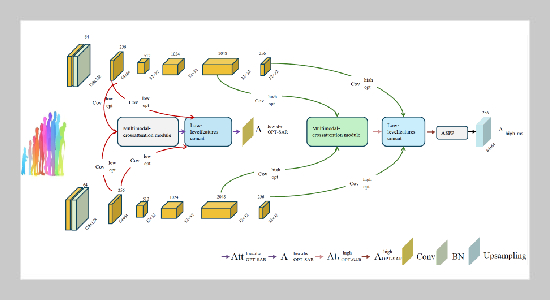
Illustration of the Disentangled Latent Representation architecture
Copyright The Author(s). This is an open access article distributed under the terms of the Creative Commons Attribution License (CC BY 4.0), which permits unrestricted use, distribution, and reproduction in any medium, provided the original author and source are cited.
Download Citation: BibTeX | http://dx.doi.org/10.6180/jase.202612_35.001
The rapid expansion of the older population, coupled with increasing labor market complexity, has made labor demand analysis challenging. Conventional forecasting models often fail to capture demographic heterogeneity, nonlinear employment dynamics, and temporal dependencies, leading to limited predictive performance. To address these limitations, this study proposes a deep learning-based framework for labor demand analysis and employment matching that integrates temporal and spatial modeling. Specifically, a Progressive Embedding Network (PEN) is developed to represent aging as a continuous temporal process within the analytical architecture. Temporal Adversarial Calibration (TAC) is employed to separate age-related progression from other explanatory features. The framework is evaluated across multiple datasets by comparing the Gated Recurrent Unit (GRU) model with the Long Short-Term Memory (LSTM) model. GRU achieves a lower RMSE of 0.0216, compared with 0.0243 for LSTM, while reducing training time due to its simpler structure.
Keywords: Aging Society; Labor Demand; Employment Matching; Deep Learning; Workforce Planning
- [1] Z. Wang, C. Liu, S. Zhang, and Q. Dou. “Foundation model for endoscopy video analysis via large-scale self-supervised pre-train”. In: International conference on medical image computing and computer-assisted intervention. Springer. 2023, 101-111. DOI: https://doi.org/10.1007/978-3-031-43996-4_10.
- [2] W. Wang, J. Shen, J. Xie, M.-M. Cheng, H. Ling, and A. Borji, (2019) “Revisiting video saliency prediction in the deep learning era” IEEE transactions on pattern analysis and machine intelligence 43(1): 220-237. DOI: https://doi.org/10.1109/TPAMI.2019.2924417.
- [3] D. Kitaguchi, N. Takeshita, H. Matsuzaki, T. Igaki, H. Hasegawa, and M. Ito, (2021) “Development and validation of a 3-dimensional convolutional neural network for automatic surgical skill assessment based on spatiotemporal video analysis” JAMA network open 4(8): e2120786. DOI: https://doi.org/10.1001/jamanetworkopen.2021.20786.
- [4] Y. Tang, J. Lu, and J. Zhou, (2020) “Comprehensive instructional video analysis: The coin dataset and performance evaluation” IEEE transactions on pattern analysis and machine intelligence 43(9): 3138-3153. DOI: https://doi.org/10.1109/TPAMI.2020.2980824.
- [5] W. Lin, X. He, W. Dai, J. See, T. Shinde, H. Xiong, and L. Duan, (2020) “Key-point sequence lossless compression for intelligent video analysis” IEEE MultiMedia 27(3): 12-22. DOI: https://doi.org/10.1109/MMUL.2020.2990863.
- [6] X. Ma, Y. Wang, X. Chen, G. Jia, Z. Liu, Y.-F. Li, C. Chen, and Y. Qiao, (2024) “Latte: Latent diffusion transformer for video generation” arXiv preprint arXiv:2401.03048: DOI: https://doi.org/10.48550/arXiv.2401.03048.
- [7] S. Tyagi and D. Yadav, (2023) “A detailed analysis of image and video forgery detection techniques” The Visual Computer 39(3): 813-833. DOI: https://doi.org/10.1007/s00371-021-02347-4.
- [8] N. R. Nagarajan and A. Sixsmith, (2023) “Policy initiatives to address the challenges of an older population in the workforce” Ageing International 48(1): 41-77. DOI: https://doi.org/10.1007/s12126-021-09442-w.
- [9] S. Kitao and N. Takeda, (2025) “Japan’s Aging Workforce: Determinants and Outlook” Asian Economic Policy Review 20(2): 251-260. DOI: https://doi.org/10.1111/aepr.12506.
- [10] R. Chen and Z. Zhang. “Deep reinforcement learning in labor market simulations”. In: 2025 IEEE Symposium on Computational Intelligence for Financial Engineering and Economics (CiFer). IEEE. 2025, 1-7. DOI: https://doi.org/10.1109/CiFer64978.2025.10975741.
- [11] F. Alharbi and A. I. Al-Alawi. “Labor market prediction using machine learning methods: A systematic literature review”. In: 2024 ASU International Conference in Emerging Technologies for Sustainability and Intelligent Systems (ICETSIS). IEEE. 2024, 478-482. DOI: https://doi.org/10.1109/ICETSIS61505.2024.10459632.
- [12] M. Hampole, D. Papanikolaou, L. D. Schmidt, and B. Seegmiller. Artificial intelligence and the labor market. w33509. National Bureau of Economic Research, 2025. DOI: 10.3386/w33509.
- [13] M. Yurtsever, (2023) “Unemployment rate forecasting: LSTM-GRU hybrid approach” Journal for Labour Market Research 57(1): 18. DOI: https://doi.org/10.1186/s12651-023-00345-8.
- [14] A. Nelson-Archer, A. Sen, M. A. Hasani, S. Davila, J. Le, and O. Abbouchi, (2025) “Forecasting Labor Markets with LSTNet: A Multi-Scale Deep Learning Approach” arXiv preprint arXiv:2507.01979: DOI: https://doi.org/10.48550/arXiv.2507.01979.
- [15] T. Hall and K. Rasheed, (2025) “A survey of machine learning methods for time series prediction” Applied Sciences 15(11): 5957. DOI: https://doi.org/10.3390/app15115957.
- [16] H. Ding, (2025) “Deep Learning for Sector-Specific Labor Market Forecasting: Integrating Job Postings and Macroeconomic Indicators” IEEE Access: DOI: https://doi.org/10.1109/ACCESS.2025.3590788.
- [17] D. Park and K. Shin, (2026) “POPULATION AGING, SILVER DIVIDEND AND ECONOMIC GROWTH” The Singapore Economic Review: 1-27. DOI: https://doi.org/10.1142/S0217590826500050.
- [18] G. S. Lawal, (2022) “LSTM-and GRU-Based Architectures for Text Sequence Modeling”: URL: https://www.researchgate.net/profile/Lawal-Anand/publication/399887135_LSTM-and_GRU-Based_Architectures_for_Text_Sequence_Modeling/links/696eae445cc49c35ce8014ca/LSTM-and-GRU-Based-Architectures-for-Text-Sequence-Modeling.pdf.
- [19] D.-E. Choe, H.-C. Kim, and M.-H. Kim, (2021) “Sequence-based modeling of deep learning with LSTM and GRU networks for structural damage detection of floating offshore wind turbine blades” Renewable Energy 174: 218-235. DOI: https://doi.org/10.1016/j.renene.2021.04.025.
- [20] J. Chung, C. Gulcehre, K. Cho, and Y. Bengio, (2014) “Empirical evaluation of gated recurrent neural networks on sequence modeling” arXiv preprint arXiv:1412.3555: DOI: https://doi.org/10.48550/arXiv.1412.3555.
- [21] Y. Hong, B. Liu, M. Wu, Y. Zhai, K.-W. Chang, L. Li, K. Lin, C.-C. Lin, J. Wang, Z. Yang, et al. “Slowfast-vgen: Slow-fast learning for action-driven long video generation”. In: International Conference on Learning Representations. 2025. 2025, 76609-76636. URL: https://proceedings.iclr.cc/paper_files/paper/2025/hash/beb743f699ce0fc9e86f786b61f0c815-Abstract-Conference.html.
- [22] N. Raja, P. Princess, and A. A. Chawla. “Human activity recognition in videos using deep learning with inflated 3D (I3D) model”. In: AIP Conference Proceedings. 3291. 1. AIP Publishing LLC. 2025, 050012. DOI: https://doi.org/10.1063/5.0273018.
- [23] Z. Chen, S. Wang, D. Yan, and Y. Li. “A spatio-temporl deepfake video detection method based on timesformer-cnn”. In: 2024 third international conference on distributed computing and electrical circuits and electronics (ICDCECE). IEEE. 2024, 1-6. DOI: https://doi.org/10.1109/ICDCECE60827.2024.10549278.
- [24] Z. Liu, J. Ning, Y. Cao, Y. Wei, Z. Zhang, S. Lin, and H. Hu. “Video swin transformer”. In: Proceedings of the IEEE/CVF conference on computer vision and pattern recognition. 2022, 3202-3211. URL: https://openaccess.thecvf.com/content/CVPR2022/papers/Liu_Video_Swin_Transformer_CVPR_2022_paper.pdf.
- [25] A. Arnab, M. Dehghani, G. Heigold, C. Sun, M. Lučić, and C. Schmid. “Vivit: A video vision transformer”. In: Proceedings of the IEEE/CVF international conference on computer vision. 2021, 6836-6846. URL: https://openaccess.thecvf.com/content/ICCV2021/papers/Arnab_ViViT_A_Video_Vision_Transformer_ICCV_2021_paper.pdf.
- [26] J. Huang, D. Tang, L. Shou, M. Gong, K. Xu, D. Jiang, M. Zhou, and N. Duan. “Cosqa: 20,000+ web queries for code search and question answering”. In: Proceedings of the 59th Annual Meeting of the Association for Computational Linguistics and the 11th International Joint Conference on Natural Language Processing (Volume 1: Long Papers). 2021, 5690-5700. DOI: https://doi.org/10.18653/v1/2021.acl-long.442.
- [27] C. M. L. Hughes, Y. Zhang, A. Pourhossein, and T. Jurasova, (2025) “A comparative analysis of binary and multi-class classification machine learning algorithms to detect current frailty status using the English longitudinal study of ageing (ELSA)” Frontiers in Aging 6: 1501168. DOI: https://doi.org/10.3389/fragi.2025.1501168.
- [28] A. Zadgaonkar, R. Keskar, and O. Kakde, (2023) “Towards a machine learning model for detection of dementia using lifestyle parameters” Applied Sciences 13(19): 10630. DOI: https://doi.org/10.3390/app131910630.
- [29] Y. Li, Y. Song, J. Sui, R. Greiner, X.-m. Li, A. J. Greenshaw, Y. S. Liu, and B. Cao, (2024) “Prospective prediction of anxiety onset in the Canadian longitudinal study on aging (CLSA): a machine learning study” Journal of Affective Disorders 357: 148–155. DOI: https://doi.org/10.1016/j.jad.2024.04.098.
- [30] S. Naz, A. Ashraf, and A. Zaib, (2022) “Transfer learning using freeze features for Alzheimer neurological disorder detection using ADNI dataset” Multimedia Systems 28(1): 85–94. DOI: https://doi.org/10.1007/s00530-021-00797-3.