Xiaoli QuThis email address is being protected from spambots. You need JavaScript enabled to view it.
Zhengzhou Technical College, No. 081, Zhengshang Road, Zhengzhou City, China
Received: January 9, 2026 Accepted: February 13, 2026 Publication Date: February 26, 2026
Copyright The Author(s). This is an open access article distributed under the terms of the Creative Commons Attribution License (CC BY 4.0), which permits unrestricted use, distribution, and reproduction in any medium, provided the original author and source are cited.
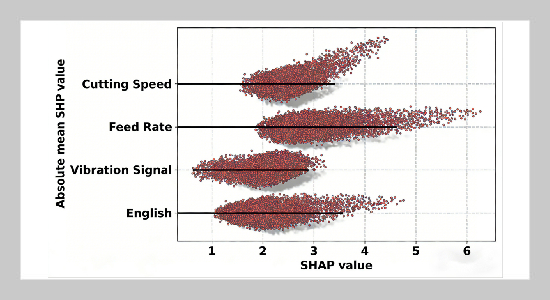
To address the limitations of traditional machining parameter optimization methods in adapting to dynamic machining conditions and ensuring high precision, this study proposes a deep learning-driven adaptive optimization framework for CNC milling parameters. First, a hybrid CNN-LSTM model integrated with Bayesian optimization (BO) is established to predict key machining outputs, including surface roughness (Ra), cutting force (Fc), and material removal rate (MRR). The model leverages convolutional neural network (CNN) to extract spatial features from multi-sensor signals (vibration, temperature, current) and long short term memory(LSTM) to capture temporal dependencies in the machining process. Second, a multi-objective adaptive optimization model considering machining precision, efficiency, and energy consumption is constructed, with constraints on cutting force, power, and tool wear. The model is solved by an improved particle swarm optimization (PSO) algorithm embedded with real-time process feedback. Experiments are conducted on a 5-axis CNC milling machine using aluminum alloy AA6061 and titanium alloy Ti-6Al-4V, with Taguchi experimental design and extended full factorial design for data collection. Results show that the proposed CNN-LSTM-BO model achieves superior prediction accuracy compared to single CNN, LSTM, and traditional regression models. The adaptive optimization framework reduces Ra by 18.7%−23.5%, improves MRR by 12.3%−16.8%,andlowersspecificenergyconsumptionby10.2%−14.6%comparedtoempiricalparametersand non-adaptive optimization methods. This research provides a data-driven intelligent solution for high-precision CNC milling parameter optimization under dynamic working conditions.
[1] J. Mao, X. Chen, W. Feng, S. Yuan, and R. Du, (2015) “A precision CNC turn-mill machining center with gearhobbing capability" Precision Engineering 41: 126–134. DOI: 10.1016/j.precisioneng.2014.09.006.
[2] Z. Wang, Y. Ran, H. Yu, S. Zhang, and G. Zhang, (2020) “Precision analysis for five-axis CNC milling ma chine based on meta-action units and integrated weights with Shannon entropy and AHP" The International Journal of Advanced Manufacturing Technology 107(5): 2767–2782. DOI: 10.1007/s00170-020-05168-2.
[3] S. Omirou, M. Charalambides, A. Lontos, M. Menicou, and G. Demosthenous, (2025) “A dedicated CAD/CAM module for high-precision CNC milling of complex threads" The International Journal of Advanced Manufacturing Technology 140(3): 2195–2210. DOI: 10.1007/s00170-025-16449-z.
[4] L. Wang, J. Han, Z. Tang, Y. Zhang, D. Wang, and X. Li, (2025) “Geometric Accuracy Design of High Performance CNC Machine Tools: Modeling, Analysis, and Optimization" Chinese Journal of Mechanical Engineering 38(1): 87. DOI: 10.1186/s10033-025-01258-y.
[5] J. Peterka, M. Kuruc, V. Kolesnyk, I. Dehtiarov, J. Moravcikova, T. Vopat, P. Pokorny, F. Jurina, and V. Simna, (2023) “Selected aspects of precision machining on CNC machine tools" Machines 11(10): 946. DOI: 10.3390/machines11100946.
[6] S. Yin, L. Wang, T. Chen, H. Huang, J. Gao, J. Zhang, M. Liu, P. Li, and C. Xu, (2025) “LKAFormer: A lightweight kolmogorov-arnold transformer model for image semantic segmentation" ACM Transactions on Intelligent Systems and Technology: DOI: 10.1145/3759254.
[7] B. Sawik. Space Mission Risk, Sustainability and Supply Chain: Review, Multi-Objective Optimization Model and Practical Approach. 2023. DOI: 10.3390/su151411002.
8] A. Sharma, R. S. Saini, A. Kaushik, A. Okshah, M. S. Kuruniyan, V. Gurumurthy, R. Vyas, R. I. H. Binduhayyim, and A. Heboyan, (2025) “Machine learning based approach for surface roughness predic tion in precision dental prototyping" Scientific Reports 15(1): 32239. DOI: 10.1038/s41598-025-17487-z.
[9] Z. A. Cevik, K. Ozsoy, A. Ercetin, and G. Sariisik, (2025) “Machine Learning-Driven Optimization of Ma chining Parameters Optimization for Cutting Forces and Surface Roughness in Micro-Milling of AlSi10Mg Produced by Powder Bed Fusion Additive Manufactur ing" Applied Sciences 15(12): 6553. DOI: 10.3390/app15126553.
[10] S. Yin, H. Li, A. A. Laghari, L. Teng, T. R. Gadekallu, and A. Almadhor, (2024) “FLSN-MVO: edge computing and privacy protection based on federated learning Siamese network with multi-verse optimization algorithm for industry 5.0" IEEE Open Journal of the Communications Society 6: 3443–3458. DOI: 10.1109/OJCOMS. 2024.3520562.
[11] W.-Y. Chang, S.-J. Wu, and J.-W. Hsu, (2020) “Investi gated iterative convergences of neural network for prediction turning tool wear" The International Journal of Advanced Manufacturing Technology 106(7): 2939 2948. DOI: 10.1007/s00170-019-04821-9.
[12] M.E. Torres, M. A. Colominas, G. Schlotthauer, and P. Flandrin. “A complete ensemble empirical mode decomposition with adaptive noise”. In: 2011 IEEE international conference on acoustics, speech and signal processing (ICASSP). IEEE. 2011, 4144–4147. DOI: 10.1109/ICASSP.2011.5947265.
[13] D. L. O’Farrell, J. J. Collard, and P. J. Norton, (2026) “Empirical Validation of the Negative Emotions Scale (NES): A Hierarchical Structural Equation Model" Journal of Rational-Emotive & Cognitive-Behavior Therapy 44(1): 1. DOI: 10.1007/s10942-025-00622-0.
[14] L. Gao, Y. Yang, H. Peng, Z. Hu, and S. Xie, (2026) “Composite adaptive second-order nonsingular terminal sliding mode controller for path-tracking of general N trailer systems" Control Engineering Practice 168: 106706. DOI: 10.1016/j.conengprac.2025.106706.
[15] A. Binbusayy is and M. Sha, (2025) “Stability Prediction in Smart Grid Using PSO Optimized XG Boost Algorithm with Dynamic Inertia Weight Updation." CMES Computer Modeling in Engineering & Sciences 142(1): DOI: 10.32604/cmes.2024.058202.
[16] F. Zhao, F. Ji, T. Xu, N. Zhu, et al., (2024) “Hierarchical parallel search with automatic parameter configuration for particle swarm optimization" Applied Soft Computing 151: 111126. DOI: 10.1016/j.asoc.2023.111126.
[17] Q. Wu, (2025) “An enhanced whale optimization algo rithm with inertia weight and dynamic parameter adaptation for wireless sensor network deployment" Computing 107(8): 167. DOI: 10.1007/s00607-025-01509-9.
[18] Z. Diao, F. Yu, H. Wu, and X. Xia, (2025) “A dynamic state cluster-based particle swarm optimization algorithm" International Journal of Computational Intelligence Systems 18(1): 202. DOI: 10.1007/s44196 025-00902-8.
We use cookies on this website to personalize content to improve your user experience and analyze our traffic. By using this site you agree to its use of cookies.