Zhaoyi Xing, Zhiyun ZouThis email address is being protected from spambots. You need JavaScript enabled to view it., and Xinhong Liu
State Key Laboratory of Chemistry for NBC Hazards Protection, Beijing 102205, China
Received: December 8, 2025 Accepted: February 18, 2026 Publication Date: March 21, 2026
Copyright The Author(s). This is an open access article distributed under the terms of the Creative Commons Attribution License (CC BY 4.0), which permits unrestricted use, distribution, and reproduction in any medium, provided the original author and source are cited.
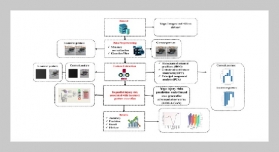
The nonivamide batch reaction process primarily relies on empirical production knowledge, with a notable absence of systematic research. This study for the first time systematically investigates the reaction kinetics of nonivamide synthesis by integrates experimental methods, employing the RC1e calorimeter to ensure reaction safety, and investigates the reaction kinetics of capsaicin synthesis. It innovatively combines the RC1e calorimeter and Aspen Plus software to carry out reaction safety evaluation and process parameter optimization: it uses the Aspen Plus software, incorporating the NRTL thermodynamic model, to simulate the batch reaction stages and conduct dynamic simulations. The study validates the reliability of kinetic equations derived from these simulations. It also examines the impacts of the reactant molar ratio (The molar ratio referred to below indicates C9H17ClO: C8H12ClNO2), feed temperature, and feed rate on product yield, leading to the optimization of operational parameters. The results reveal that at 40◦C, the reaction rate constant for this synthesis process is 0.1486 L/(mol · s), with the kinetic equation expressed as k = 34960.37e−100911/RT. In terms of optimizing product yield, the findings indicate that a reactant molar ratio of 1.1:1 enhances the yield by 1.934 percentage points; a feed temperature of 38◦C improves the yield by 1.889 percentage points; and maintaining a feed duration of 60 minutes further increases the yield by 0.055 percentage points, building on the optimized temperature conditions. The optimized parameters can realize a stable increase of 3.878 percentage points in the yield of industrial nonivamide production, control the adiabatic temperature rise below 11.415◦C, and reduce the load of the reactor cooling system by about 15%, which provides reliable kinetic models and engineering operation parameters for the industrial scale-up of nonivamide synthesis and solves the engineering problems of yield fluctuation and high safety risk caused by empirical operation.
[1] Q.Zhang,H.Li,S.Zhang,etal.,(2025)“Determination of Nonivamide in guinea pig plasma by high-performance liquid chromatography-tandem mass spectrometry" Chinese Journal of Analysis Laboratory 44(1): 83–88.
[2] J. Zhang, J. Li, X. Deng, et al., (2021) “Determination of five kinds of capsaicins in edible oil by GPC-UPLC MS/MS "China Oils and Fats 46(9): 82–86.
[3] Y. Zhang, J. Li, and C. Wang, (2021) “Scale-up strategy for fast exothermic batch reactions based on reaction calorimetry and dynamic simulation" Chemical Engineering Research and Design 176: 289–301. DOI: 10.1016/j.cherd.2021.08.015.
[4] H. Zhao, W. Zhao, S. Liu, et al., (2022) “Simultaneous Determination of Octogen and Nonivamide in A New Type of Explosion Suppressant by HPLC" Anhui Chemical Industry 48(5): 102–106.
[5] D. Li, C. Tong, T. Liu, et al., (2024) “Process simulation and optimization of reaction unit in bisphenol A plant based on Aspen Plus software" Petrochemical Technology Application 42(2): 108–111, 148.
[6] B. Wang, W. Zhao, X. Cao, et al., (2020) “Determination of Imidazole and Two Impurities in the Imidazole Production Process by HPLC" Physical Testing and Chemical Analysis Part B 56(6): 692–695.
[7] F. Cui, J. Jiang, W. Zhang, et al., (2017) “Analysis of the Thermal Hazards of the Synthesis Reaction of Tert-butyl Peroxybenzoate" China Safety Science Journal 27(11): 85–90.
[8] Y. Dai, (2017) “Hardware Composition and Operational Precautions of the RC1e Fully Automatic Reaction Calorimeter" Chemical Industry Management (9): 170–172.
[9] European Process Safety Centre. Guidelines for Scale up of Fast Exothermic Batch Reactions. Tech. rep. EPSC TR-2020-003. 2020.
[10] Y.Dai, (2017) “Programming Considerations and Precautions for the RC1e Fully Automatic Reaction Calorimeter" Chemical Industry Management (2): 7–9.
[11] L.Zhang,X.Song,J.Zhang,etal.,(2023) “Studyonthe Reaction Kinetics of the Isomerization Process of Tranexamic Acid" CIESC Journal 74(10): 4173–4181.
[12] W.Tu, Z. Gan, and D. Zhao, (2015) “Study on the SN2 Reaction of Haloalkanes" Journal of Guangxi Normal University (Natural Science Edition) 32(3): 50–59.
[13] J. Xie and W. L. Hase, (2016) “Rethinking the SN2 Reaction" Science 352(6281): 32–33. DOI: 10.1126/ science.aaf1531.
[14] H.Liu,X.Chen,andW.Zhang,(2019)“Scale-upeffects on mass transfer and reaction kinetics of fast exothermic liquid-liquid batch reactions" Industrial Engineering Chemistry Research 58(32): 14789–14798. DOI: 10.1021/acs.iecr.9b02567.
[15] C. Zhou. “The Research and Development of Chemical Engineering Property Estimation System". (phdthesis). Qingdao University of Science and Technology, 2022.
[16] X. Wei, L. Yu, J. Jia, et al., (2023) “Process Simulation and Optimization of the Hydrogen Circulating Desulfurization System in Diesel Hydrodesulfurization Using Aspen Plus" Adhesion 50(4): 125–128.
[17] J. Zhang, W. Wang, F. Liu, et al., (2023) “ASPEN Simulation of Azeotropic Distillation for Separating Systems Rich in Sec-butyl Acetate Byproducts" Adhesion 50(6): 111–114.
[18] L. Sun. Process Simulation Training– Aspen HYSYS Tutorial. China Petrochemical Press, 2019, 424–467.
[19] X. Zhang, (2020) “Simulation Research of Methanol Distillation Process in Large Coal Chemical Industry" Mod ern Chemical Research (6): 138–139.
[20] P. Cai, X. Deng, Y. Cao, et al., (2019) “Incipient Fault Detection of Nonlinear Chemical Processes Based on Weighted Probability Related KPCA" Chemical Indus try and Engineering Progress 38(12): 5247–5256.
[21] S. Skogestad, (1997) “Dynamics and Control of Distillation Columns" Chemical Engineering Re search and Design 75(6): 539–562. DOI: 10.1205/026387697524092.
[22] C. Linghu, (2023) “Application of Aspen HYSYS soft ware in the simulation of low-temperature separation of natural gas" Chemical Engineering Design Communications 49(2): 159–161.
[23] R. Zhang, Z. Liu, J. Wang, et al., (2023) “Online dynamic simulation and optimization of water-cooledcas cade refrigeration systems" Chemical Industry and Engineering Progress 42: 124–132.
[24] J. Chen and W. L. Hase, (2018) “Dynamics of SN2 reactions in liquid-liquid biphasic systems: A computational and experimental study" Journal of Physical Chemistry Letters 9(12): 3245–3251. DOI: 10.1021/acs.jpclett.8b01243.
[25] K. Schmidt and T. Müller, (2023) “Industrial-scale syn thesis of nonivamide: Process optimization and safety as sessment" Chemical Engineering Technology 46(5): 1032–1040. DOI: 10.1002/ceat.202200789.
We use cookies on this website to personalize content to improve your user experience and analyze our traffic. By using this site you agree to its use of cookies.